Navigating the MRT Network: Transfer Lines and Rush Hour Reality
When you first land in Singapore, the sheer efficiency of Changi Airport might lull you into a false sense of security, making you think navigating the entire island will be just as straightforward. Then you look at the MRT map, a spaghetti junction of coloured lines, and the initial excitement can quickly turn into a slight panic. Trust me, I’ve been there – trying to figure out which line goes where, how to pay, and how on earth to avoid the morning rush. This guide is for every expat, new or seasoned, who wants to master the MRT and make it their reliable lifeline for exploring this incredible city.
Understanding the Singapore MRT Network at a Glance
The Mass Rapid Transit (MRT) system is truly the backbone of public transport in Singapore. It’s clean, efficient, and generally very reliable. For those of us used to grimy, delayed subways in other major cities, it's a breath of fresh air – quite literally, thanks to the powerful air-conditioning. But don't let its polished facade fool you; there’s still a learning curve, especially when you're trying to get across town during peak hours or decipher which exit leads to that specific hawker centre you heard about.
The Different Lines and Their Significance
Singapore's MRT network has grown tremendously over the years, and it continues to expand. What might look like a daunting tangle on the map quickly becomes logical once you understand the main arteries. Think of them as lifelines connecting different parts of the island, each serving distinct purposes and leading to various hubs.
The North-South Line (Red) is one of the oldest and most crucial, running from Jurong East in the west, cutting through the heart of the city at Orchard and City Hall, and extending all the way up to Woodlands in the north. If you're heading to the shopping belt or need to transfer to Malaysia via Woodlands Checkpoint, this is your line. The East-West Line (Green) is equally vital, connecting the eastern residential areas and Changi Airport to the CBD (City Hall, Raffles Place, Tanjong Pagar) and further west to industrial hubs like Jurong East. Many expats find themselves relying heavily on the East-West line, especially if they live in the East Coast area or work downtown. It’s a workhorse of a line, always bustling.
Then you have the North East Line (Purple), which snakes from HarbourFront (the gateway to Sentosa) through the cultural melting pot of Little India and eventually up to Punggol. This line is a fantastic way to explore some of Singapore's vibrant neighbourhoods that are slightly off the main tourist drag. The Circle Line (Yellow) is a marvel of engineering, forming a loop around the central area, connecting major interchanges like Dhoby Ghaut, Marina Bay, and one-north. It's incredibly useful for bypassing the city centre if you're travelling between different districts without wanting to dive into the busiest stations. Finally, the Downtown Line (Blue) connects areas like Bukit Panjang, MacPherson, and eventually Expo, offering a more direct route through some newer residential and business districts. With its sleek, driverless trains, it's a very modern addition. Newer lines like the Thomson-East Coast Line (Brown) are steadily rolling out, further enhancing connectivity to areas previously less accessible, like the famous East Coast Park.
Reading the MRT Map Like a Pro
The official MRT map can look like a piece of abstract art to the uninitiated. However, it's designed with surprising clarity once you know what to look for. Each line is colour-coded and assigned a number (e.g., NS for North-South, EW for East-West, CC for Circle). Stations are clearly marked, and interchange stations – where you can switch between lines – are usually represented by overlapping circles or squares. Learning to read these icons is key.
When planning your journey, first identify your starting point and destination. Let's say you're at Woodlands and want to get to Expo for a trade show. You'd find Woodlands (NS9) on the Red line. Expo (CG1/DT35) is on both the Changi Airport Line (part of the East-West line) and the Downtown Line. You'd see that from Woodlands, you can take the Red line south to City Hall (NS25/EW13), then transfer to the Green line eastbound towards Changi Airport and alight at Expo. Alternatively, you could take the Red line to Newton (NS21/DT11), transfer to the Blue line and take it directly to Expo. Understanding which route requires fewer transfers or is less crowded at certain times becomes second nature with practice. Always look for the station codes – they tell you which line it is and its sequence on that line, which can be helpful if you’re trying to remember your stop or asking for directions.
Operating Hours and Frequencies
The Singapore MRT runs like clockwork for the most part, but it's not a 24-hour service, which can sometimes catch new expats off guard. Generally, trains start running around 5:30 AM and cease operations around midnight or 1:00 AM, depending on the line and day of the week. Weekends usually see slightly extended hours, especially on Friday and Saturday nights, to cater to the nightlife crowd. However, if you're out past midnight, you'll need to rely on late-night buses, taxis, or ride-hailing services like Grab or Gojek. You can learn more about these options in our guide on Late-Night Transport: Night Rider Buses and Midnight Taxi Surcharges.
During peak hours, which are typically from 7:00 AM to 9:30 AM and 5:00 PM to 7:30 PM on weekdays, trains run at incredibly high frequencies – sometimes every 2-3 minutes. This is when the system really earns its reputation for efficiency, albeit with sardine-can levels of crowding. Outside of these times, and especially on weekends, frequencies drop to every 5-8 minutes, or even 10-15 minutes on some of the less busy extensions. This makes a huge difference if you’re just trying to hop on quickly. It’s always a good idea to check the various transport apps like Moovit or the official MyTransport.SG app for real-time train timings, especially if you’re running on a tight schedule. Public holidays can also affect frequencies, sometimes running on weekend schedules, so it's always worth a quick check online before heading out.
Mastering Payment and Fares for a Seamless Journey
One of the biggest anxieties for newcomers in any city is figuring out how to pay for public transport without looking like a clueless tourist holding up the queue. Singapore has made it remarkably easy, leaning heavily on modern payment methods, which is a blessing for expats. Gone are the days of fumbling for exact change or buying single-trip tickets that quickly add up.
SimplyGo: Your Best Friend for Contactless Travel
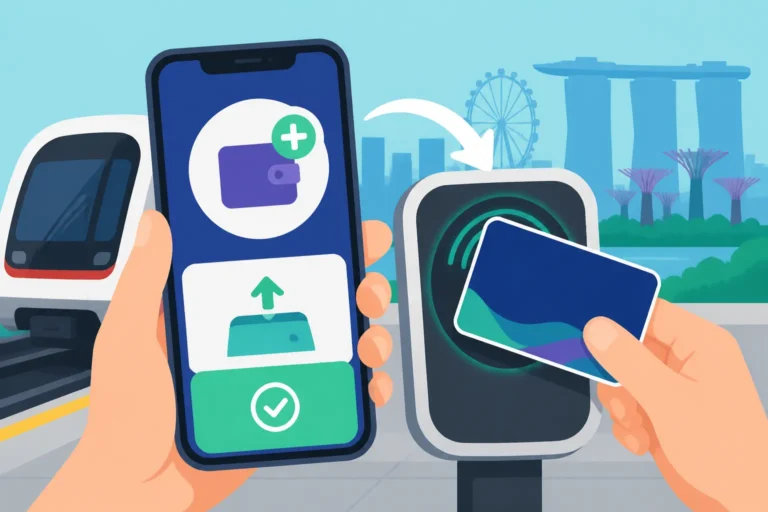
For many expats, SimplyGo is an absolute game-changer. It allows you to use your existing contactless credit or debit card (Mastercard or Visa) directly on the MRT gantries, just like you would with an EZ-Link card. You simply tap in and tap out, and the system automatically calculates the correct fare. No need to top up a separate card, no worrying about insufficient funds – it’s all linked to your bank account. This convenience is unparalleled, especially when you've just arrived and haven't fully settled into the local financial ecosystem yet.
You can link your contactless card to the SimplyGo app, which then lets you track your journey history and fares in real-time. This is super helpful for budgeting or if you need to reconcile travel expenses. It eliminates the need for a physical card altogether, as many people now use their mobile phones or smartwatches with Apple Pay or Google Pay to tap in and out. This seamless integration means one less thing to worry about when you're still grappling with opening a bank account or getting your Singpass sorted. For a detailed guide on this, check out Using SimplyGo: Tapping Your Credit Card or Phone for Bus and Train Fares.
EZ-Link Cards vs. Singapore Tourist Pass
While SimplyGo is great, traditional stored-value cards still have their place. The most common is the EZ-Link card. These are prepaid cards that you top up with cash at MRT stations, convenience stores like 7-Eleven, or even via an app. For those who prefer to keep their travel expenses separate from their main bank account or who don't have a contactless card yet, an EZ-Link is a reliable option. They are also widely used by locals and can be used on buses as well. You can purchase them at any MRT station ticket office or convenience store. Topping up is simple – just head to a General Ticketing Machine or an EZ-Link top-up machine. We have a handy guide on How to Use the EZ-Link App to Top Up Your Transport Card if you prefer digital management.
For short-term visitors or tourists, the Singapore Tourist Pass might seem appealing. It offers unlimited travel on MRT, LRT, and basic bus services for a set period (1, 2, or 3 days). While it sounds good on paper, for expats who are here for longer, it’s rarely cost-effective. Your travel patterns will likely involve fewer intense travel days and more regular commutes, making per-ride payment via SimplyGo or EZ-Link more economical in the long run. If family or friends are visiting, however, it could be a convenient option for them for a packed sightseeing itinerary.
Fare Structure and Calculating Your Costs
Singapore's public transport operates on a distance-based fare system. This means the further you travel, the more you pay, but it's structured in a way that usually offers excellent value for money. The exact fare is automatically calculated when you tap out, taking into account your entry and exit points. Transfers between MRT lines or between MRT and buses within a certain timeframe (usually 45 minutes) are typically counted as part of a single journey, meaning you only pay the incremental distance, not a brand new fare. This integrated system is fantastic for reducing overall costs, especially if your commute involves both a train and a bus leg.
A short MRT ride might cost you as little as S$0.92, while a longer journey across the island could be around S$2.50. For an expat, understanding your average daily commute cost is essential for Healthcare Budgeting in Singapore: Managing Out-of-Pocket Costs and general living expenses. You can estimate fares using online tools or the MyTransport.SG app, but generally, you won't need to perform manual calculations as the system handles it seamlessly. Just remember to always tap in and tap out correctly, or you might be charged a default maximum fare.
Navigating the Rush Hour Reality
Ah, rush hour in Singapore. It’s a rite of passage for every expat. You think you've seen crowded trains, but Singapore’s blend of efficiency and sheer population density during peak times is something else entirely. It’s not necessarily chaotic, but it is intense, and knowing what to expect can save you a lot of stress.
The Peak Hour Experience: What to Expect
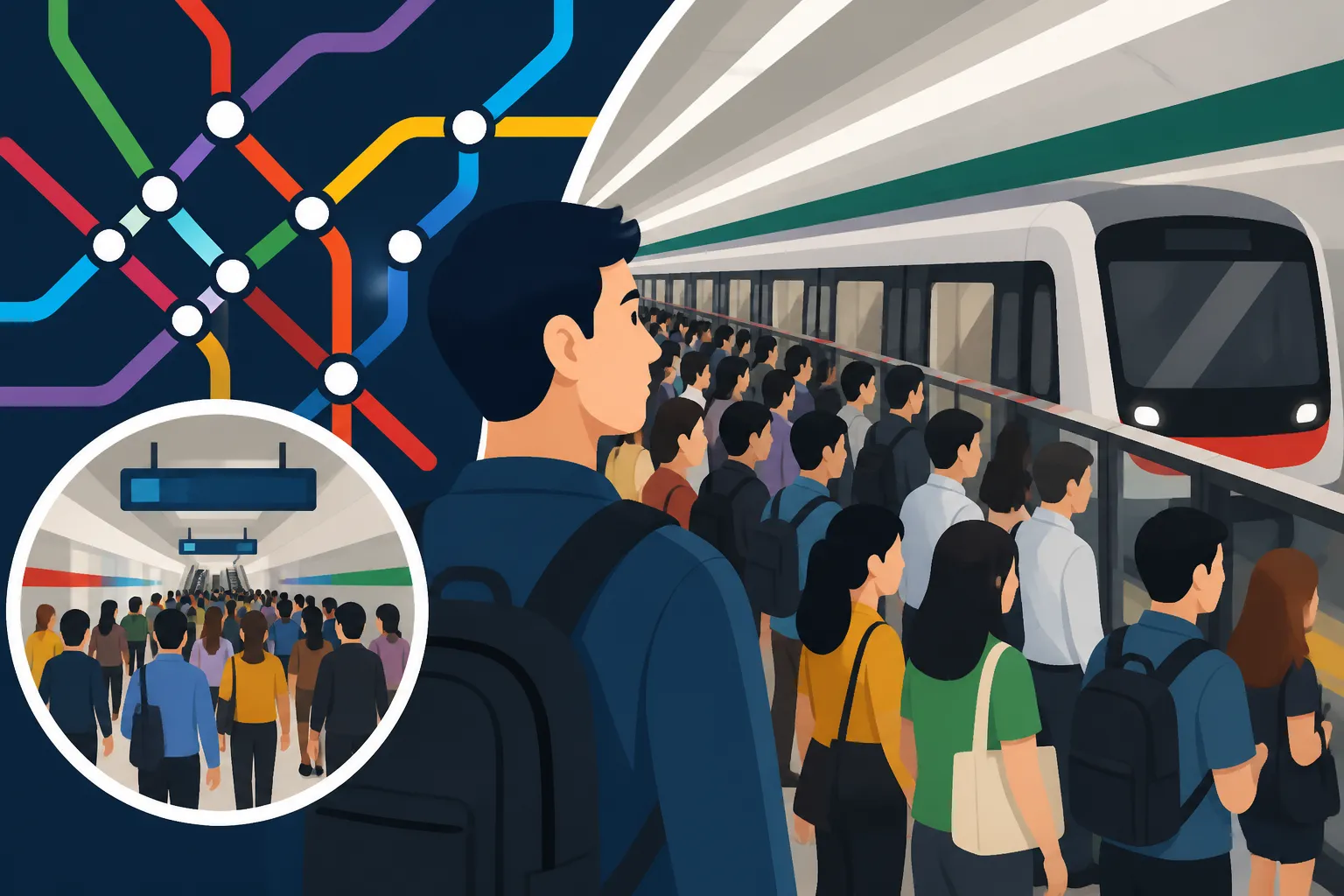
During the weekday morning (7:00 AM – 9:30 AM) and evening (5:00 PM – 7:30 PM) peaks, certain MRT lines and stations transform into bustling human rivers. The North-South and East-West Lines, which serve major residential areas and the Central Business District (CBD), are particularly notorious. Stations like Raffles Place, City Hall, Dhoby Ghaut, and Outram Park become chokepoints, with throngs of commuters flowing in and out of trains. You’ll experience queues just to get onto the escalator, never mind the train itself.
The trains themselves become incredibly packed. Personal space becomes a luxury, and you’ll find yourself closer to strangers than you ever thought possible. While Singaporeans are generally polite, during rush hour, efficiency often trumps etiquette. People will squeeze in, bags will brush against you, and you might have to exert a bit of force just to get off at your stop. If you're carrying a large backpack, it’s good practice to take it off and hold it in front of you to free up space and avoid bumping others. This collective experience can be quite a shock if you're not used to it, and it's certainly a contrast to the calm, orderly Singapore you might experience at other times.
Strategies for Surviving the Squeeze
So, how do you navigate this daily ritual? First, if your work schedule allows, try to adjust your commute times. Even leaving 15-30 minutes earlier or later can make a significant difference to the crowd levels. This might mean enjoying a leisurely breakfast at a hawker centre near work before you clock in, or perhaps doing some errands before heading home. Another trick is to strategically position yourself on the platform. Some platforms have markings indicating where the train doors will open, and you can try to aim for a less crowded carriage if you know the layout of the train.
Consider using alternative entrances or exits at major interchange stations. Sometimes, walking a bit further to a less obvious entrance can save you minutes on the escalator queue and get you onto a slightly emptier platform. If you’re truly adverse to crowds, and your destination is only one or two stops away from an interchange, sometimes walking might be faster and less stressful than enduring a packed train. For those who live in the heart of the CBD, cycling or even walking to work can be a very viable and pleasant alternative, especially in the cooler morning hours. Also, for internal links relevant to your general commute, check out Public Transport in Singapore: MRT, Buses, and Commuting Hacks for more great advice.
The Impact of Train Breakdowns and Delays
While Singapore's MRT is renowned for its reliability, it’s not immune to issues. Train breakdowns and delays do happen, and when they do, they can cause significant disruption, especially during peak hours. These incidents, while thankfully infrequent, can be frustrating, turning a 30-minute commute into an hour-plus ordeal. Common causes include signal faults, track issues, or even passenger incidents.
The key to dealing with these situations is staying informed. Local news channels and transport operators (SMRT and SBS Transit) are usually very quick to disseminate information. Follow their official social media channels, or download apps like MyTransport.SG, which provide real-time updates on line statuses. Station announcements will also keep you in the loop. If you find yourself caught in a delay, don't panic. Look for alternative routes, consider switching to a bus if available, or, as a last resort, hop into a taxi or use a ride-hailing app. Having a good local SIM card or an eSIM from providers like Airalo ensures you always have data to check maps and updates when you're out and about, which is critical during unexpected delays. Remember, there's a strong sense of collective sighing and shared frustration among commuters during these times, so just ride it out with everyone else!
Etiquette, Rules, and Safety on the MRT
Singapore is famous for its strict rules and high level of civility, and the MRT is no exception. While many rules are posted, there are also unwritten codes of conduct that help keep the system running smoothly. Understanding these will help you blend in and avoid any awkward glares or, worse, fines!
The Unwritten Rules: Courtesy and Personal Space
First and foremost, queuing is sacred in Singapore. Whether you're waiting for the train, an escalator, or to purchase a ticket, always form an orderly queue. On escalators, stand on the left if you intend to stand still, allowing those in a hurry to walk on the right. When the train arrives, let passengers alight first before you attempt to board. Trying to push your way in prematurely is a cardinal sin.
Inside the train, keep noise levels down. Loud phone conversations or music (even with headphones, if it's bleeding out) are generally frowned upon. Give up your seat for the elderly, pregnant women, parents with young children, or those with disabilities. These priority seats are clearly marked and should always be offered. While personal space is a luxury during rush hour, at other times, try not to lean too much on fellow passengers or spread your belongings excessively. Finally, always move to the center of the carriage after boarding, making space for others entering behind you – don't just stand by the doors.
Strict Enforcement: Fines and Prohibited Items
Singapore takes its rules very seriously, and violations on the MRT can lead to hefty fines. The most famous one? No eating or drinking! This rule is strictly enforced to maintain cleanliness and prevent pests. Chewing gum, which is generally banned from import and sale in Singapore, is also prohibited on public transport. Littering, spitting, smoking, or vandalizing public property are all subject to severe penalties. For a detailed breakdown of these, refer to our guide on Everyday Rules and Etiquette: Fines, Laws, and Social Norms.
You'll see signs explicitly stating these prohibitions, often with the corresponding fine amounts. While it might seem overly strict compared to your home country, this vigilance is precisely why the MRT is so spotless and well-maintained. Always pay attention to announcements and signage, and if in doubt, err on the side of caution. Even bringing durians (the notoriously pungent "king of fruits") onto the MRT is not allowed, despite being a national obsession, due to its strong smell which can bother other passengers.
Staying Safe: Emergency Procedures and Awareness
The MRT system is incredibly safe, with CCTV surveillance and regular patrols by transport staff and police. However, it's always good to be aware of emergency procedures. In case of a medical emergency on a train or platform, inform station staff immediately. There are emergency communication buttons inside train carriages that connect you directly to the driver, and emergency call points on platforms.
If you notice unattended bags or suspicious activity, report it to the nearest station staff or dial 999 for the police. Singapore has a low crime rate, but vigilance is always encouraged. The system is designed with safety in mind, with platform screen doors preventing falls onto the tracks and clear exit routes in case of evacuation. Fire extinguishers are available, and emergency stop buttons are accessible on platforms (though only to be used in genuine emergencies). Getting familiar with the layout of your usual stations, including emergency exits, is always a smart move.
Beyond the MRT: Integrating with Other Public Transport
While the MRT is fantastic, it's just one piece of Singapore's highly integrated public transport puzzle. To truly master commuting like a local, you'll need to understand how it connects with buses and even alternative ride options.
Seamless Transfers to Buses
One of the best features of Singapore's public transport system is how seamlessly the MRT and bus networks integrate. As mentioned earlier, if you transfer from an MRT to a bus (or vice-versa) within a specific time window (usually 45 minutes to an hour) and for a continuous journey, your fare is calculated as one continuous trip, saving you money. This means you don't pay a full new fare for the second leg of your journey; you only pay for the additional distance travelled.
This makes bus transfers incredibly convenient, especially for reaching destinations that aren't directly on an MRT line. Many MRT stations have integrated bus interchanges or clearly marked bus stops nearby. You can use your SimplyGo-enabled card or EZ-Link card on buses too – just tap in when you board and tap out when you alight. Bus arrival times are usually displayed at bus stops and are also available in real-time on various transport apps. Understanding the bus routes complementing the MRT can significantly expand your reach across the island.
Exploring with LRT and Taxis/Ride-Hailing
Beyond the MRT and buses, Singapore also has Light Rail Transit (LRT) systems in several residential towns like Bukit Panjang, Sengkang, and Punggol. These are automated, driverless trains that connect residents within these estates to their respective MRT interchanges. If you find yourself living in one of these areas, the LRT will likely be your local connector. It operates on the same fare system as the MRT and buses.
For those times when public transport simply isn't feasible – perhaps you’re running late, carrying heavy shopping, or heading somewhere off the beaten path – taxis and ride-hailing services are readily available. Grab is the dominant ride-hailing app, offering various options from standard cars to larger vehicles. Gojek and TADA are other popular alternatives. These services provide door-to-door convenience, though at a higher cost, especially during peak hours or bad weather when surge pricing kicks in. Knowing when to splurge on a Grab versus taking the MRT is part of becoming a seasoned Singapore resident. Dive deeper into these options with our guide on Ride-Hailing Apps: Grab, Gojek, TADA, and CDG Zig Explained.
Using Navigation Apps for Multi-Modal Journeys
Gone are the days of paper maps and guesswork. Navigation apps are indispensable for navigating Singapore's public transport. Google Maps is excellent, providing real-time public transport options, estimated travel times, and even telling you which bus stop to get off at. The official MyTransport.SG app from the Land Transport Authority (LTA) is another powerhouse, offering highly accurate real-time bus arrival times, MRT line statuses, and route planning.
Other popular choices include Moovit, which gives you step-by-step instructions and combines various modes of transport, and Citymapper, known for its comprehensive options and "get me home" feature. These apps are crucial, especially when you're first figuring out your daily commute for work or trying to explore a new neighbourhood. They can calculate your journey using a combination of MRT, bus, and even walking, helping you choose the fastest or most convenient route. Having a reliable data plan, possibly from a local provider or an eSIM from Airalo for initial arrival, is essential to make the most of these tools.
Insider Tips and Expat Wisdom for MRT Travel
After years of living here, you pick up a few tricks that make MRT travel not just tolerable, but even enjoyable. It's about more than just getting from A to B; it's about understanding the rhythm of the city.
Best Times to Travel and Avoid
This might sound obvious, but avoiding the absolute peak of rush hour is the #1 tip. If your work schedule allows, try to start earlier or later. Even a 30-minute shift can make a world of difference in your comfort levels. Weekends also have their own peak times, especially mid-morning to late afternoon, when families and shoppers head out. Major shopping malls and tourist attractions like Orchard Road, VivoCity (for Sentosa), and Marina Bay Sands-adjacent stations can get very crowded.
If you're planning a leisure outing on a Saturday or Sunday, consider travelling during the early morning (before 10 AM) or later in the evening (after 7 PM) to enjoy a more relaxed journey. For unique events or public holidays, always anticipate heavier crowds. Sometimes, on these special occasions, the LTA even extends operating hours to accommodate the influx of people. Keep an eye on local news or the MyTransport.SG app for such announcements.
Leveraging MRT for Tourist Exploration
For new expats who are still in the "tourist phase" of their relocation, the MRT is your best friend for exploration. It connects directly or indirectly to almost all major attractions. For instance, the Downtown Line brings you to Bayfront for Gardens by the Bay and Marina Bay Sands, or to Chinatown and Telok Ayer for vibrant heritage districts. The North East Line takes you to Little India and Clarke Quay.
Changi Airport is also directly connected via the East-West Line, making arrivals and departures hassle-free. Our Changi Airport Guide: Navigating Terminals and Jewel for Frequent Flyers has all the details. Instead of expensive taxis, you can easily reach Sentosa via the HarbourFront station, then take the Sentosa Express. The MRT is a cost-effective way to see the city, allowing you to hop on and off, soaking in the different atmospheres of various neighbourhoods. Just make sure you understand the general operating hours so you don't miss the last train!
Staying Connected on the Go
One thing you'll quickly appreciate about Singapore's MRT is the excellent mobile connectivity. You'll typically have 4G/5G signal throughout most of the underground tunnels and all stations. This means you can stay connected, browse the internet, check emails, or stream content during your commute. For new arrivals, getting a local SIM card or an eSIM is paramount. There are several providers like Singtel, StarHub, and M1, offering competitive data plans.
For those just landing, an eSIM like Airalo can be a lifesaver. You can activate it before you even leave your home country, ensuring you have data the moment you touch down. This allows you to immediately access navigation apps, contact your relocation company, or message family without scrambling for Wi-Fi. It’s a small detail, but having immediate connectivity significantly reduces the stress of initial settlement. Later, you can look into more permanent Mobile Phone Plans: SIM-Only Contracts vs Handset Subsidies. Knowing you can stay connected while underground is a luxury not all metro systems offer, so make the most of it!
| MRT Line Name | Colour | Key Destinations | Interchange Stations | Typical Frequency (Peak) |
|---|---|---|---|---|
| North-South Line (NSL) | Red | Orchard, City Hall, Raffles Place, Dhoby Ghaut, Marina Bay, Woodlands | City Hall, Dhoby Ghaut, Marina Bay, Newton, Jurong East | 2-3 mins |
| East-West Line (EWL) | Green | Changi Airport, Tampines, Paya Lebar, City Hall, Raffles Place, Buona Vista | City Hall, Raffles Place, Buona Vista, Jurong East | 2-3 mins |
| North East Line (NEL) | Purple | HarbourFront, Chinatown, Little India, Serangoon, Punggol | Dhoby Ghaut, Outram Park, Serangoon | 3-5 mins |
| Circle Line (CCL) | Yellow | Dhoby Ghaut, Marina Bay, Botanic Gardens, Holland Village, one-north | Dhoby Ghaut, Marina Bay, Paya Lebar, Serangoon, Buona Vista | 4-6 mins |
| Downtown Line (DTL) | Blue | Expo, Bugis, Telok Ayer, Newton, Botanic Gardens, Beauty World | Bugis, Newton, Botanic Gardens, MacPherson, Expo | 3-5 mins |
| Thomson-East Coast Line (TEL) | Brown | Woodlands North (via JB), Orchard, Marina Bay, Gardens by the Bay, East Coast Park | Woodlands, Orchard, Marina Bay, Gardens by the Bay | 5-7 mins |
This table provides a quick overview, but remember that the network is constantly evolving.
Navigating the MRT might seem daunting at first, but with a bit of practice and these insider tips, you'll be zipping around Singapore like a seasoned local in no time. It's a reliable, clean, and efficient way to explore the island, get to work, and truly integrate into the Singaporean way of life. When you first move here, dealing with all the logistics can be overwhelming, from finding a place to live, which our Renting in Singapore: The Ultimate Guide for Expatriates (2026) covers, to simply getting around. But I promise, the MRT will become one of the things you appreciate most about living here. And if you're coordinating a move, services like Sirelo can help with the broader logistics, freeing you up to focus on the finer details of getting settled, like mastering public transport.
Disclaimer
The information provided in this guide is intended for general informational purposes only and does not constitute professional advice. While we strive to keep the content accurate and up-to-date, public transport rules, fares, and operating hours in Singapore are subject to change by the relevant authorities (LTA, SMRT, SBS Transit). Always verify information with official sources or dedicated transport applications for the most current details. We are not responsible for any inconveniences or financial losses incurred from relying on the information presented herein.