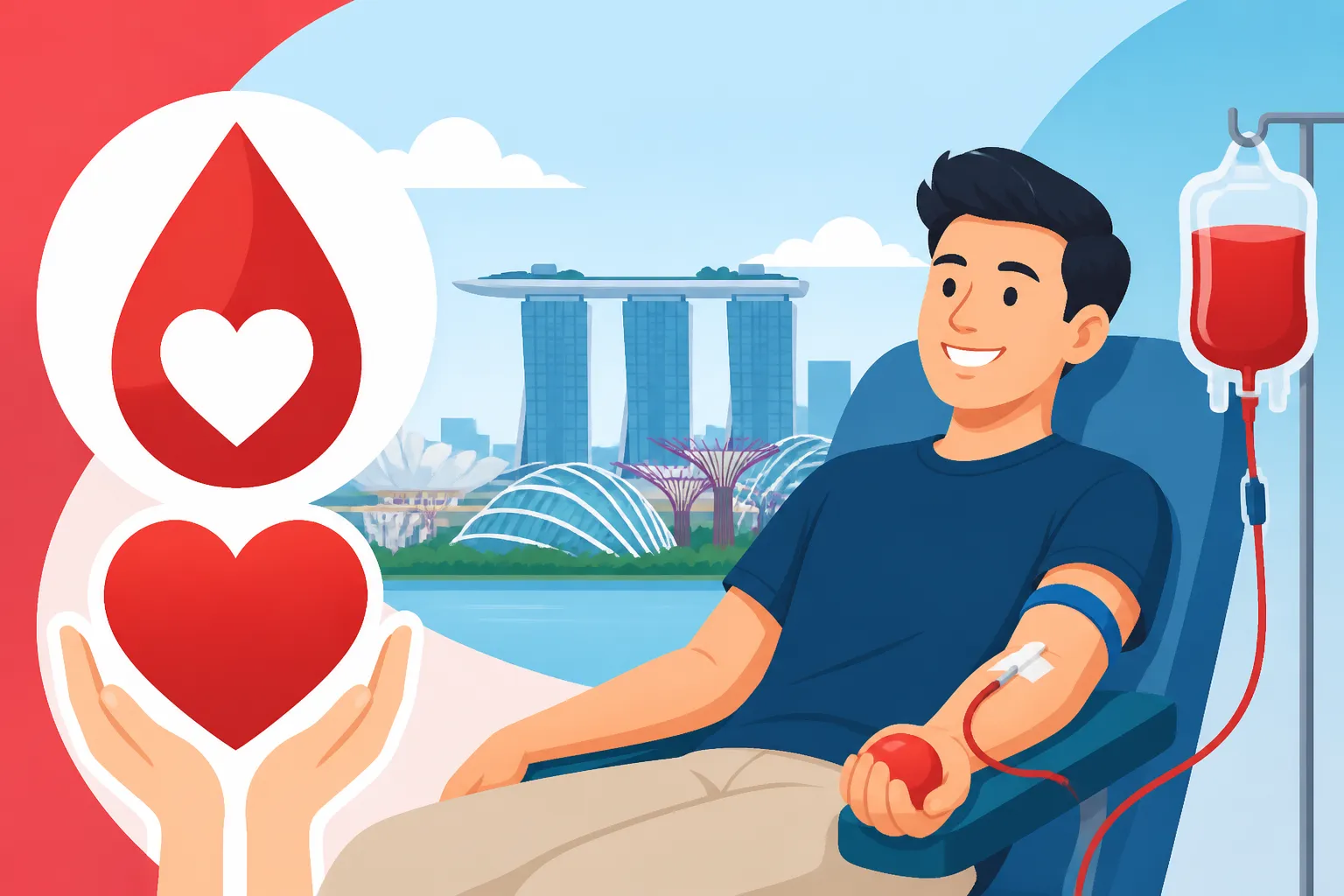
Where to Donate Blood as an Expatriate in Singapore
Finding yourself wanting to give back to the local community in Singapore often leads to the noble thought of blood donation, yet many of us hesitate because we aren't sure if our international travel history or residency status disqualifies us. I remember standing outside the Outram clinic years ago, clutching my passport and worrying that my childhood in Europe would be an automatic deal-breaker. This guide solves that uncertainty by detailing exactly where, how, and if you can donate blood as a foreigner in the Lion City.
The Vital Role of Blood Donation in Singapore's Healthcare Ecosystem
Singapore operates a world-class medical system, but it is one that relies heavily on a constant, fresh supply of blood to support everything from routine surgeries to emergency trauma care. For those of us living here on an Employment Pass or as Permanent Residents, contributing to this supply is one of the most direct ways to integrate into the local social fabric. The Health Sciences Authority (HSA) and the Singapore Red Cross work in tandem to manage the National Blood Programme, ensuring that every drop collected meets stringent safety standards.
The demand for blood in Singapore is projected to rise significantly as the population ages. While many expats focus on their own coverage—perhaps through Expat Health Insurance in Singapore: Public vs Private Coverage—it is equally important to recognize the community's collective needs. Donating blood is a voluntary act of solidarity that transcends nationality. When you walk into a blood bank, you aren't just an expat; you are a donor helping to sustain a system that might one day save a friend, a colleague, or even yourself.
For those of us who travel frequently across Southeast Asia for work or leisure, maintaining a high standard of personal health is paramount. While companies like SafetyWing provide excellent travel-focused medical support, being a blood donor requires a baseline of wellness that often encourages us to stay more mindful of our lifestyle choices. It is a win-win scenario: the community gets the blood it needs, and you get a mini-health check every time you visit the bank.
Navigating the Eligibility Criteria for Foreign Donors
One of the biggest hurdles for the expat community used to be the permanent deferral for those who lived in certain parts of Europe during the "Mad Cow Disease" (vCJD) outbreak. However, you will be heartened to know that Singapore, following global trends and updated scientific data, has significantly revised these restrictions. Many who were once told "no" are now welcomed with open arms. The basic requirements are straightforward: you must be between 16 and 60 years old (up to 65 for regular donors), weigh at least 45kg, and be in good general health.
Before you make the trip, you should consult the Singapore Healthcare System for Expats: Complete 2027 Guide to understand how your general medical records are handled here. For blood donation specifically, you will need to present a valid form of identification. For foreigners, this means your original NRIC (if you are a PR) or your physical FIN card. A digital copy via the Singpass app is also widely accepted and highly recommended for efficiency. If you haven't set this up yet, understanding the Singpass Login for ICA: Navigating the Electronic Permanent Residence (e-PR) System can help you see how vital this digital identity is for all administrative tasks in Singapore.
Travel deferrals are the most common reason expats are turned away. If you have recently returned from a region with endemic malaria or other tropical diseases, you will likely face a temporary deferral period ranging from four weeks to several months. The HSA website maintains a real-time list of "malaria-endemic" areas. If you are an active traveler using SafetyWing to cover your regional hops, it is wise to check your recent destinations against the HSA deferral map before booking your donation appointment. This saves you the frustration of a wasted trip to the clinic.
Fixed Blood Bank Locations Across the Island
Singapore has strategically placed its blood banks to ensure accessibility, whether you live in the heart of the city or in the suburban heartlands. Each "Bloodbank" (as they are officially named) offers a professional, clean, and surprisingly relaxing environment.
Bloodbank at HSA (Outram)
Located within the Health Sciences Authority building near the Singapore General Hospital (SGH) campus, this is the "mother ship" of donation centers. It is particularly well-equipped for apheresis donations (platelets and plasma), which take longer but are in high demand. If you are navigating the Expat Guide to Navigating the Mount Elizabeth Novena Campus or other major medical hubs, you will find the Outram location feels very similar in its clinical excellence. It is easily accessible via the Outram Park MRT station, serving the East-West and North-East lines.
Bloodbank at Dhoby Ghaut
For those working in the CBD or living near Orchard, the Dhoby Ghaut location is incredibly convenient. Situated in the Dhoby Xchange, it allows you to pop in during a long lunch break or after work. The staff here are very used to the expat crowd and are experts at navigating the specific questions foreigners often have about their medical history. Given its central location, it is one of the busiest banks, so booking an appointment via the HealthHub app is essential.
Bloodbank at Woodlands and Jurong East
Serving the northern and western clusters, these banks are perfect for expats living in areas like Upper Bukit Timah or near the international schools in the north. The Woodlands branch is located at the Woodlands Civic Centre, while the Jurong East branch is at Westgate Tower. Both offer the same high level of care you would expect from Finding Medical Care: Hospitals, Polyclinics, and GP Networks in Singapore.
| Location | Address | Best For |
|---|---|---|
| Bloodbank@HSA | 11 Outram Road, S169078 | Apheresis (Platelets) & Central residents |
| Bloodbank@Dhoby Ghaut | 11 Orchard Rd, #B1-05 to 10, S238826 | Working professionals in the CBD/Orchard |
| Bloodbank@Woodlands | 900 South Woodlands Dr, #06-07, S730900 | North-side residents and families |
| Bloodbank@Jurong East | 1 Gateway Dr, #10-01 to 05, S608531 | West-side residents and tech-hub workers |
| Bloodbank@One Punggol | 1 Punggol Dr, #04-11, S828629 | Residents in the North-East corridor |
Mobile Blood Drives: Bringing the Bank to You
Beyond the permanent locations, the Singapore Red Cross frequently organizes mobile blood drives in community centers, corporate offices, and even shopping malls. This is a fantastic way to donate if you find it hard to carve out time to travel to the fixed banks. Many large multinational corporations in Singapore host annual blood drives as part of their Corporate Social Responsibility (CSR) programs. If your company doesn't do this, it might be a project worth suggesting to your HR department.
When attending a mobile drive, the process is slightly different but no less safe. The equipment is portable, and the screening process is just as rigorous. You will still need your FIN card or Singpass. If you are considering Understanding Corporate Health Insurance vs Personal Medical Plans, you might find that your company’s wellness culture is reflected in how they support these drives. Some employers even offer "medical leave" or time off for the afternoon following a donation, though this is at the company's discretion.
It is worth noting that mobile drives usually only accept "whole blood" donations rather than apheresis. If you have a rare blood type, the Red Cross might specifically reach out to you via SMS to ask if you can visit a fixed bank for a targeted donation. This level of personalized communication is a hallmark of the Singapore Healthcare System for Expats: Complete 2027 Guide, where data-driven efficiency is the norm.
The Step-by-Step Donation Experience
Walking into a Singaporean blood bank for the first time can be a bit intimidating, but the process is designed to be seamless. First, you will fill out a comprehensive health questionnaire. Be honest about everything—from recent tattoos to medications. If you are currently under a doctor's care for something minor, you might want to check the Choosing a Primary Care Physician (GP) in Singapore guide to see if your regular treatments might cause a temporary deferral.
After the paperwork, you will have a private interview with a medical professional. They will check your hemoglobin levels with a quick finger-prick test to ensure you aren't anemic. This is often the part people dread most, but it’s over in a second. If your iron is low, they will give you a list of iron-rich foods and ask you to come back in a few weeks. It’s a helpful, free health screening in its own right.
The actual donation takes about 8 to 12 minutes for whole blood. You’ll be reclined in a comfortable chair, often with a view of a TV or some soothing greenery. The nurses are incredibly gentle; I’ve found that the level of care often exceeds what I’ve experienced in my home country. Once you’re done, you’re ushered to the refreshment area. This is the best part—you get free juice, biscuits, and sometimes even hot Milo or crackers. It is mandatory to rest here for at least 15 minutes to ensure you don’t feel lightheaded before heading back out into the tropical heat.
Preparing Your Body and Mind for Donation
In a climate as humid as Singapore's, hydration is your best friend. In the 24 hours leading up to your donation, drink plenty of water and avoid caffeine or alcohol, which can dehydrate you. A common mistake many expats make is skipping a meal before donating to "save time." This is a recipe for a fainting spell. Eat a light, healthy meal about three hours before your appointment.
If you are a high-flyer or a busy executive with a plan from Cigna Global, you probably already value efficiency and health optimization. View blood donation as part of your "maintenance routine." Just as you wouldn't skip your Comprehensive Health Screenings: Annual Medical Packages Explained, you shouldn't neglect the simple check of your blood pressure and pulse that occurs during the donation screening.
Post-donation, listen to your body. Avoid lifting heavy items or doing strenuous exercise at the gym for at least 24 hours. The Singapore sun can be unforgiving, so if you’re walking to the MRT after your session, take it slow. If you do feel unwell later, the HSA provides a 24-hour medical notification line. If you ever feel there was an issue with your care, knowing how to handle Managing Medical Disputes: Patient Rights and Filing Complaints is useful, though incidents at the blood bank are extremely rare.
Common Concerns and Frequently Asked Questions
A question I often get from fellow expats is: "Will my blood be used for locals only, or can it help other expats?" The answer is simple: the blood pool is universal. It is used for anyone in need within the Singapore hospital system. Whether it is an emergency at an A&E ward—detailed in Emergency Medical Care in Singapore: Ambulances and A&E Wards—or a planned surgery for a child, your contribution is vital.
Another concern involves the "incentives" for donating. In Singapore, blood donation is strictly voluntary and non-remunerated. You don't get paid, but you do get a "donor card" (now mostly digital) that tracks your milestones. Reaching 25, 50, or 100 donations is a major point of pride in the community, and the Red Cross holds an annual award ceremony to honor these lifesavers.
For those worried about insurance, donating blood does not affect your premiums or your standing with providers like Cigna Global. In fact, being a regular donor is often a sign of a healthy, stable lifestyle. If you are here on a work pass, don't worry about the administrative side; as long as you have your FIN and a local address, you are good to go. Even if you are in the middle of Switching Jobs on an EP: Do You Need to Leave Singapore?, your donor record remains tied to your FIN, ensuring continuity in your "giving" history.
Why Your Contribution Matters More Than Ever
The expat community in Singapore is vast, yet we are sometimes seen as transient. By becoming a regular blood donor, you leave a tangible, life-saving legacy in the country you currently call home. It’s a quiet way to say "thank you" to a nation that provides us with safety, career opportunities, and an incredible lifestyle.
Whether you choose the high-tech environment of the Outram bank or the convenience of the Dhoby Ghaut station, the experience is rewarding. You walk out knowing that you’ve potentially saved three lives. In the hustle and bustle of expat life—between Healthcare Budgeting in Singapore: Managing Out-of-Pocket Costs and planning your next trip to Bali—taking an hour to give blood is perhaps the most grounded thing you can do.
If you are new to the island, make sure to check your Expat Health Checklist for the First 30 Days in Singapore and add "Register as a Blood Donor" to the list. It’s a simple act that makes you a true part of the Singapore heartland.
Medical Disclaimer
This guide is for informational purposes only and does not constitute professional medical advice. Eligibility for blood donation is determined solely by the Health Sciences Authority (HSA) and the Singapore Red Cross based on their prevailing safety protocols and your individual health assessment at the time of donation. Always consult with a qualified healthcare provider or the staff at the blood bank if you have specific concerns about your health, medications, or travel history before attempting to donate. For medical emergencies, please call 995 immediately.