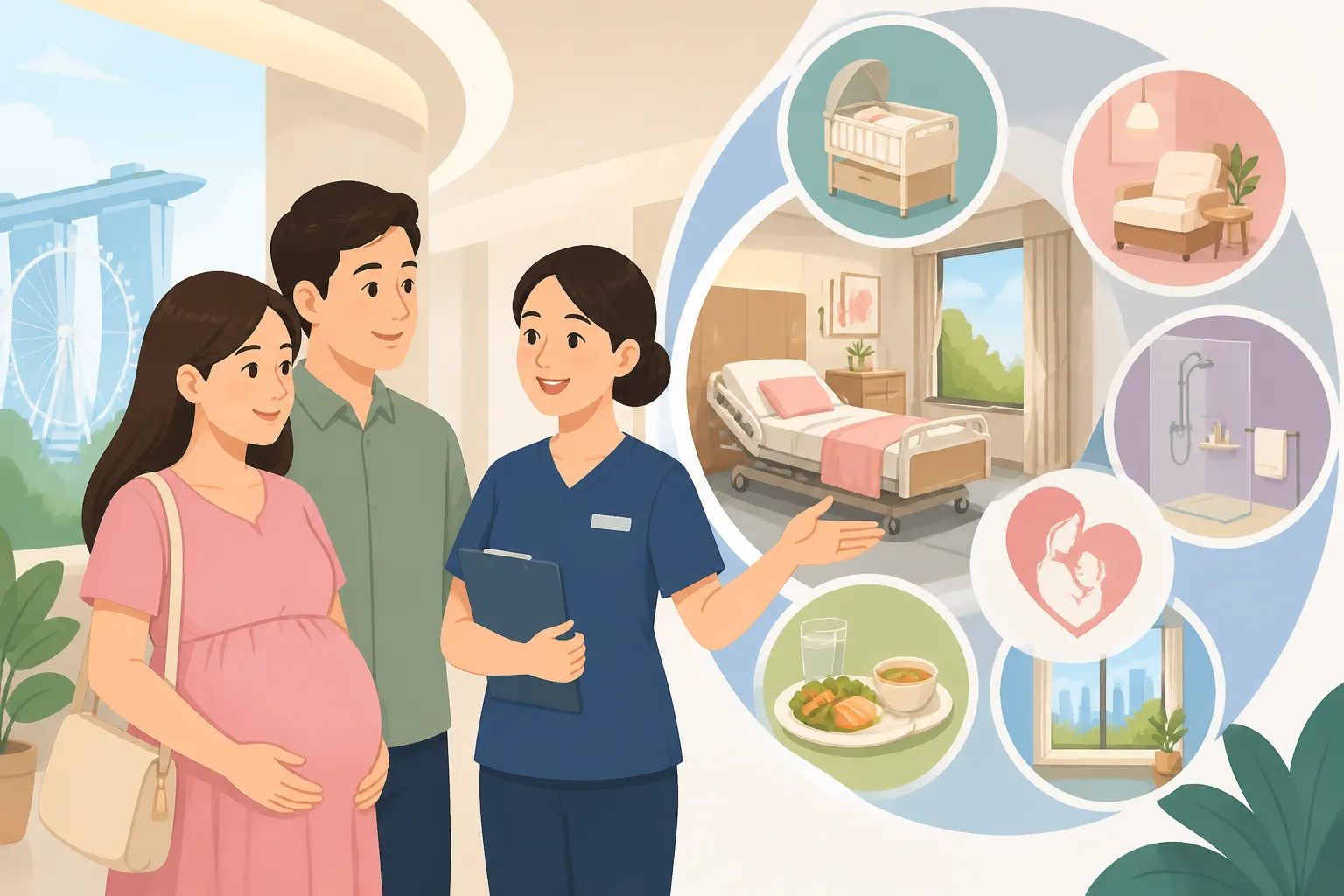
Maternity Hospital Tours: What to Look for When Choosing a Ward
Choosing a maternity ward in Singapore can feel like an overwhelming high-stakes game of Tetris, especially when you are navigating a healthcare system that treats foreigners differently than citizens. I remember the paralyzing anxiety of my first hospital tour, clutching a list of questions while wondering if I’d accidentally signed up for a five-star hotel stay instead of a medical procedure. This guide breaks down exactly what to look for during your maternity hospital tours to ensure your birth experience is safe, supported, and within budget.
Navigating the Singapore Maternity Landscape: Public vs Private
The first thing you’ll notice when you start your search is the stark divide between public and private institutions. In many countries, the "public" option is seen as a last resort; in Singapore, the public hospitals like KK Women's and Children's Hospital (KKH) or National University Hospital (NUH) are world-class, though they operate with a different rhythm than the private ones. As an expat, you must realize that you do not qualify for the subsidies that locals receive. You will be paying the "unsubsidized" rate, which often brings the cost of a public ward closer to a private room than you might expect.
When you walk into Mount Elizabeth, Gleneagles, and Raffles: Premium Private Hospitals, the atmosphere is distinctly "hospitality-first." The lobbies smell like lemongrass, the concierge is at your beck and call, and the rooms feel like luxury suites. On your tour, pay attention to the patient-to-nurse ratio. In private hospitals like Thomson Medical Centre or Gleneagles, you are paying for the luxury of having a nurse arrive almost the moment you press the call button. In public hospitals, while the medical care is impeccable, the nurses are often managing a higher volume of patients, and the environment is much more functional and brisk.
Another crucial factor for expats is the choice of your OBGYN. If you have a specific private doctor you’ve been seeing, they likely have "admitting privileges" at specific private hospitals. During your tour, ask which doctors are part of their resident team and how they coordinate with your private consultant. If you choose a public hospital, you may be assigned a team of doctors rather than one consistent face, unless you opt for the "Private Patient" scheme within the public system. Understanding the Singapore Healthcare System for Expats: Complete 2027 Guide is essential here, as the administrative paths for foreigners can be winding.
Essential Logistics: What to Ask During the Ward Tour
Once you are on the floor, look past the shiny surfaces and focus on the logistics of the labor and delivery process. Start with the delivery suites. Are they "LDR" (Labor, Delivery, and Recovery) rooms where you stay in one place, or will you be wheeled from a labor ward to a delivery room and then to a postnatal room? The latter can be quite jarring in the middle of active labor. Ask about the hospital’s policy on birth partners. In the post-pandemic era, most Singaporean hospitals allow one partner, but some private hospitals now offer "companion stay" packages where your spouse can stay overnight in a "lodger" bed.
Pay close attention to the neonatal facilities. While everyone hopes for a smooth delivery, you need to know what happens if things go sideways. Ask to see the Neonatal Intensive Care Unit (NICU). Public hospitals like KKH have the most robust NICUs in the country, often handling the most complex cases. If you choose a smaller private boutique hospital, ask about their transfer protocol. If your baby needs specialized care, which public hospital do they partner with, and how is the transport handled? For those with comprehensive plans like Cigna Global, these emergency transfers are often covered, but the logistical stress is something you want to map out beforehand.
Don't forget the "little" things that become big things after 48 hours of no sleep. Check the food menus. Singaporean hospitals are famous for their "confinement food"—a traditional Chinese diet designed to help mothers recover, often featuring lots of ginger, sesame oil, and red date tea. If you have specific dietary requirements or prefer a Western menu, see if the hospital can accommodate you. Also, check the bathroom facilities. A walk-in shower with a bench is a godsend after a C-section, whereas a high-rimmed tub can be a nightmare.
Comparing Room Types and Amenities
| Room Type | Average Vibe | Partner Stay? | Privacy Level |
|---|---|---|---|
| Single Room (Private) | Hotel-like, quiet | Yes (Lodger fee applies) | High |
| 2-Bedded Ward | Clinical but modern | Usually No | Moderate (Curtains only) |
| 4-Bedded Ward (Public) | Busy, functional | No | Low |
| Premier Suite | Luxury apartment | Yes (Included) | Absolute |
The Medical Vibe: Intervention Policies and Breastfeeding Support
Singapore has a relatively high rate of medical intervention compared to some European or Australian standards. During your tour, try to gauge the hospital’s "medical philosophy." If you are aiming for a natural birth with minimal intervention, ask about the availability of birth balls, telemetry monitoring (which allows you to move around while being monitored), and water birth facilities. Thomson Medical Centre and NUH are often cited as being more "natural-birth friendly," but this can change based on the specific nursing team on duty.
Breastfeeding support is another critical pillar. Most hospitals in Singapore are "Baby-Friendly Hospital Initiative" (BFHI) certified, meaning they strongly encourage skin-to-skin contact and breastfeeding within the first hour. On your tour, ask how many lactation consultants are on staff. Are they available 24/7, or only during office hours? In the haze of the first 24 hours, having a pro help you with the "latch" can be the difference between a successful breastfeeding journey and a stressful one. If you are a digital nomad or an expat who travels frequently, having a plan like SafetyWing can offer peace of mind for the baby's future travels, but the immediate postnatal support happens right there in the ward.
Ask about the "nursery policy" as well. Some hospitals encourage "rooming-in," where the baby stays with you 24/7. Others have a well-staffed nursery where you can send the baby if you desperately need four hours of uninterrupted sleep. There is no right answer here, but you need to know if the hospital’s philosophy aligns with yours. If you are planning on hiring help later, you might want to look into the Postpartum Confinement Culture in Singapore: Nannies and Care Centers to see how the hospital stay bridges into your home life.
Financial Transparency: Packages and Insurance Realities
This is the part that makes most expats break into a cold sweat. In Singapore, hospitals offer "Maternity Packages" which usually cover a 2-night stay for a normal delivery or a 3-night stay for a C-section. However, these packages are notoriously "leaky." They often exclude things like the anesthetist’s fee, the pediatrician’s fee, emergency medications, or neonatal tests like jaundice screening. On your tour, ask for a detailed "Estimated Bill" for a foreigner.
You must check if your insurance provider has a "direct billing" arrangement with the hospital. Companies like Cigna Global are widely recognized in Singapore’s private sector, allowing you to focus on the baby rather than the paperwork. If you are relying on a corporate plan, be sure to read the Understanding Corporate Health Insurance vs Personal Medical Plans guide, as many employer-provided plans have surprisingly low sub-limits for maternity. If the hospital doesn't offer direct billing, you will need to pay the deposit (which can be several thousand dollars) upfront and claim it back later.
Keep in mind that as an expat, you are likely excluded from local schemes like MediShield Life. This means your "out-of-pocket" risk is higher. During the tour, ask specifically about the costs of common "extras." How much is an epidural? What is the cost of an emergency C-section upgrade? What is the daily rate if the baby needs to stay in the NICU for an extra three days? Being prepared for the Cost of Giving Birth in Singapore: Natural vs C-Section Estimates will help you avoid "bill shock" on the day of discharge. For those who move between countries frequently, SafetyWing provides a flexible safety net, but for the specific, high-cost event of a Singaporean birth, a dedicated international health plan is often the better "hero" solution.
Final Preparations: Documentation and Admission
Once you’ve toured the facilities and picked your "winner," the administrative work begins. You will likely be asked to "pre-register." This involves submitting copies of your passport, Employment Pass (EP), and your marriage certificate (if applicable). If you are planning on Adding Family Dependants to Your Singapore Health Insurance Policy, you should start that conversation with your broker at least three months before the due date.
Ask the tour coordinator about the "Admission Kit." Most private hospitals provide almost everything: pajamas, basic toiletries, diapers, and even a "going home" outfit for the baby. Public hospitals are a bit more "bring your own." Knowing exactly what is provided helps you pack a leaner hospital bag, which is one less thing to worry about when the contractions start. Also, clarify the process for Emergency Medical Care in Singapore: Ambulances and A&E Wards. If labor starts at 3:00 AM, do you go to the main A&E, or is there a specific "High Dependency" or labor entrance you should use? Knowing exactly where to park and which elevator to take can save a lot of frantic searching in the middle of the night.
Finally, remember that the "vibe" matters. You will be at your most vulnerable in this building. If the staff during the tour seem rushed, dismissive, or if the ward feels chaotic, listen to your gut. You want a place where you feel like a person, not just a room number. Singapore offers some of the best maternal care in the world, so take the time to find the ward that feels like a safe harbor for your new family.
Disclaimer
This guide is for informational purposes only and does not constitute medical or financial advice. Healthcare regulations, hospital policies, and insurance coverage in Singapore are subject to frequent changes. Always consult with your medical practitioner and your insurance provider to confirm current costs, medical protocols, and coverage eligibility before making any healthcare decisions.