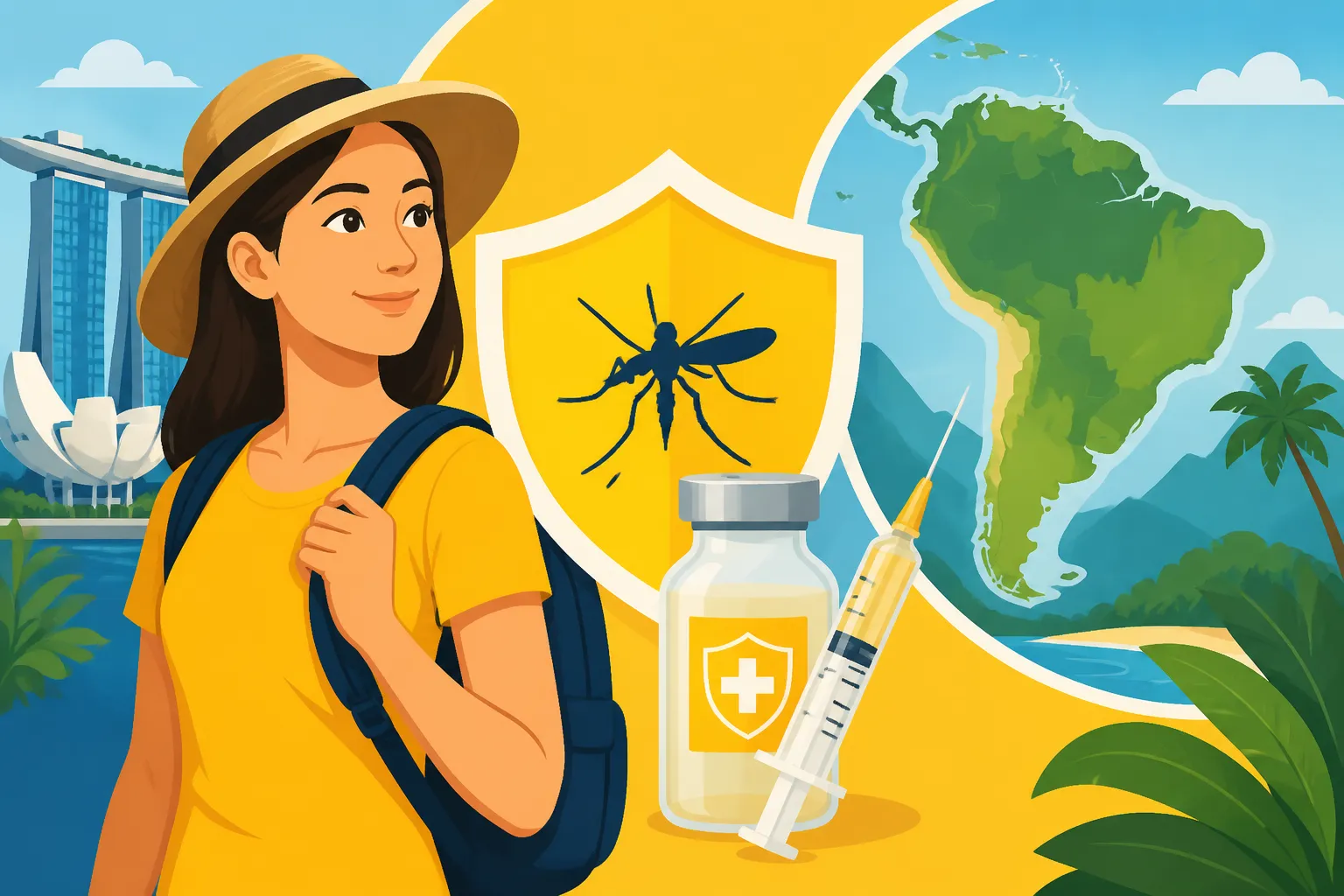
Where to Get the Yellow Fever Vaccine Before Traveling to South America
Planning a dream trip to the Amazon or the Andes only to realize you are missing a mandatory vaccination certificate is a stress no traveler needs. I remember the cold sweat I broke into just two weeks before a flight to Bogota when I discovered my childhood records didn't count for entry. This guide breaks down exactly where to secure your yellow fever shot and the essential "Yellow Card" in Singapore so your South American adventure stays on track.
Understanding Yellow Fever Requirements for Singapore Residents
If you are living in Singapore, you are residing in a country that takes tropical disease prevention extremely seriously. Because Singapore has the Aedes aegypti mosquito—the same vector that spreads Dengue and Zika—it is also a potential breeding ground for Yellow Fever if the virus were ever introduced by a traveler. Consequently, the Ministry of Health (MOH) and the Immigration and Checkpoints Authority (ICA) have stringent rules not just for where you are going, but for your return.
When you travel to certain parts of South America or Africa, you aren't just protecting yourself from a potentially fatal hemorrhagic fever. You are also ensuring you don't get quarantined upon your return to Changi Airport. If you arrive from a Yellow Fever endemic country without a valid International Certificate of Vaccination or Prophylaxis (ICVP), you could be isolated for up to six days. This is a massive administrative headache that can be easily avoided with a bit of foresight.
The vaccination is unique because it cannot be administered by just any neighborhood doctor. In Singapore, only clinics specifically licensed by the MOH to provide the yellow fever vaccine can issue the official WHO "Yellow Card." This certificate becomes valid only 10 days after the injection, which is a non-negotiable window you must account for in your itinerary. If you show up at a border in Peru or Brazil and your certificate is only eight days old, you may be denied entry or forced to pay for an on-site vaccination in less-than-ideal conditions.
Where to Get Vaccinated in Singapore
Finding the right clinic is the first hurdle. While Singapore has an incredible density of medical facilities, the yellow fever vaccine is a controlled substance. You need to look for designated travel clinics that carry the Stamaril vaccine and have the authority to stamp your ICVP.
Tan Tock Seng Hospital Travellers Health and Vaccination Clinic
Most long-term expats will point you toward Tan Tock Seng Hospital (TTSH). Their Travellers' Health & Vaccination Clinic (THVC) is widely considered the gold standard for anyone preparing for a trip to high-risk regions. They don't just give you a jab; they provide a comprehensive consultation that covers everything from malaria prophylaxis to altitude sickness.
The advantage of TTSH is their deep expertise. The doctors there are specialized in infectious diseases and stay updated on the latest outbreaks in South America. However, the downside is the wait time. You often need to book an appointment weeks in advance. If you are a last-minute traveler, this might not be your best bet. When navigating Finding Medical Care: Hospitals, Polyclinics, and GP Networks in Singapore, it is important to remember that public hospital specialist clinics like THVC operate differently than your local walk-in GP.
Raffles Medical and Private Travel Clinics
For those who value convenience and are willing to pay a premium, Raffles Medical Group offers yellow fever vaccinations at several of their larger hubs, most notably at Raffles Hospital in Bugis and their clinic at Changi Airport Terminal 3. This is often the preferred route for busy professionals who need an appointment outside of standard government hospital hours.
Private clinics like Raffles or Fullerton Health are generally more expensive than public options, but they often have better stock reliability and shorter waiting lists. If you are already looking into Expat Health Insurance in Singapore: Public vs Private Coverage, you might find that while routine vaccinations aren't always covered, the ease of access in the private sector is worth the out-of-pocket cost. These clinics are well-versed in the needs of the international community and provide a seamless experience for obtaining your "Yellow Card."
Specialized GP Networks and SATA CommHealth
There are also several accredited GP networks and non-profit organizations like SATA CommHealth that provide travel vaccines. These are excellent middle-ground options. SATA, for instance, has several locations across the island, including Bedok and Jurong, which might be more accessible if you live in the heartlands rather than the CBD.
Always call ahead to confirm they have the yellow fever vaccine in stock. Supply chain issues can occasionally affect availability in Singapore, and you don't want to waste a trip only to find out they are waiting on a shipment. This is part of the broader reality of Pharmacies and Medication in Singapore: Prescriptions and OTC Rules where certain specialized biologicals are held in limited quantities.
Cost Breakdown and What to Bring
The cost of a yellow fever vaccination in Singapore is not insignificant, especially when you factor in the consultation fee and the cost of the certificate itself. Since this is an elective travel vaccine, it is almost never covered by basic corporate insurance plans or Healthcare Budgeting in Singapore: Managing Out-of-Pocket Costs strategies focused on local care.
| Service Item | Public Hospital (TTSH) Estimate | Private Clinic (Raffles) Estimate |
|---|---|---|
| Pre-Vaccination Consultation | S$40 – S$60 | S$80 – S$120 |
| Yellow Fever Vaccine (Stamaril) | S$160 – S$190 | S$200 – S$250 |
| International Certificate (ICVP) | S$20 – S$30 | S$30 – S$50 |
| Total Estimated Cost | S$220 – S$280 | S$310 – S$420 |
When you head to your appointment, you must bring your NRIC or FIN card and your physical passport. The doctor needs your exact passport details to fill out the "Yellow Card." If there is a typo in your passport number on that certificate, it could be rendered invalid at international borders. It is wise to bring a record of your previous vaccinations if you have them, as the doctor might suggest other boosters, such as Typhoid or Hepatitis A, which are also relevant for South American travel. You can find more details on this in our guide on Routine and Travel Vaccinations: Preparing for Regional Asia Travel.
The 10-Day Rule and Medical Considerations
The yellow fever vaccine is a live-attenuated virus. This means your body needs time to process it and develop the necessary antibodies. International health regulations state that the certificate is only valid starting from the 10th day after the primary vaccination. If you are planning to visit the Colombian jungle or rural areas of Bolivia, this 10-day window is the difference between a smooth entry and a major problem.
Managing Side Effects
Because it is a live vaccine, some people experience mild flu-like symptoms about five to seven days after the injection. This can include a low-grade fever, muscle aches, or a headache. Expats are usually advised not to schedule their vaccination right before a major work presentation or a high-stress event. Give your body a weekend to rest.
If you have a pre-existing condition, you should discuss this thoroughly with the doctor. People over the age of 60 or those with compromised immune systems have a slightly higher risk of adverse reactions. In some cases, a doctor may issue a medical waiver if the vaccine is contraindicated for you, though a waiver is not always accepted by every country’s immigration department. This is where having a robust plan with Cigna Global can be helpful, as their comprehensive expat plans often provide better access to specialists who can navigate complex medical histories.
Coverage and Insurance for International Travel
While the vaccine protects your health, it doesn't protect your wallet from the other risks of South American travel, such as theft, flight cancellations, or non-yellow-fever-related illnesses. For digital nomads or those on shorter assignments, SafetyWing offers a flexible solution that covers medical emergencies and travel-related mishaps. It is a great safety net to have alongside your official vaccination papers.
If you are a long-term resident, you might want to review Understanding Corporate Health Insurance vs Personal Medical Plans to see if your current coverage includes any "Wellness" or "Vaccination" riders. While rare, some high-tier plans for executives do reimburse travel-related medical expenses.
Why the Certificate Lasts a Lifetime
One piece of good news for travelers is that as of 2016, the WHO updated its regulations to state that a single dose of the yellow fever vaccine provides life-long immunity. You no longer need a booster every ten years. This means your "Yellow Card" is a "one and done" document.
However, this makes the physical card incredibly valuable. If you lose that little yellow booklet, you may have to go through the entire vaccination process again just to get a new stamp, as many clinics do not keep digital records indefinitely. I recommend taking a clear photo of your certificate and uploading it to a secure cloud drive. If you are using the HealthHub App as a Foreigner with Singpass, check to see if your vaccination has been logged there, though international border agents will still insist on seeing the physical ICVP booklet.
Preparing for Entry Requirements in South America
Every country in South America has slightly different rules regarding Yellow Fever. For example, Brazil often "strongly recommends" the vaccine for certain states (like Minas Gerais or the Amazon region) but may not always mandate it for entry from Singapore. However, if you are traveling from Brazil into a country like Colombia or Panama, those countries will require the certificate because you are coming from an endemic zone.
The rules are fluid and can change based on local outbreaks. Before you fly, it is worth checking the latest requirements on the embassy websites of your destination countries. This is similar to how we stay updated on Singapore Visa and Immigration: The Complete Guide for Expats (2027)—the rules in 2026 are more digitized but no less strict.
Final Logistics and Travel Tips
Before you head to the clinic, make sure you have planned your full medical checklist. Travel to South America often requires more than just one shot. You might need to discuss:
- Malaria tablets (Malarone or Doxycycline)
- Dengue fever precautions (especially as Singaporeans are already familiar with Dengue Fever Prevention: Symptoms, Testing, and NEA Guidelines)
- Altitude sickness medication (Acetazolamide) for trips to Cusco or La Paz
- Rabies pre-exposure prophylaxis if you are doing extensive trekking
Securing your yellow fever vaccine is the most critical "gatekeeper" step for your journey. Once that is done and your 10-day countdown has started, you can focus on the more exciting parts of your trip, like booking treks or tasting local cuisines. Just remember to keep that yellow booklet safe with your passport—it is quite literally your ticket into (and out of) the continent.
Whether you choose the efficiency of Raffles Medical or the comprehensive care at TTSH, getting vaccinated in Singapore is a straightforward process as long as you plan. For those living here permanently, managing these tropical health requirements is just another part of the Expat Health Checklist for the First 30 Days in Singapore. Stay safe, get your jab early, and enjoy the incredible landscapes of South America.
Disclaimer
The information provided in this guide is for educational and informational purposes only and does not constitute medical or legal advice. Vaccination requirements and medical guidelines in Singapore and South America can change frequently. Always consult with a qualified healthcare professional or a specialized travel health clinic to discuss your specific medical history and travel itinerary before receiving any vaccinations. For the most current entry requirements, refer to the official embassy websites of your destination countries and the Singapore Ministry of Health.