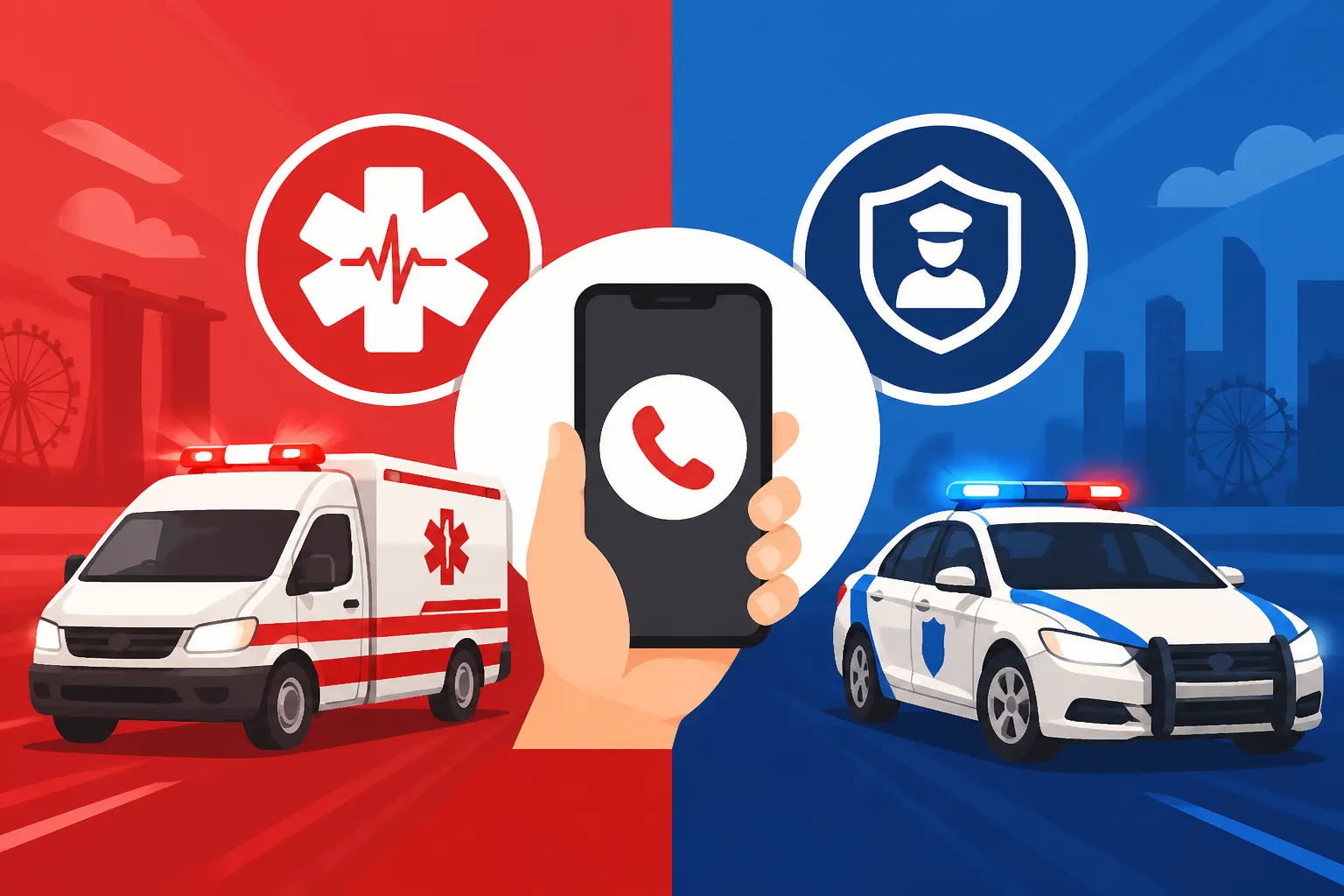
Emergency Numbers: Calling 995 for Ambulance and 999 for Police
Realizing you don’t know who to call when your child stops breathing or someone breaks into your apartment is a terrifying wake-up call for any expat. Many newcomers find themselves frozen with a phone in hand, realizing their home country’s emergency codes mean nothing here. This guide clarifies exactly when to dial 995, 999, or 1777 in Singapore.
The Lifeline: Understanding the 995 Emergency Ambulance Service
The number 995 is the most critical sequence of digits you will ever learn in Singapore. It connects you directly to the Singapore Civil Defence Force (SCDF) Operations Centre. This is the dedicated line for life-threatening medical emergencies and fire-related incidents. When you dial 995, you are activating a highly sophisticated network of paramedics and fire fighters who are trained to respond within minutes. However, as an expat, you must understand that the SCDF operates on a strict triage system. They are not a taxi service to your preferred doctor, and their primary goal is stabilization and transport to the nearest suitable government facility.
When you call 995, the dispatcher will ask a series of rapid-fire questions to determine the severity of the situation. This is where many newcomers feel flustered. You need to remain calm and provide your exact location, the nature of the emergency, and a contact number. In Singapore, the SCDF uses a tiered response system, meaning the type of vehicle sent—whether a Red Rhino, a fire engine, or a specialized ambulance—depends entirely on the information you provide. If you are struggling with the local accent or are in a state of shock, referring to What to Say When Calling 995: Scripts for Non-Native English Speakers can help you prepare for that high-pressure conversation.
Defining a Medical Emergency in the Eyes of SCDF
What you consider an emergency might differ from the SCDF’s technical definition. In Singapore, a 995-appropriate emergency includes conditions like cardiac arrest, unconsciousness, massive bleeding, severe respiratory distress, or major trauma from a fall or accident. If you call for something like a mild fever, a minor cut that has stopped bleeding, or a persistent cough, the paramedics may still arrive, but they will categorize the case as a non-emergency. This categorization has significant implications for your wallet and the resources available to others in genuine peril.
I remember once seeing a neighbor call 995 for a sprained ankle. While the paramedics were professional, they spent significant time explaining that her condition did not warrant an emergency response. This "education" is part of a broader national effort to keep emergency lines open for life-or-death situations. If you aren't sure if your situation qualifies, it is often better to err on the side of caution, but be prepared for the paramedics to advise you otherwise once they conduct an on-site assessment. For a deeper breakdown of what happens next, see Emergency Medical Care in Singapore: Ambulances and A&E Wards.
The Financial Penalty for Non-Emergency 995 Calls
One of the most surprising things for expats is that a 995 ambulance ride is technically free—but only if it is a genuine emergency. If the SCDF determines that your situation was not an emergency, you will be billed a significant fee, currently set at S$274 (though this is subject to periodic increases). This policy was implemented to discourage the misuse of emergency resources. For foreigners without local subsidies, these costs are entirely out-of-pocket unless covered by a robust plan like Cigna Global.
The bill for a non-emergency call will usually be sent to your registered residential address or handed to you at the hospital. It covers the deployment of the vehicle and the manpower involved. It is a steep price to pay for a lapse in judgment, so it is vital to understand the difference between urgency and an emergency. If you are worried about managing these unexpected costs, reading about Ambulance Fees: When Is a Ride Free and When Do You Pay? will give you a clearer picture of the financial landscape.
Protocol: Why You Can't Choose Your Hospital
This is perhaps the biggest "culture shock" for expats used to private healthcare. If you call 995, the SCDF ambulance will take you to the nearest "Public Hospital" equipped to handle your specific emergency. They will generally not divert to a private facility like Gleneagles or Raffles Hospital, even if you have premium insurance and your primary specialist is based there. The priority is getting you into a stabilization ward as fast as possible.
Once you are at a public facility like Singapore General Hospital (SGH) and Public Hospital Access for Expats, and your condition is stabilized, you can request a transfer to a private hospital. However, this transfer will be at your own expense and must be arranged via a private ambulance service. This is where having a flexible insurance provider like SafetyWing can be useful for those who prefer private care settings but find themselves in the public system due to an emergency.
Beyond Emergencies: When to Dial 1777
If you are facing a medical situation that requires transport but isn't life-threatening, do not call 995. Instead, Singapore uses the 1777 hotline for private ambulance services. Think of 1777 as the gateway to a fleet of private providers who operate outside the SCDF framework. This is the number to call if you need to transport an elderly relative to a scheduled appointment, move a patient between hospitals, or if you have a non-critical injury but cannot sit in a standard taxi or Grab car.
Using 1777 gives you much more control over the destination. Unlike 995, private ambulances will take you to whichever hospital you specify, including high-end private clinics. This is the preferred route for many expats who want to ensure they are treated within their preferred network from the moment they leave their doorstep. However, because these are private businesses, the fees are unregulated and can vary significantly based on the time of day, the distance traveled, and the level of medical equipment required on board.
Managing Non-Life-Threatening Transport
For situations like a broken arm (where the bone isn't protruding), a high but stable fever, or severe abdominal pain that doesn't suggest an appendix rupture, 1777 is your best bet. When you call, you will be connected to a dispatcher who coordinates with various private ambulance operators. You should ask for an estimated time of arrival (ETA) and a quote for the trip. During peak hours or monsoon rains, the wait for a private ambulance can be longer than an SCDF response, so keep that in mind.
I’ve used this service when a visiting relative had a severe gout flare-up. He couldn’t walk, but it certainly wasn’t a "995" moment. The private ambulance team arrived with a stretcher, navigated our narrow condo hallway with ease, and took him straight to the specialist we had phoned ahead of time. It was a seamless experience, though it did cost about S$150. For more on these distinctions, check out Non-Emergency Medical Transport: When to Use 1777 Instead of 995.
The Private Ambulance Network and Hospital Selection
When you opt for a private ambulance via 1777, you have the luxury of choosing premium institutions like those mentioned in Mount Elizabeth, Gleneagles, and Raffles: Premium Private Hospitals. These hospitals often have shorter waiting times at their Accident and Emergency (A&E) departments compared to public ones. If your insurance plan through Cigna Global covers private hospital stays, starting your journey in a private ambulance ensures there is no friction in the admissions process.
Private ambulances are also essential for "inter-facility" transfers. If you are currently in a public hospital but want to move to a private suite for better amenities or to be under a specific surgeon, the public hospital will not provide the transport. You (or your family) must call 1777 to arrange for a private crew to come and collect you. Always ensure the receiving hospital has a bed confirmed before you book the transport.
Policing and Safety: Calling 999 for Help
Singapore is famously one of the safest cities in the world, but emergencies still happen. The number 999 is the direct line to the Singapore Police Force (SPF). Like the ambulance service, 999 is reserved for "Emergency Police Assistance." This includes crimes in progress, situations where there is an immediate threat to life or property, or when a suspect is still in the vicinity.
The SPF is incredibly efficient, and the 999 operators are trained to handle a wide variety of calls. However, as an expat, it is important to distinguish between a "police emergency" and a "police matter." If you return home to find your apartment has been burgled, that is a 999 call. If you want to report a lost passport or a minor fender-bender where no one is hurt, there are other, more appropriate channels that keep the 999 lines clear for high-stakes interventions.
Immediate Response for Crimes and Safety
If you witness a fight, suspect a break-in, or feel you are being followed, dial 999 immediately. The police response time in Singapore is exceptionally fast. You should be prepared to provide a description of any suspects, their direction of travel, and any vehicle license plate numbers if possible. The operator will likely stay on the line with you until officers arrive on the scene.
Interestingly, 999 is also the number to call for serious traffic accidents involving injuries or significant damage to government property. If you are involved in a collision on the PIE or BKE, and someone is trapped or bleeding, calling 999 will often trigger a joint response from both the SPF and the SCDF. For those who enjoy the city’s nightlife, knowing that help is a 999 call away adds a layer of security, though you’ll find Safe Walking at Night: Why Singapore is Exceptionally Secure for Women generally holds true across the island.
Reporting Non-Urgent Matters and Noise
One common mistake expats make is calling 999 for neighbor disputes or noise complaints. While these are frustrating, they are rarely emergencies. For non-urgent police matters, the SPF encourages the use of the "Police Hotline" at 1800 255 0000. This is where you can provide information on a crime that happened in the past or seek advice on a dispute.
If you are dealing with a neighbor who is drilling at 2 AM, your first call should actually be to your condo’s security or the town council. If that fails, you can call the non-emergency police line. Using 999 for a noise complaint can lead to a polite but firm reminder from the operator about what constitutes an emergency. This separation of concerns allows the SPF to maintain its reputation for rapid response to high-priority threats.
Specialized Police Services and SMS 7199
In a forward-thinking move, Singapore also offers the 7199 SMS service. This is designed for situations where it is unsafe to speak—for example, during a domestic violence incident or a situation where a perpetrator is nearby and would hear a phone conversation. You can text your location and the nature of the help needed to 7199, and the police will treat it with the same urgency as a 999 call.
This service is a vital safety net for the vulnerable and is something every expat should save in their phone contacts. Additionally, the SPF has a strong presence in the digital world; you can report many minor crimes and lost property via their online portal or at a neighborhood police post (NPP). These physical kiosks are scattered throughout residential areas and are often automated, allowing you to file reports 24/7 without needing to wait for an officer.
Navigating the A&E and Hospital Triage Systems
Once you arrive at the hospital, whether by 995 or 1777, you will enter the triage system. This is the process where medical staff determine the priority of patients based on the severity of their condition. It is important to realize that arriving in an ambulance does not automatically put you at the front of the line. If your condition is stable, you may still have to wait while the doctors attend to "walk-in" patients who are in more critical condition.
Singapore’s public hospitals use a standardized triage scale, usually ranging from P1 (immediate life-saving intervention) to P4 (non-emergency). If you are a P3 or P4 patient at a public A&E, be prepared for a wait that can stretch into several hours, especially on weekends or public holidays. The efficiency is high, but the volume of patients in the public sector is immense.
Public Hospital A&E: The Triage Scale
In the public system, the triage process begins the moment you step through the door or are wheeled in. A nurse will take your vitals—blood pressure, heart rate, and oxygen levels—and ask about your pain levels. If you are classified as P1, you will be whisked into the resuscitation room immediately. If you are P2, you might wait 15–30 minutes. P3 patients, which include those with stable fractures or severe abdominal pain, often face the longest wait times.
Expats often find the public A&E environment a bit overwhelming due to the crowds. However, the quality of care is world-class. If you are using Singapore General Hospital (SGH) and Public Hospital Access for Expats, you are in one of the best-equipped facilities in Asia. Just remember that as a foreigner, you will be billed at the "Private" rate in a public hospital, which means you won't benefit from the subsidies available to citizens. To manage these records and your appointments, it's highly recommended to start Using the HealthHub App as a Foreigner with Singpass.
Private Hospital A&E: Speed, Comfort, and Costs
For many in the expat community, private A&E departments are the preferred choice. Facilities like Mount Elizabeth Novena or Raffles Hospital offer a much more "boutique" experience. The waiting rooms are quieter, the triage is often faster, and you are more likely to see a senior consultant sooner. However, this comes at a premium. A simple visit to a private A&E can easily start at S$300 just for the consultation, before any tests or medications are added.
If your insurance, such as SafetyWing, covers private outpatient emergency visits, the cost is manageable. Without insurance, a night in a private A&E with diagnostic tests like an MRI or CT scan can easily run into the thousands. It is always wise to have your insurance card and a form of identification (Passport or FIN) ready. For a detailed comparison of these facilities, see A&E Departments: Triage Systems and Payment at Public vs Private Hospitals.
| Number | Service | Best For | Cost for Expats |
|---|---|---|---|
| 995 | SCDF Emergency | Life-threatening situations (Stroke, Heart Attack) | Free for emergencies; S$274+ for non-emergencies |
| 999 | Police Emergency | Crimes in progress, immediate danger | Free |
| 1777 | Private Ambulance | Non-life-threatening transport to specific hospitals | Variable (S$100 – S$500+) |
| 1800 255 0000 | Police Hotline | Reporting non-urgent crimes or disputes | Free |
| 7199 | Emergency SMS | When you cannot safely speak to the police | Standard SMS rates |
| 1767 | Samaritans (SOS) | Mental health crisis and suicide prevention | Free |
Financial Preparedness for Emergency Care
The administrative side of an emergency in Singapore can be as stressful as the medical side. Unlike some countries where billing happens weeks later, Singaporean hospitals—both public and private—often require some form of financial commitment upfront. If you are being admitted, you will be asked for a deposit or a "Letter of Guarantee" (LOG) from your insurance provider.
This is where the difference between international and local insurance becomes stark. Premium providers like Cigna Global are well-recognized by Singaporean hospitals, and they can often issue an LOG quickly, allowing for "cashless" hospitalization. If you are on a more basic travel plan or a lower-tier local plan, you might be required to pay the deposit (which can range from S$5,000 to S$20,000) on your credit card and claim it back later.
Out-of-pocket costs for Foreigners
As an expat, you are effectively a "private patient" regardless of the hospital type. This means every bandage, every pill, and every minute of a doctor’s time is itemized and charged. In a public hospital A&E, the flat fee usually covers the basic consultation and some nursing care, but specialized scans or specialists called in from other departments will add to the bill.
It is wise for new arrivals to keep a credit card with a high limit specifically for medical emergencies. Even if you have the best insurance in the world, the time it takes for an insurance company in another time zone to send a Letter of Guarantee can sometimes be longer than the hospital is willing to wait before asking for a deposit. Being financially prepared prevents the added trauma of credit card declines while you are in the waiting room.
Deposit Requirements and Payment Methods
Hospitals in Singapore accept a wide range of payment methods, including major credit cards, PayNow, and bank transfers. If you are a Permanent Resident, you might be able to use your MediSave to offset some costs, but for Employment Pass holders, this is generally not an option.
When you are at the registration counter, ask for an "Estimated Bill." Singaporean hospitals are quite good at providing a financial counseling session early in the admission process. This document will outline the expected costs based on your diagnosis. If the numbers look scary, this is the moment to contact your insurance broker. For more on managing the long-term mental health impact of such stressful events, Mental Health in Singapore: Counseling, Psychiatry, and Expat Support offers excellent resources for the community.
Mental Health and Social Crisis Support
Not every emergency is physical or criminal. Mental health crises are a significant concern for the expat community, often exacerbated by the isolation of living away from home. If you or someone you know is experiencing a mental health emergency, such as suicidal ideation or a severe breakdown, there are specialized numbers that provide more targeted help than 995 or 999.
The Samaritans of Singapore (SOS) operate a 24-hour hotline at 1767. This service is staffed by trained volunteers and professionals who provide a listening ear and crisis intervention. For more acute psychiatric emergencies, the Institute of Mental Health (IMH) has a 24-hour Emergency Helpline at 6389 2222. If the situation is violent or involves self-harm in progress, 995 is still the appropriate number to call to ensure physical safety first.
Accessing the Samaritans of Singapore (SOS)
The SOS is a crucial resource for the expat community. Living in a high-pressure environment like Singapore can lead to burnout and depression. The SOS hotline is confidential and provides a safe space to talk. They also offer CareText services via WhatsApp (9151 1767) for those who prefer texting over talking.
One thing I’ve noticed is that expats often hesitate to call because they fear it might affect their work pass or reputation. In Singapore, seeking help from a crisis hotline is confidential. These organizations are there to support you, not to report you. If you are feeling the weight of expat life, don't wait for it to become an emergency before reaching out.
The IMH Crisis Helpline for Psychosis and Severe Distress
For situations involving psychosis, severe mania, or an inability to function, the IMH Emergency Helpline is the gold standard. They can provide immediate clinical advice and, if necessary, direct you to their specialized A&E in Hougang. While IMH is a public facility, it is the primary center for psychiatric emergencies in the country.
Managing these situations requires a delicate touch. If you are calling for a friend or colleague, try to have their basic information and a history of any medications they are taking ready. This information is vital for the medical team to provide the right intervention. For a broader look at the support networks available, refer to Mental Health in Singapore: Counseling, Psychiatry, and Expat Support.
Disclaimer
The information provided in this guide is for general informational purposes only and does not constitute legal or medical advice. Emergency protocols, contact numbers, and hospital fees in Singapore are subject to change by the Singapore Civil Defence Force, Singapore Police Force, and Ministry of Health. Always verify the latest numbers and procedures with official government sources. The author and publisher are not responsible for any actions taken based on this content. In a life-threatening emergency, dial 995 immediately.


