Changing Locks on a Rental Property: Is It Allowed?
One of the first anxieties many expats feel when they finally get the keys to their new apartment in Singapore isn't just about the move itself, but a quiet, nagging thought: "Who else has keys to this place?" You've just unpacked, probably ordered some hawker food, and now you’re wondering if changing the locks for a fresh start is even an option. This guide will walk you through the realities, rules, and best practices surrounding lock changes in your Singapore rental, helping you maintain peace of mind without running afoul of your landlord or the law.
The Tenancy Agreement: Your Unbreakable Contractual Bond
When you sign a tenancy agreement (TA) in Singapore, you're not just agreeing to pay rent; you're entering into a detailed legal contract that outlines your rights and, more importantly, your responsibilities as a tenant. This document is the cornerstone of your rental relationship, and it almost always has explicit clauses about making any alterations to the property – locks included.
The Standard "No Alterations" Clause
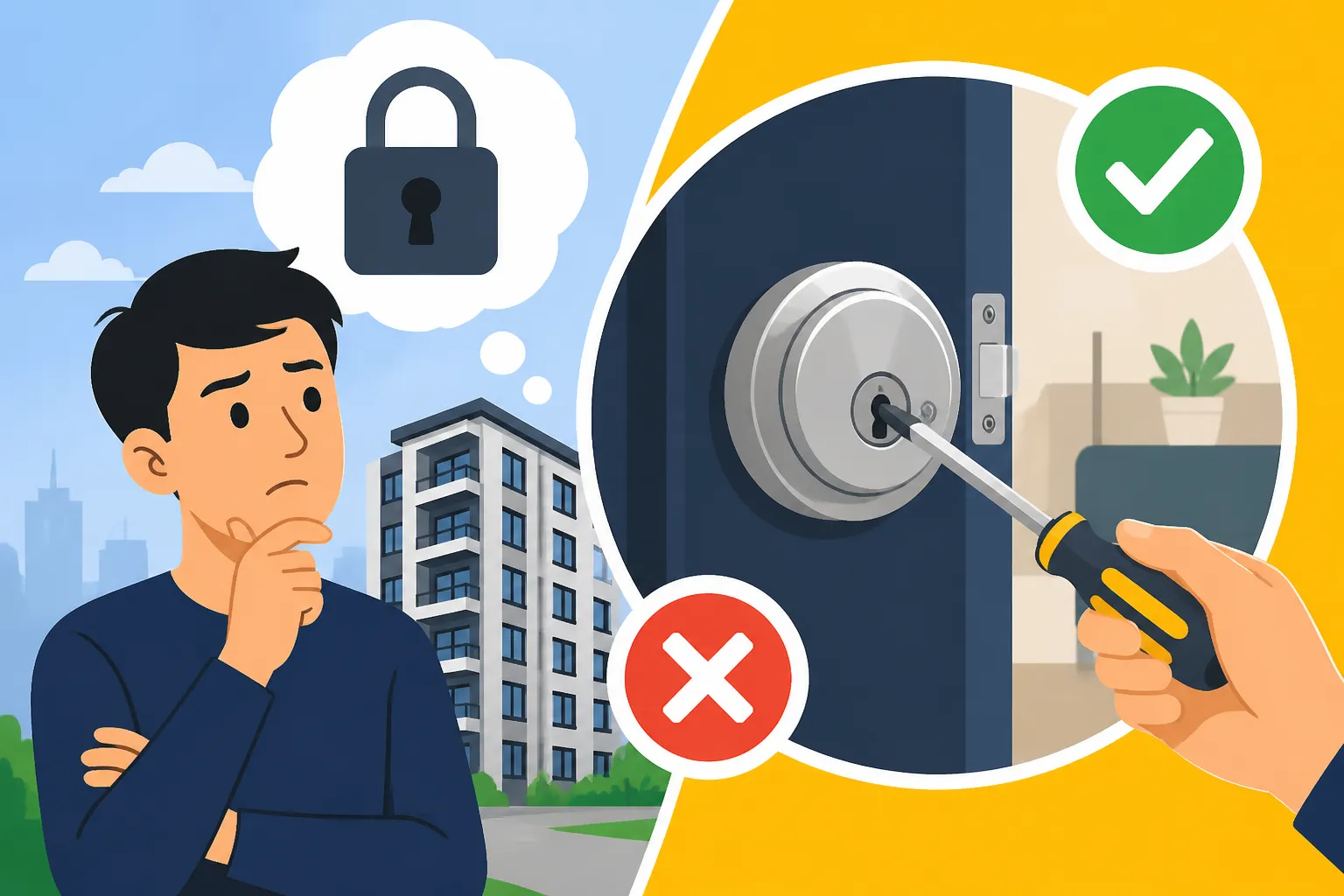
It's pretty standard practice here in Singapore for tenancy agreements to contain a clause that strictly prohibits tenants from making any alterations, additions, or improvements to the property without the express written consent of the landlord. This isn't just a suggestion; it's a legally binding condition. Changing the locks, even if it seems like a minor adjustment, falls squarely under "alterations" because it modifies the fundamental security mechanism of the property.
Landlords have very good reasons for this stance. Firstly, they need to maintain control over access to their property. In emergency situations, like a burst pipe or a fire, they (or their appointed agent) need to be able to enter quickly. If the locks have been changed and they don't have a key, it creates a huge liability and could lead to significant property damage that could have been prevented. Secondly, the landlord might have specific types of locks or master key systems in place for convenience, insurance purposes, or for managing multiple properties. Changing these could disrupt their system, costing them time and money to revert or update. Lastly, they need to ensure the security of future tenants. If locks are changed haphazardly or with sub-standard equipment, it might compromise the property's overall security down the line.
Understanding Your Rights (or Lack Thereof)
As a tenant, your rights are largely defined by what's stipulated in your Tenancy Agreement and the broader common law governing landlord-tenant relationships in Singapore. When it comes to changing locks, your "right" is usually limited to what the landlord permits. If your TA states no alterations without consent, then unilaterally changing the locks is a breach of contract.
What are the consequences of such a breach? Well, it can range from a stern warning and a demand to restore the original locks at your own expense, to the forfeiture of your security deposit, or even legal action for damages. Imagine you've paid a hefty two-month security deposit – easily S$8,000 to S$20,000 for many expats – losing that over a lock change would be a painful lesson. It’s also crucial to remember that disputes can escalate. If you refuse to comply, the landlord could potentially serve you a notice to vacate the premises, leading to a much bigger headache than you anticipated. This is why it’s so important to fully understand your Tenancy Agreements: The Diplomatic Clause and Breaking Your Lease before you sign on the dotted line, and certainly before you make any changes.
Why Expats Want to Change Locks: Unpacking Valid Concerns
It’s completely understandable why the thought of changing locks crosses many expats' minds. You're in a new country, often far from your established support networks, and security is a primal need. These aren’t just fleeting thoughts; they often stem from very real concerns.
Security Fears and Past Experiences
Many of us come from countries where changing locks between tenants is standard practice, or where the idea of previous occupants or even strangers having access to your home is unsettling. The mental image of a whole host of people—previous tenants, their domestic helpers, old contractors, agents, cleaners—potentially having copies of your keys can be genuinely unsettling. You've just poured your life into boxes and shipped it halfway across the world, setting up your new home in Singapore, and the thought that someone else might still have a key to your sanctuary is a significant source of anxiety.
I remember when I first moved here, my biggest worry was whether the previous tenant, who I knew had a few issues, had truly returned all their keys. Singapore is incredibly safe, arguably one of the safest cities in the world, and property crime rates are low. However, that doesn't erase the deeply ingrained sense of personal security many of us bring from our home countries. It's not about distrusting Singapore; it's about trusting the unknown history of your specific rental unit. This desire for a fresh start and complete peace of mind, knowing only you and your immediate family have access, is a very natural human response.
Practical Concerns and Access Issues
Beyond the psychological aspect, there are practical reasons too. What if you lose your keys? It happens to the best of us. Having a unique, new lock installed means that if you misplace your set, you know the security of your home isn't compromised by a lost key floating around that someone else might find and use. Instead, you'd just get a new set cut.
The typical process in Singapore if you lose your keys involves informing your landlord or agent, who will then likely arrange for a locksmith. Depending on your Tenancy Agreement, the cost of replacing or re-keying the lock often falls squarely on the tenant. This can be a substantial sum. If you had changed the locks yourself, it might simplify the process in case of a loss – but it would also mean you've already breached your contract. It's a tricky situation. Furthermore, modern properties often have electronic access cards or smart locks, which add another layer of complexity. Managing these digitally can be daunting, especially if you're traveling and need to grant access remotely. Ensuring your phone has proper roaming data with a service like Airalo can be crucial for staying connected to smart home systems or your landlord in such scenarios.
The Proper Channels: How to Request a Lock Change in Singapore
Given that simply going ahead and changing the locks is a big no-no, what's the correct way to approach this if you genuinely feel a security risk or just crave that extra peace of mind? The answer, like with most things in Singapore, involves clear communication and following protocol.
The Power of Written Communication
Your first step, and really, your only legitimate step, is to initiate a formal request with your landlord or their appointed property agent. And by "formal," I mean in writing. An email, a message on a traceable platform (like WhatsApp if you screenshot the conversation for your records), or a formal letter, is paramount. This creates a paper trail, protecting you if there's any misunderstanding later on.
In your request, be clear, concise, and polite. Explain your reasons for wanting a lock change without being accusatory. For instance, instead of saying, "I don't trust the previous tenants," you might say, "For our complete peace of mind and enhanced security, we would feel much more comfortable if the main door lock cylinder could be changed." You can also suggest solutions, like offering to bear the full cost of the new lock and its installation, and assuring them that you will provide them with a full set of new keys. Sometimes, offering to revert the locks to the original state (if the landlord keeps the original cylinder) or providing an equivalent upon moving out can also sway them.
Remember, landlords are business owners. They are often concerned about costs and maintaining their asset. If you frame your request as a minor enhancement you’re willing to fund, rather than a demand or an implication of their negligence, you're much more likely to get a positive response.
When a Landlord Might Agree (or Be Obligated)
While landlords are generally not obligated to change locks unless there's a demonstrable security breach or a clause in the TA explicitly stating this, they might agree under certain circumstances:
- Demonstrable Security Risk: If there has genuinely been a break-in (rare in Singapore, but not impossible) or a documented incident involving unauthorized access, the landlord would likely agree, and potentially even cover the cost. You can learn more about Everyday Rules and Etiquette: Fines, Laws, and Social Norms which generally contribute to Singapore's high safety.
- Documentation of Previous Tenant Issues: If the landlord themselves had issues with a previous tenant, or if a master key was compromised, they might be more amenable.
- Minor, Reversible Changes: Sometimes, simply changing the cylinder of a common door lock is an easy, low-cost solution. If you propose this, offer to give them the old cylinder so it can be swapped back when you leave, ensuring the original lock is preserved.
- New Property/First Tenant: If you're the very first tenant in a brand-new property, the concern about previous occupants is moot. However, if the landlord has used many contractors during the fit-out, your security concerns might still be valid, and they might agree to a change for good tenant relations.
- Building Rapport: A good relationship with your landlord or agent can go a long way. If you’ve proven to be a reliable, responsible tenant, they might be more flexible. For a smooth relocation, leveraging services like Sirelo can sometimes help in connecting with reliable local property agents who understand these nuances and can mediate effectively.
It's also worth noting that some Tenancy Agreements actually require the tenant to replace the lock if keys are lost. In such cases, the landlord may be more open to a change, provided you cover the costs and provide them with new keys.
Alternatives and Best Practices for Security in Your Singapore Home
So, what if your landlord says no to a lock change? Don't despair! There are plenty of ways to enhance your home security and peace of mind without breaching your contract or incurring extra costs and hassles.
Enhancing Security Without Changing Locks
Singapore is exceptionally safe, but a little extra caution never hurts, especially when it comes to your home. If you can't change the main lock, consider these alternatives:
- Add an Internal Security Chain or Bolt: Many doors already have these, but if yours doesn't, you could ask your landlord if you can install one. These are typically surface-mounted and don't permanently alter the door or frame significantly. They offer a strong deterrent from the inside.
- Portable Door Locks: These are ingenious devices that you can install from the inside without any tools or permanent fixtures. They fit into the strike plate of your door frame and provide an extra layer of security that cannot be opened from the outside, even with a key. Perfect for expats who travel frequently and want peace of mind while away, or for an added sense of security at night.
- Door and Window Sensors: Battery-operated contact sensors are affordable and can be placed on doors and windows. They alert you (via an app or a loud alarm) if opened. Again, no permanent installation required, making them ideal for rental properties.
- Indoor Security Cameras: Discreet Wi-Fi cameras can be placed facing your entry points or valuable items. These don't affect the physical structure of the property and allow you to monitor your home remotely. Always inform your landlord if you're installing anything like this, especially if it involves drilling or external wiring, though most indoor, plug-and-play models are fine.
- Safe Deposit Box: For genuinely valuable documents, jewellery, or sentimental items, consider using a small personal safe that is securely bolted down (with landlord permission) or a portable one that you can discreetly store. Alternatively, many banks offer safe deposit box services.
- Good Neighbour Relations: This might sound old-fashioned, but building a friendly relationship with your neighbours is an excellent security measure. They’ll be more likely to notice unusual activity around your unit if they know you.
It’s about layers of security. While a new lock cylinder gives psychological comfort, these non-invasive measures provide tangible protection that won't land you in a dispute with your landlord or impact your Initial Rental Costs: Security Deposits, Stamp Duty, and Advance Rent when it comes time to move out.
Moving In and Out: Lock Protocols
To avoid any issues from the get-go, be proactive during your move-in and move-out process regarding locks and keys.
When you're Moving In: Conducting the Handover Inventory and Defect Check, make sure the handover process includes a detailed accounting of all keys and access cards. List exactly how many sets you receive. This should be part of the inventory checklist. If there's any ambiguity, ask for clarification and get it in writing. "We received two sets of physical keys and two access cards for the main door" is a good statement to have in your record.
At the end of your tenancy, when it's time for Getting Your Deposit Back: Navigating End-of-Lease Cleaning and Disputes, you will be expected to return all keys and access cards that were provided to you at the start of the lease. If you've lost any, you will likely be charged for replacements or, worse, for changing the locks to ensure the property's security for the next tenant. If you did manage to get your landlord’s permission to change the locks, ensure you follow through on any agreement to revert them or provide all necessary keys for the new setup. Documenting everything, including photos of the locks before and after, can save you from potential disputes, especially those that might end up at the How to Fight an Unfair Deposit Deduction at the Small Claims Tribunal. Being thorough here also helps you avoid deductions for things like "missing keys" that were never actually provided to you in the first place, or for issues that fall under What Constitutes "Fair Wear and Tear" in a Singapore Apartment?.
Always prioritise open communication and respect the terms of your Tenancy Agreement. This approach will make your Singapore rental experience much smoother and stress-free.
| Action | Risk Level | Potential Consequences | Best Practice |
|---|---|---|---|
| Changing locks without landlord's consent | High | Breach of contract, loss of security deposit, legal action, forced restoration. | Never do this. |
| Requesting a lock change in writing | Low | Landlord may refuse, but no penalty for asking. | Always ask first, state reasons, offer to pay, provide new keys. |
| Installing non-invasive security (e.g., portable lock, sensor) | Very Low | No alteration to property, easily removed. | Generally acceptable, but inform landlord if unsure or if it's visible externally. |
| Losing keys | Medium | Cost of replacement/re-keying deducted from deposit. | Report immediately to landlord/agent, document. |
| Documenting key handover at move-in/out | None (Beneficial) | Clear record protects against future disputes over missing keys or unauthorized changes. | Mandatory practice. Take photos, get signed confirmation. |
Disclaimer
The information provided in this article is for general guidance only and does not constitute legal advice. While efforts have been made to ensure accuracy based on general Singapore rental practices, tenancy laws can be complex and specific to your individual Tenancy Agreement. Always consult with your landlord, property agent, or a legal professional for advice tailored to your specific situation.