Transferring a Fiber Internet Contract to a New Tenant to Avoid Penalty
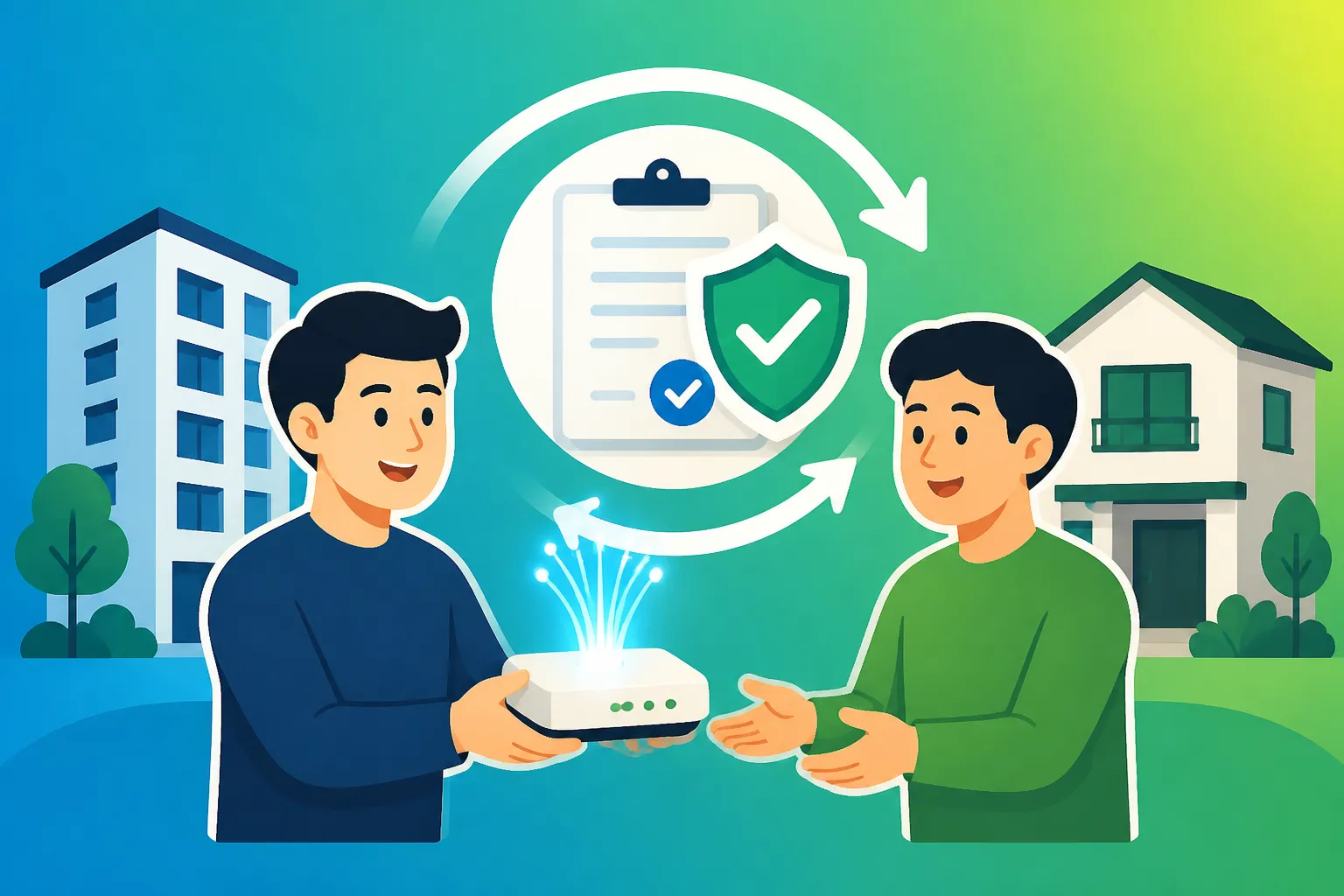
Ah, the joys of moving house in Singapore, right? It’s never just about packing boxes and hiring a mover; it’s a whole dance with contracts, deposits, and endless paperwork. One of the sneakiest costs that often catches expats off guard when they’re relocating within the city-state or leaving altogether is that pesky fiber internet contract early termination fee. This guide is here to walk you through the labyrinthine process of potentially transferring your fiber internet contract to a new tenant, saving you a hefty penalty fee.
The Sticky Wicket of Early Termination Penalties
Let's face it, nobody enjoys paying extra, especially when it's for a service you won't even be using anymore. Singapore's telecom providers are notorious for their ironclad contracts, typically 12-month or 24-month commitments for fiber broadband. If you decide to pack up and move before your contract is up, be it across the island or across continents, you’re usually staring down a significant early termination penalty. This fee can range from a prorated amount of your remaining contract value to a fixed sum, often running into hundreds of dollars. For someone already grappling with the costs of an international move, perhaps with Sirelo handling the logistics, that’s just another unwelcome expense.
The frustration is palpable. You signed up for a great deal, probably tied into a fantastic bundle when you first arrived, and now circumstances have changed. Maybe your job moved you to a different country, or you found a new apartment that just doesn’t make sense with your current provider’s coverage or installation timeline. Whatever the reason, suddenly, that budget-friendly internet plan is threatening to drain your wallet. It feels unfair, especially when you’re leaving the country and won’t benefit from the service at all. This is where the idea of transferring your contract to a new tenant can become a true lifeline, potentially saving you a significant sum.
Why Telecom Providers Charge Early Termination Fees
It’s easy to feel personally targeted by these fees, but from the telecom provider’s perspective, there’s a method to the madness. Installing fiber broadband involves a significant upfront investment in infrastructure, equipment, and technician time. When they offer you a long-term contract, they're essentially spreading that cost out, banking on your consistent payments over the agreed period. If you bail early, they lose out on that projected revenue and might even incur costs to dismantle or repurpose equipment.
Think about it: they gave you a discounted rate on installation, maybe even threw in a free router or a streaming device, all predicated on you staying for two years. When you leave after one, they haven't recouped their initial investment. The early termination fee, while painful for us, is their way of recovering some of those losses and discouraging customers from hopping between providers purely for short-term deals. It’s a business model, not a personal vendetta, but it certainly feels personal when you’re staring at the bill. Understanding this, however, can help frame your approach when negotiating with them, as it shows you comprehend their underlying concerns.
The Financial Impact of Breaking an Internet Contract
Let's do some quick back-of-the-napkin math to really hit home the financial sting. Say you’re on a 24-month fiber plan costing S$49.90 a month. You're 18 months in, so you have six months remaining. Some providers charge a flat fee of, say, S$200-$300. Others might charge you the remaining months' subscription fees, which in this hypothetical would be 6 x S$49.90 = S$299.40. That's almost S$300 that could have gone towards your security deposit for your next rental, or even a nice farewell dinner with friends.
This is on top of other moving-out expenses you're likely facing, such as Terminating SP Group Utilities and Claiming Your Initial Deposit, Getting Your Deposit Back: Navigating End-of-Lease Cleaning and Disputes, and various other administrative hurdles. Every little bit saved helps, and preventing an internet penalty could free up cash for other critical moving necessities. It's truly a no-brainer to explore every avenue to avoid these charges.
Is Transferring Your Internet Contract Even an Option in Singapore?
Okay, so now that we’ve established why these fees exist and how much they can hurt, let's get to the crux of it: can you actually transfer your fiber internet contract to a new tenant? The short answer is: sometimes, but it’s not always straightforward, and it heavily depends on your specific telecom provider and their current policies. Unlike some other utilities where a simple change of occupant can be arranged, internet contracts often involve a full reassessment of the new customer's eligibility.
The key is that the "transfer" isn't usually a direct handover of your exact contract terms and conditions. Instead, it's more like a new tenant agreeing to take over the service at the same address under new terms while simultaneously releasing you from your obligation. This nuance is crucial because it means the new tenant still needs to qualify as a new subscriber, and their chosen plan might not be identical to yours. However, from your perspective, the outcome is the same: you’re off the hook for the early termination fee.
Provider Policies: A Mixed Bag
Singapore has several major fiber internet providers: Singtel, StarHub, and MyRepublic are the big three, with others like ViewQwest and M1 also in the mix. Their policies on contract transfers (or "change of ownership" as they often call it) can vary quite a bit.
- Singtel: Historically, Singtel has been open to "transfer of ownership" for residential broadband services, but it usually involves the new party taking over the line and establishing a new contract with Singtel. The new party needs to go through their credit checks and sign up for a plan that may or may not be the same as yours. It's less a direct transfer of your contract and more a new subscription that allows you to exit yours without penalty.
- StarHub: StarHub also generally facilitates change of ownership. Similar to Singtel, the new owner will enter into a new contract with StarHub. They will assess the new applicant’s creditworthiness and offer available plans. The existing subscriber (you) gets released from the contract, provided all conditions are met by the new applicant.
- MyRepublic: Known for their more flexible approach in the past, MyRepublic might have slightly more accommodating options for transferring services, but again, the new subscriber will almost certainly sign a fresh agreement with them.
It's vital to check directly with your specific provider. Don't rely on old forum posts or anecdotal evidence from five years ago. Call their customer service line, be polite but firm, and ask explicitly about their "change of ownership" or "contract transfer" policies for residential fiber broadband. Keep in mind that policies can change without much notice, so what was possible last year might not be today.
| Internet Provider | General Stance on Contract Transfers (Residential) | Key Considerations for New Tenant | Potential Benefit for Outgoing Tenant |
|---|---|---|---|
| Singtel | Generally permits "Change of Ownership" | New contract, credit check, plans may differ | Avoids early termination penalty |
| StarHub | Generally permits "Change of Ownership" | New contract, credit check, plans may differ | Avoids early termination penalty |
| MyRepublic | Often flexible, but new contract required | New contract, credit check, plans may differ | Avoids early termination penalty |
| M1 | Typically requires new subscriber sign-up | New contract, credit check, plans may differ | Avoids early termination penalty |
| ViewQwest | Policies vary; direct discussion needed | New contract, credit check, plans may differ | Avoids early termination penalty |
Disclaimer: Information in this table is based on general understanding and common practices. Specific terms and conditions, as well as eligibility criteria, are subject to the individual provider's policies at the time of inquiry.
Common Hurdles You Might Encounter
Even if your provider allows for a transfer, it’s not a guaranteed walk in the park. Here are some common obstacles:
- New Tenant's Eligibility: The prospective new tenant needs to pass the provider’s credit checks, just like any new customer. If they have a poor credit history or are very new to Singapore, they might be rejected, and then you’re back to square one.
- Matching Plans: The new tenant might not want your exact plan. They might need a different speed, a different bundle of services (e.g., no landline, different TV package), or they might find a cheaper "new customer" deal elsewhere. This can complicate the "transfer" process, as the provider might insist on the new tenant signing up for one of their current offerings, rather than just seamlessly stepping into your old one.
- Timing: The transfer process takes time. You'll need to coordinate with the new tenant and the telco. If you're rushing to leave Singapore, this might not be feasible. Plan for at least 1-2 weeks for the process, assuming all goes smoothly.
- Equipment: What about the router, ONT (Optical Network Terminal), or any other equipment provided? Some might be leased and must be returned, while others might become the property of the new tenant. Clarify this to avoid unexpected charges.
- Bundled Services: If your fiber internet is part of a larger bundle (e.g., with mobile lines, TV packages), it becomes significantly more complex. The new tenant likely won't want your mobile plan, and unbundling can trigger separate termination fees for the other services. Focus on transferring the internet line only if possible.
It's really about managing expectations. A true "transfer" where the new tenant simply steps into your existing shoes with the same contract terms is rare. It's usually a mutually beneficial arrangement where the telco gets a new customer, and you get released from your obligation.
The Nitty-Gritty: How to Initiate a Transfer
So, you’ve decided to go for it. You’re ready to try and transfer that contract. Here’s a step-by-step guide to navigating this process, hopefully saving you that early termination fee.
Step 1: Contact Your Internet Service Provider (ISP)
This is your first and most crucial step. Don't assume anything. Call Singtel, StarHub, MyRepublic, or whoever your provider is.
- Be clear and polite: Explain your situation: you're moving out of your current address, and a new tenant is moving in. You'd like to explore the possibility of transferring the fiber broadband service to them to avoid an early termination fee.
- Ask about their "change of ownership" or "contract transfer" policy for residential broadband.
- Inquire about specific requirements: What documents are needed from you? What does the new tenant need to provide? Is there a processing fee?
- Understand the process: Will the new tenant be taking over your existing plan, or will they need to sign up for a new one? How long does it typically take?
- Get it in writing (if possible): If they confirm it's possible, ask for an email outlining the steps and requirements. This provides a paper trail, which is always good in Singapore's administrative landscape.
They might tell you it's not possible or try to guide you towards an early termination. Be persistent and reiterate your goal of avoiding the fee by facilitating a new subscriber at the same address. Sometimes, the first customer service representative isn't fully aware of all options.
Step 2: Find a Willing New Tenant
This is often the trickiest part. You need someone genuinely interested in taking over the internet service.
- Coordinate with your landlord or property agent: They are your best allies here. Inform them of your intent to transfer the internet contract and ask them to mention it to prospective new tenants. Highlight the benefit for the new tenant: immediate internet access without waiting for installation and potentially avoiding activation fees. This can be a huge selling point, especially for other expats new to Singapore.
- List it as a perk: When your property agent is marketing the unit, they can explicitly state "Fiber broadband available for transfer, immediate activation possible!" This can be a strong draw, as Renting in Singapore: The Ultimate Guide for Expatriates (2026) will tell you that getting utilities set up quickly is a common expat pain point.
- Be proactive: If you know the new tenant, reach out to them directly. Explain the situation and the benefits for both of you.
The new tenant usually needs to agree to this. They need to understand they will be signing a new contract with the provider.
Step 3: Facilitate the Application for the New Tenant
Once you have a willing new tenant, you’ll need to work together to complete the transfer.
- Gather necessary documents: This will likely include:
- For you (the existing subscriber): Your NRIC/FIN, a copy of your existing contract or account details.
- For the new tenant: Their NRIC/FIN, proof of address (like their new tenancy agreement), and possibly proof of income for credit checks.
- Jointly contact the ISP: In many cases, both you and the new tenant will need to be on the call or present at a service center (if required by the provider) to formalize the transfer. This ensures both parties agree to the terms of release and new subscription.
- Verify the new contract: Ensure the new tenant understands their new contract terms, including duration, monthly fees, and any bundled services. This avoids future disputes.
- Confirm your release: Get explicit confirmation from the ISP that you are formally released from your contract and will not incur any early termination fees. Ask for an email confirmation or a reference number for this confirmation.
This process ensures that the telecom provider sees a new, revenue-generating customer at your old address, making them more amenable to releasing you.
Step 4: Equipment Handover and Final Checks
Before you completely move out and wave goodbye to your old home, a few final logistical steps are necessary.
- Equipment Handover: Clarify with your ISP if the existing router and ONT should remain at the property for the new tenant. In most cases, the ONT is fixed to the wall and stays, while the router might be transferred or replaced. If you own the router, you can take it, but if it was provided by the ISP under contract, they might require it to stay or be returned. Make sure the new tenant is aware of what equipment they are receiving.
- Final Bill Check: After the transfer is complete and you've moved out, keep an eye on your final bill. Ensure that the early termination fee has not been charged and that all charges correspond to your usage up to the transfer date. If you see an unexpected fee, immediately contact your ISP with your confirmation details.
- Other Utilities: Remember, the internet is just one piece of the puzzle. You'll also need to handle other utility transfers, as detailed in guides like Setting Up SP Group: Electricity, Water, and Refuse Collection Fees and of course, Closing Accounts and Tax Clearance when leaving Singapore. Getting your ducks in a row for all these can be stressful, but being methodical helps.
By meticulously following these steps, you maximize your chances of a smooth, penalty-free exit from your internet contract.
What if a Transfer Isn't Possible? Alternative Solutions
Sometimes, despite your best efforts, a direct contract transfer just isn't feasible. Perhaps the new tenant has their own preferred provider, or your ISP has a strict no-transfer policy for your specific plan. Don't despair; you still have a few cards to play to minimize the financial impact.
Negotiate with Your Current Provider
Even if a formal transfer is off the table, don't just accept the early termination fee at face value. Pick up the phone and talk to your ISP.
- Explain your circumstances: Are you leaving Singapore for good? Is it a work relocation? Sometimes, if you can demonstrate a genuine reason for leaving the country (e.g., proof of visa cancellation or a new overseas employment contract), providers might be willing to offer a reduced penalty or even waive it as a gesture of goodwill, especially if you’ve been a long-standing customer with a good payment history.
- Leverage a new subscription: If the new tenant isn't taking over your contract but is signing up with the same provider for a new service at the same address, sometimes you can negotiate. The ISP is still gaining a new customer, so they might be more flexible with your termination fee. It’s a bit of a long shot, but it's worth asking.
- Ask for a pro-rated fee: If they insist on a penalty, ask if it can be prorated based on the remaining months rather than a lump sum. This might already be their policy, but it's good to confirm.
Remember, customer service agents often have some discretion, especially if you're polite, persistent, and have a compelling reason.
Downgrade Your Plan
If you're staying in Singapore but moving to a new address where your current plan is incompatible, or if you simply need to reduce your monthly expenses, consider downgrading. Some providers allow you to switch to a lower-tier, cheaper plan partway through your contract without incurring a full early termination fee for the original contract, though a small administrative fee might apply. This doesn't eliminate the commitment, but it reduces your monthly outlay.
However, if you're leaving Singapore entirely, downgrading won't help you avoid the full termination. This option is primarily for those staying put but wanting to reduce their internet costs. For those still on Mobile Phone Plans: SIM-Only Contracts vs Handset Subsidies, it might be an option to bundle down.
Utilize Temporary Data Solutions
If you need to cut ties with your home internet contract but still require connectivity while you're sorting out your move or if you're waiting for a new internet line to be installed at your next place, consider temporary mobile data solutions.
- Prepaid SIM cards: Grab a local prepaid SIM from Singtel, StarHub, or M1. They offer generous data packages that can tide you over for a few weeks.
- eSIMs: For short-term needs, especially if you're traveling temporarily before your final move, an eSIM like
Airalocan be incredibly useful. You can buy a regional data plan and be connected almost instantly, without the hassle of physical SIM cards or long-term contracts. This is a great stop-gap measure for digital nomads or those in transitional housing. - Pocket Wi-Fi: Renting a pocket Wi-Fi device can also provide portable internet for a short period.
These options give you flexibility, allowing you to cut your home internet contract sooner if needed, without leaving you completely disconnected.
Sell Your Remaining Contract (Unofficially)
This is a grey area and generally not endorsed by ISPs, but it's something some expats have explored. If your provider absolutely will not allow a formal transfer, you could, in theory, find someone to subsidize your remaining months' fees.
For example, if you have 3 months left at S$50/month (total S$150), and the new tenant agrees to give you S$100 in exchange for using your already-active service, it's a win-win (for you and them, not necessarily the telco). This requires a high degree of trust and is only feasible if you are transferring tenancy directly to someone you know well, and if the new tenant doesn't mind operating under your name for a short period. However, be aware of the risks: you remain legally responsible for the contract, and any misuse or unpaid bills by the new tenant will fall back on you. This is definitely a last resort and should be approached with extreme caution, and usually only if you are leaving the country entirely and have no other choice.
Navigating Singapore's contracts can feel like a maze, but with a bit of persistence and knowing your options, you can often find a path that saves you money and stress. Good luck with your move!
Disclaimer
The information provided in this guide is for general informational purposes only and does not constitute legal, financial, or professional advice. Telecom provider policies, fees, and regulations in Singapore can change frequently. Readers are strongly advised to verify all information directly with their specific internet service provider (e.g., Singtel, StarHub, MyRepublic) and to consult with a professional advisor for their individual circumstances. The author and publisher are not responsible for any losses or damages incurred as a result of relying on this information.