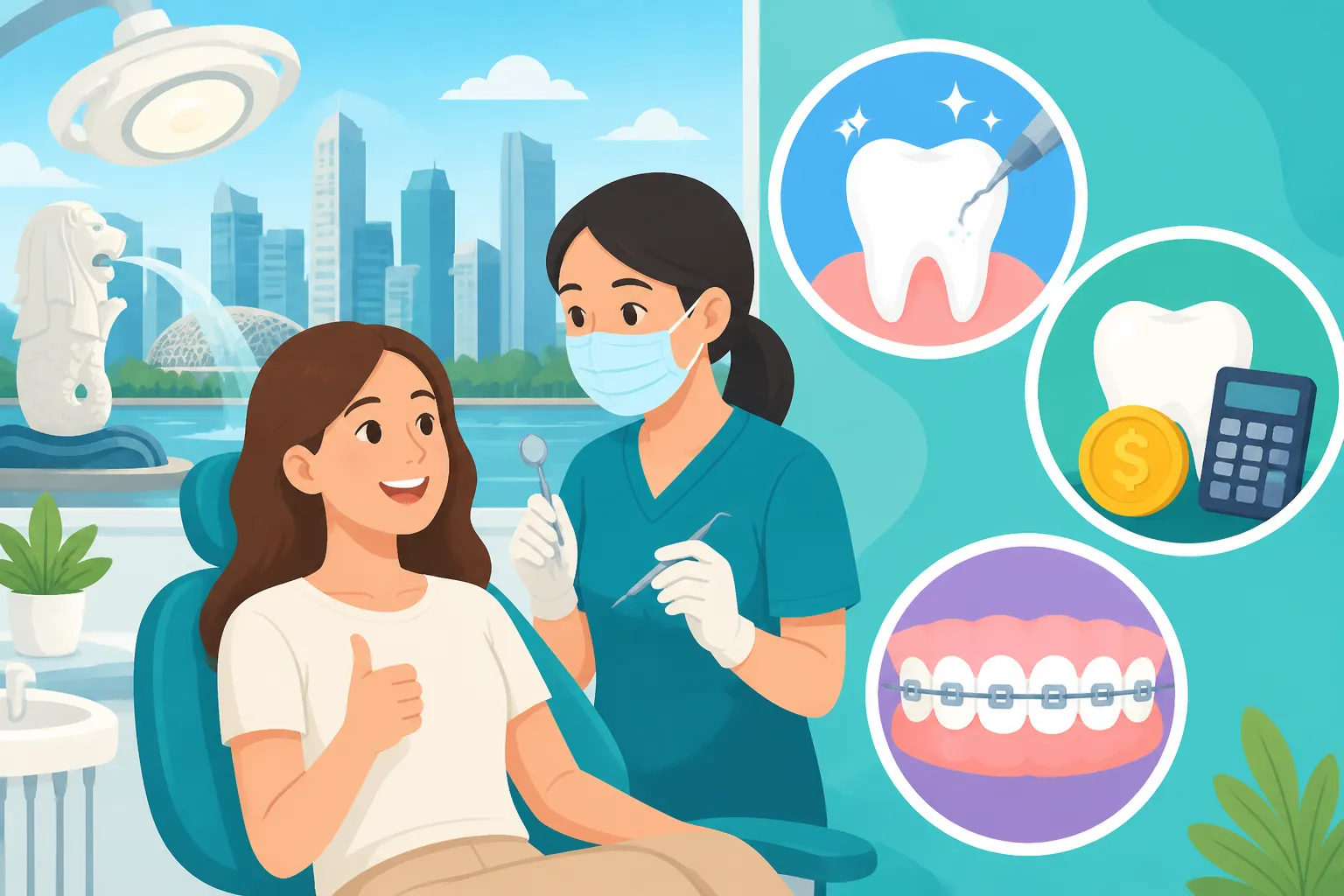
Finding an Expat-Friendly Dentist: Costs, Scaling, and Orthodontics
Waking up with a throbbing toothache in a foreign city is a special kind of nightmare that usually involves frantic Google searches and immediate anxiety about your bank balance. I remember my first month in Singapore, staring at a cracked molar and wondering if a simple filling would cost more than my monthly rent in Tiong Bahru. This guide solves the confusion around finding reliable, expat-friendly dental care while navigating the significant price gaps between heartland clinics and Orchard Road specialists.
The Reality of Dental Care in Singapore for Expats
Navigating the dental landscape here is vastly different from the systems in Europe or North America. While Singapore is world-renowned for its medical standards, dental care is almost entirely a private-market affair for expatriates. Unlike the subsidized pathways available for citizens, those of us on an Employment Pass or S Pass are essentially "free agents" in a highly competitive and sometimes confusing market.
Public vs Private Why Choice Matters
The first thing you will notice is the divide between government-linked institutions and private practices. Public options, like National Dental Centre Singapore (NDCS) or the dental wings of polyclinics, are fantastic but notoriously difficult to access for non-citizens. You might find that the wait times for a non-emergency appointment stretch into months. For an expat, this often makes the private sector the only viable choice for anything beyond a basic check-up.
Private clinics range from the "heartland" variety—located in HDB estates like Ang Mo Kio or Clementi—to the ultra-premium clinics in the Central Business District or Orchard Road. The difference in price can be staggering. A heartland clinic might charge you S$80 for scaling and polishing, while a premium clinic with a view of the skyline might quote S$250 for the same procedure. Understanding Polyclinic vs Private Clinic Waiting Times and Cost Differences is the first step in deciding where to book your chair time.
Language and Training Standards
One major relief for newcomers is that the standard of care is exceptionally high across the board. Most dentists in Singapore are Finding English-Speaking and Internationally Trained Doctors who have completed their degrees at the National University of Singapore (NUS) or prestigious universities in the UK, Australia, or the US. This means you won’t have to worry about a language barrier when explaining a complex phantom pain in your jaw.
The clinical environment is typically state-of-the-art. Even in smaller suburban clinics, you will likely see digital X-rays and 3D imaging tools that might have been considered "specialist-only" back in your home country. This high level of infrastructure is one reason why Healthcare Budgeting in Singapore Managing Out-of-Pocket Costs remains a top priority for families, as you are often paying for this high-end technology with every visit.
Understanding Dental Costs From Scaling to Root Canals
The "sticker shock" of Singaporean dental care is real, especially if you are coming from a country with universal dental subsidies. Because there is no fixed pricing regulated by the government for private dentists, you will find a wide spectrum of fees. It is always wise to ask for a "fee estimate" before the bib is placed around your neck.
Routine Maintenance Costs Scaling and Polishing
Most of us aim for a bi-annual cleaning, but in Singapore, this is where the costs begin to add up. A standard session of scaling and polishing usually involves a consultation fee, the cleaning itself, and often a mandatory fluoride treatment. In 2026, you can expect to pay anywhere from S$100 to S$300 for this bundle at an expat-friendly clinic.
If you are a digital nomad or a frequent traveler, you might find that services like SafetyWing provide a baseline of security, but routine dental is often an optional add-on that requires careful reading of the fine print. For those settled here long-term, these routine visits are the best way to avoid the much higher Cost of Dental Fillings and Root Canals Without Local Insurance. I’ve found that many clinics offer "family packages" if you bring your partner and children at the same time, which can shave 10-15% off the total bill.
Complex Procedures Fillings Crowns and Extraction
Once you move past cleaning and into restorative work, the pricing structure changes. Fillings are usually priced by the number of "surfaces" restored. A simple one-surface composite filling might cost S$120, but a complex multi-surface restoration can easily hit S$300. Crowns are a much larger investment, often ranging from S$1,200 to S$2,500 per tooth depending on the materials used (porcelain vs. zirconia).
If you find yourself needing an extraction, a simple "non-surgical" pull is relatively affordable. However, if it’s a surgical extraction—common with impacted teeth—the costs escalate because you are then paying for the surgeon’s time and potentially local anesthesia or sedation. This is where having a robust plan from a provider like Cigna Global becomes invaluable, as they are one of the few that offer high-limit dental modules that actually cover major restorative work without a dozen "gotcha" exclusions.
The Hidden Costs of Specialist Referrals
In many Western countries, your general dentist does almost everything. In Singapore, there is a strong culture of specialization. If your root canal looks even slightly complicated, your GP dentist will likely refer you to an Endodontist. While this ensures a better clinical outcome, it also means a higher specialist consultation fee and higher procedural costs.
A root canal performed by a specialist in a clinic at Mount Elizabeth might cost S$1,500 to S$2,500 per tooth, excluding the cost of the crown. It is essential to understand Specialist Referrals Do You Need a GP Before Seeing an Expert because going directly to a specialist can sometimes save you the initial consultation fee at the GP level, but many top-tier specialists prefer a referral to understand the history of the tooth.
Orthodontics and Specialized Treatments
Singapore is a regional hub for orthodontics, and it’s very common to see adults and teenagers alike sporting braces or clear aligners. The social "stigma" of adult braces is non-existent here, partly because the technology used is so discreet.
Braces and Invisalign for Adults and Kids
If you are looking for Finding an Expat-Friendly Dentist Costs Scaling and Orthodontics, you will likely be presented with two main paths: traditional metal/ceramic braces or clear aligners like Invisalign. Traditional braces for a teenager usually start around S$4,000 to S$6,000 for a two-year treatment plan. Invisalign is generally more expensive, ranging from S$7,000 to S$10,000 depending on the complexity of the alignment.
When budgeting for this, remember that the initial quote often excludes the "pre-treatment" costs like X-rays, 3D scans, and extractions. It also frequently excludes the "post-treatment" retainers, which can cost an additional S$600 to S$1,000. It is vital to check Does Corporate Expat Insurance Usually Cover Orthodontics Braces because most standard company plans strictly exclude "cosmetic" orthodontics unless you have a very high-tier executive package.
Wisdom Tooth Surgery and Medisave
One of the biggest points of confusion for expats is the "Medisave" claim. You will often see signs in clinics saying "Medisave claimable for wisdom tooth surgery." Here is the catch: this only applies to Singapore Citizens and Permanent Residents. If you are on an EP, you are part of the group Why Expats Are Excluded from MediShield Life and CPF Subsidies, meaning you must pay the full surgical fee out of pocket.
Wisdom tooth surgery is considered a minor surgical procedure if it involves cutting into the bone. The cost for one tooth can range from S$600 to S$1,500. If you need all four removed under general anesthesia, you are looking at a hospital bill that can exceed S$5,000. For this reason, many expats wait until they have a trip back home to handle non-urgent wisdom tooth issues, though the convenience of Singapore's clinics often wins out.
Navigating Dental Insurance and Corporate Benefits
Don't assume your "full medical cover" includes your teeth. In my experience, dental is the first thing to be slashed from corporate budgets. You need to be proactive in auditing your policy before the pain starts.
Why Dental is Often an Add-on Coverage
Most international health insurance plans treat dental as an optional "rider." If you are using a flexible plan like SafetyWing for a shorter stay or as a supplement, you need to verify if emergency dental is included. Usually, these plans only cover "accidental dental"—like a tooth knocked out in a bike accident—rather than a toothache caused by a cavity.
For those on comprehensive annual policies from Cigna Global, you often have the choice between "Routine Dental" and "Major Dental" tiers. It is generally advised that if you have children or a history of dental issues, paying the extra premium for major dental is almost always worth it. Singapore's costs for crowns and bridges can wipe out a year's worth of premium savings in a single afternoon. You can learn more about how this fits into your broader plan in our guide to Expat Health Insurance in Singapore Public vs Private Coverage.
Direct Billing vs Reimbursement
Singapore’s dental clinics are quite split on how they handle insurance. High-end clinics in central areas often have "Direct Billing" arrangements with major international insurers. This means you only pay your deductible or co-pay at the desk, and they handle the paperwork. This is a massive luxury.
However, many smaller or heartland clinics operate on a "pay and claim" basis. You pay the full amount, they give you an itemized receipt and a clinical summary, and you submit it to your insurer yourself. If you are on a budget, navigating Co-pays and Deductibles How Singapore Medical Billing Works is crucial so you aren't surprised by a 20% "co-insurance" clause that you forgot about.
Comparison Table: Estimated Dental Costs in Singapore (2026)
| Service Type | Heartland Clinic (HDB) | Central Private Clinic | Specialist Clinic |
|---|---|---|---|
| Consultation Fee | S$40 – S$60 | S$80 – S$120 | S$150 – S$250 |
| Scaling & Polishing | S$80 – S$130 | S$150 – S$250 | S$200 – S$350 |
| Routine X-Ray (Periapical) | S$30 – S$50 | S$60 – S$90 | S$100+ |
| Simple Composite Filling | S$100 – S$180 | S$180 – S$300 | N/A (Usually GP) |
| Root Canal (Molar) | S$800 – S$1,200 | S$1,200 – S$1,800 | S$2,000 – S$3,000 |
| Wisdom Tooth Surgery | S$600 – S$1,000 | S$1,000 – S$1,500 | S$1,500 – S$2,200 |
| Invisalign (Full Case) | S$6,500 – S$8,000 | S$8,000 – S$11,000 | S$9,000 – S$12,000 |
Emergency Dental Situations
Tooth pain never happens at 2 PM on a Tuesday; it always hits at midnight on a Saturday. Knowing where to go before the crisis happens will save you a lot of grief.
After-Hours Clinics and 24-Hour Options
There are surprisingly few truly 24-hour dental clinics in Singapore. Most "emergency" dental work after hours is handled by the A&E departments of major hospitals, but even then, they may only provide pain relief and antibiotics until a dentist is available the next morning.
For true after-hours care, Raffles Dental (at Raffles Hospital) is one of the most reliable options for expats. They have a more consistent emergency roster than smaller neighborhood clinics. You can check our specific guide on Finding an Emergency Dentist on a Sunday in Singapore for a list of clinics that specifically open on weekends. Be prepared for an "Emergency Surcharge," which can add S$100 to S$200 to your bill before any treatment even begins.
Managing Pain and Immediate Steps
If you have a dental emergency, the first thing to do is call your regular clinic. Many dentists in Singapore are surprisingly responsive via WhatsApp—which is the unofficial business communication tool of the island. If you can’t get a hold of them, don't just suffer.
If a tooth is knocked out, keep it in a small container of milk or saliva and get to a dentist within 30 to 60 minutes. For severe swelling that affects your breathing or swallowing, skip the dentist and go straight to a hospital A&E. Understanding Emergency Medical Care in Singapore Ambulances and AE Wards is important because a dental infection that spreads can become a systemic medical emergency very quickly.
Practical Tips for Choosing Your Clinic
Finding the right "fit" is about more than just the price. It’s about the rapport you have with the dentist and the convenience of the location relative to your home or office.
Locations and Accessibility
If you work in the CBD, clinics in Raffles Place or Tanjong Pagar are incredibly convenient for lunchtime appointments, but you will pay a premium for that convenience. If you are looking to save money, taking a 20-minute MRT ride to a clinic in a residential hub like Bishan or Tampines can significantly lower your costs.
Many expat families flock to clinics in Camden Medical Centre or Novena Medical Center because these buildings are designed specifically for medical excellence and often house multiple specialists under one roof. This makes it easy to coordinate Navigating Polyclinic Dental Services vs Private Orthodontic Care if different family members have different needs.
Checking Credentials and Reviews
Before booking, check the Singapore Dental Council (SDC) register to ensure your dentist is fully licensed. While almost everyone is, it’s good practice. More importantly, look at the "hidden" reviews in expat Facebook groups rather than just Google Maps.
Google reviews in Singapore can sometimes be skewed by "free gift" incentives for five-star ratings. In expat forums, you’ll get the "real talk" about whether a dentist has a gentle hand or if they tend to over-prescribe expensive treatments like crowns when a filling might have sufficed. Finding someone who understands the Singapore Healthcare System for Expats Complete 2026 Guide will ensure you aren't treated like a tourist, but like a resident who knows how the system works.
Important Medical Disclaimer
The information provided in this guide is for educational and informational purposes only and does not constitute professional medical or dental advice, diagnosis, or treatment. Always seek the advice of a qualified dental provider with any questions you may have regarding a medical condition or treatment plan. Never disregard professional medical advice or delay in seeking it because of something you have read in this article. Prices and regulations mentioned are based on 2026 estimates and are subject to change by individual providers or government authorities.