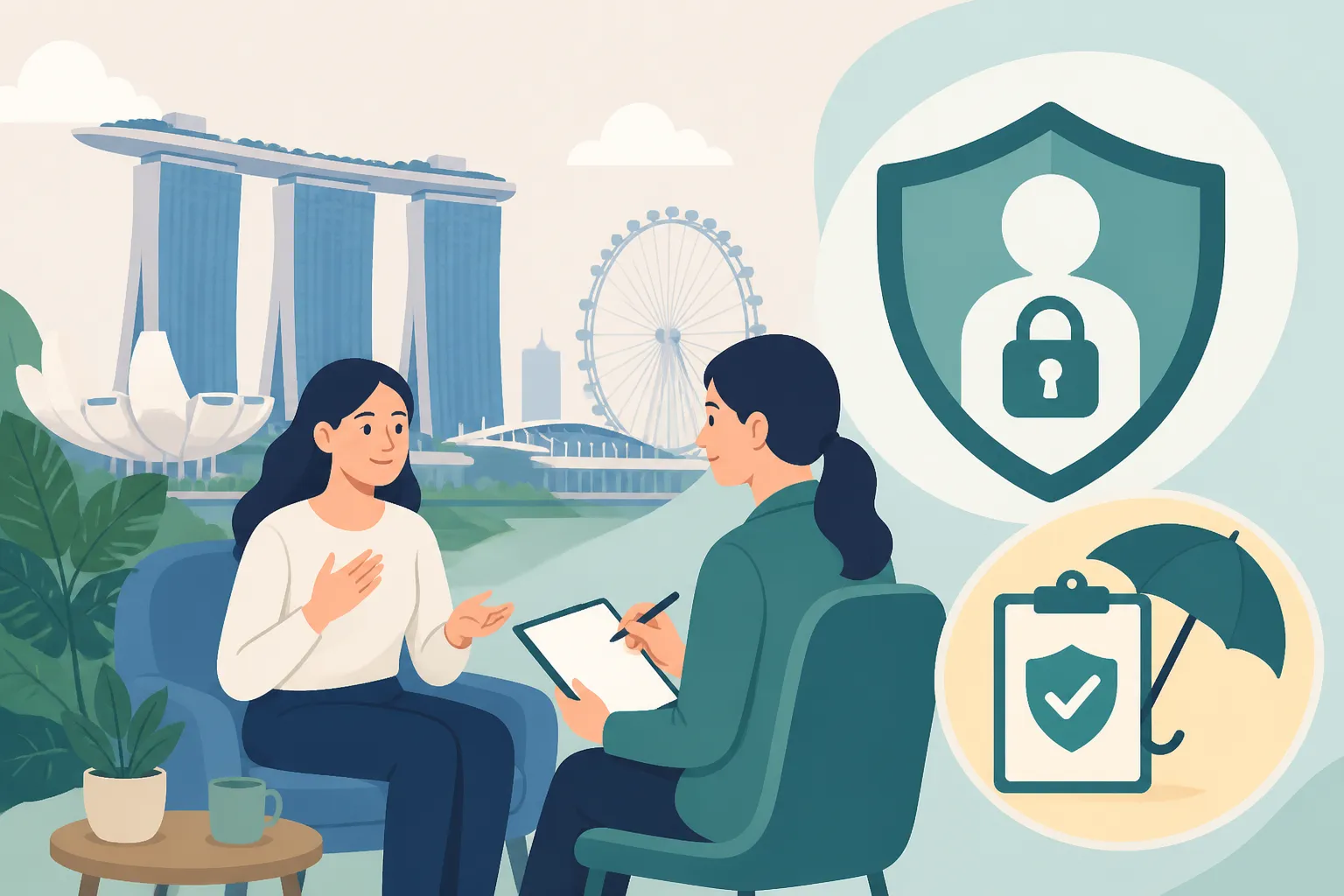
Accessing Therapy in Singapore: Confidentiality and Insurance Coverage
Moving to a new country often brings a hidden psychological tax that no one warns you about during the honeymoon phase of exploring hawker centers and lush tropical parks. I remember sitting in my high-rise apartment during my second year here, feeling an overwhelming sense of isolation despite being surrounded by millions of people. This guide provides a deep dive into navigating the mental health landscape in Singapore, specifically addressing the twin pillars of confidentiality and insurance coverage that often prevent expats from seeking the help they need.
The Landscape of Mental Health for Expats in Singapore
Navigating mental health in a foreign country is fundamentally different from seeking help back home. In Singapore, the system is efficient but can feel highly clinical and transactional if you don’t know where to look. For many of us, the pressure to "succeed" in a high-cost environment like Singapore creates a unique form of stress that requires specialized support.
Overcoming the Stigma of Expat Privilege
One of the biggest hurdles expats often face is the internal guilt associated with feeling unhappy in a "paradise" like Singapore. There is a pervasive myth that if you have a good salary, a condo with a pool, and a helper, you shouldn’t have anything to complain about. This "expat privilege" stigma often leads to delayed treatment. However, the reality of being thousands of miles away from your support network, coupled with the "always-on" work culture, makes Mental Health in Singapore: Counseling, Psychiatry, and Expat Support a critical topic for every newcomer.
Expats often deal with specific stressors like the "trailing spouse" syndrome, where one partner loses their professional identity, or "third-culture kid" issues for children who feel they belong nowhere. Validating these feelings is the first step. You aren't being ungrateful; you are being human. Understanding that mental health is a legitimate part of Singapore Healthcare System for Expats: Complete 2027 Guide helps reframe therapy as a maintenance tool rather than a sign of failure.
Types of Professionals: Counselors, Psychologists, and Psychiatrists
The terminology in Singapore can be confusing. If you are looking for talk therapy, you are likely looking for a counselor or a clinical psychologist. Counselors often focus on life transitions, relationship issues, and general stress. Clinical psychologists usually have more advanced degrees and can offer specialized therapies like Cognitive Behavioral Therapy (CBT) or Eye Movement Desensitization and Reprocessing (EMDR).
If you believe you need medication, you must see a psychiatrist. Unlike counselors and psychologists, psychiatrists are medical doctors who can prescribe antidepressants or anti-anxiety meds. If you aren't sure where to start, Choosing a Primary Care Physician (GP) in Singapore is often the best first move, as a GP can assess your symptoms and provide a referral to the right kind of specialist.
Navigating Confidentiality and Data Privacy
Confidentiality is the number one concern I hear from fellow expats. In a small, interconnected community like the Singapore expat circle, the fear that a therapist might know your boss or that your medical records might leak to the Ministry of Manpower (MOM) is palpable.
Professional Ethics vs. Legal Obligations
In Singapore, psychologists and counselors registered with the Singapore Register of Psychologists (SRP) or the Singapore Association for Counselling (SAC) are bound by strict ethical codes. Your sessions are private, and what you say in the room stays there. However, there are "mandatory reporting" exceptions that are standard worldwide but worth noting here. If a therapist believes you are at immediate risk of harming yourself or others, they are legally required to intervene.
Outside of those extreme scenarios, your data is protected under the Personal Data Protection Act (PDPA). When you visit a private clinic, your records are not automatically uploaded to a central government database accessible by your employer. Many expats choose private practices specifically for this reason, ensuring a clear firewall between their personal health and their professional life. For those worried about their career, it's worth reading up on whether Are Mental Health Records Confidential from Employers in Singapore? to put your mind at ease.
Workplace Confidentiality: Are Your Records Safe from HR?
This is where things get tricky. If you use your company-provided health insurance to pay for therapy, the insurance company will receive a claim. Depending on how your company’s HR or benefits department handles insurance reports, there is a non-zero chance that a "utilization report" could show that an employee is seeking mental health services. While these reports are usually anonymized in larger companies, in a small firm, it might not be hard to piece together.
To maintain absolute 100% confidentiality from your employer, many veteran expats recommend paying out of pocket for the first few sessions or using a private international plan like those offered by Cigna Global. By bypassing the corporate plan, you ensure that no record of your treatment ever touches your company’s financial or HR systems. If you find yourself needing a break, you might also want to look into Workplace Burnout and Stress: Seeking Medical Leave for Mental Health to understand your rights regarding medical certificates (MCs).
Understanding Insurance Coverage for Therapy
The "Singaporean way" of healthcare often prioritizes physical ailments over mental ones in standard local insurance packages. For expats, this means you need to be very tactical about how you fund your sessions.
Corporate vs. Private Insurance Limitations
Most local corporate insurance plans in Singapore offer very limited mental health coverage, if any. You might find a small "outpatient specialist" benefit that covers $500 to $1,000 a year, which, at Singapore private practice rates, might only cover two or three sessions. This is a common frustration, and many people get a shock when their claim is rejected because therapy was classified as a "pre-existing condition" or simply excluded from the "base" plan.
When you are Understanding Your Employer’s Medical Benefits Package Before Signing, look specifically for mental health parity. If your corporate plan is lacking, it might be time to look into a personal top-up plan. This is where international providers like SafetyWing or Cigna Global come into play. These providers are generally more attuned to the needs of the global workforce and often include robust mental health modules that cover both inpatient psychiatric care and outpatient counseling.
Using International Providers for Greater Flexibility
International health insurance plans are often the gold standard for expats in Singapore because they allow you to choose your provider without being restricted to a specific "panel" of clinics. For example, Cigna Global offers modular plans where you can add mental health as an optional extra, which is perfect if you know you have a history of anxiety or depression.
On the other hand, SafetyWing is often a favorite for younger expats or those on localized contracts who need something more flexible and affordable. While their primary focus is often travel-medical, their specialized expat products have been evolving to better handle the long-term needs of the community. Having a plan that covers you both in Singapore and when you fly home for the holidays is a huge stress-reliever. It also helps you avoid the dreaded "out-of-pocket" spiral that can happen if a crisis occurs. For a broader look at your options, check out Expat Health Insurance in Singapore: Public vs Private Coverage.
The Financial Reality: Costs and Subsidies
Singapore is not a cheap place to be unwell. If you are paying out of pocket, you need to budget carefully to ensure your treatment isn't cut short by financial strain.
Private Practice vs. Public Hospital Costs
The cost difference between the private and public sectors in Singapore is staggering. In a private clinic—where most expats go for the sake of speed and English-speaking, internationally-trained doctors—you can expect to pay anywhere from S$180 to S$350 per hour. If you require a psychiatrist for medication, the initial consultation might be even higher, and you will also need to factor in the cost of the prescriptions themselves.
Public options, such as the Institute of Mental Health (IMH) or psychiatric departments in public hospitals like SGH, are much more affordable but come with caveats. As a foreigner, you will not receive the same subsidies as citizens. While the base cost is lower, the waiting times can be months. In a crisis, you should always head to the A&E, but for routine therapy, the public system can feel slow and bureaucratic. To see how these costs compare to other medical needs, refer to Healthcare Budgeting in Singapore: Managing Out-of-Pocket Costs.
| Service Type | Private Clinic Cost (Est.) | Public Hospital Cost (Foreigner Rate Est.) | Wait Time |
|---|---|---|---|
| Counseling (1 hr) | S$150 – S$250 | S$80 – S$120 | 1-2 Weeks |
| Psychologist (1 hr) | S$200 – S$350 | S$100 – S$150 | 4-8 Weeks |
| Psychiatrist (Initial) | S$300 – S$500 | S$150 – S$200 | 8-12 Weeks |
| Medication (Monthly) | S$50 – S$200 | S$30 – S$150 | N/A |
Finding Pro-Bono or Low-Cost Options
If you are currently between jobs or your insurance doesn't cover therapy, there are "middle ground" options. Organizations like AWARE (for women) or the Singapore Association for Mental Health (SAMH) offer counseling on a sliding scale based on income. Additionally, some private clinics offer "trainee" rates where you see a supervised student completing their Master’s degree for a fraction of the usual cost (often around S$40-S$80). These can be lifesavers for those who need Accessing Therapy in Singapore: Confidentiality and Insurance Coverage but are worried about their bank balance.
Practical Steps to Booking Your First Session
Once you've decided to seek help, the actual process of getting into a chair (or a Zoom call) can feel daunting. Here is the step-by-step reality of how it works in the Little Red Dot.
Do You Need a GP Referral?
Strictly speaking, you do not need a referral to see a private counselor or psychologist in Singapore. You can simply find a clinic that resonates with you and book an appointment directly. This is often the fastest route. However, if you are hoping to claim the cost on your insurance, many providers (including Cigna Global) may require a GP referral to prove "medical necessity."
Visiting a GP first is advisable if you are experiencing physical symptoms like insomnia, heart palpitations, or chronic fatigue. A doctor can run blood tests to rule out thyroid issues or vitamin deficiencies that often mimic depression. Plus, a GP who knows the local network can recommend a therapist who specifically deals with expat issues. If you are worried about the cost of that initial visit, you can check How Much Does a GP Visit Cost for a Foreigner in Singapore? to plan your budget.
Telehealth vs. In-Person Care
Telehealth exploded in Singapore during the pandemic and has remained a staple. Many expats prefer it because it allows them to speak with a therapist back in their home country who understands their specific cultural nuances. However, be careful with insurance claims here. Some Singapore-based insurers will only cover therapists who are licensed to practice within Singapore.
If you prefer a local touch but want the convenience of your sofa, apps like WhiteCoat or Doctor Anywhere now offer mental health modules. This is an excellent way to get Telehealth in Singapore: Using Apps for Consultations and Prescriptions for mild to moderate issues. For more deep-seated trauma or complex diagnostics, most specialists still recommend at least a few in-person sessions to build a proper therapeutic alliance.
Support Systems for Specific Expat Needs
Singapore is a melting pot, but it can also be a pressure cooker. Finding a therapist who "gets" the expat life is crucial for a successful outcome.
Culturally Sensitive and Internationally Trained Therapists
Many therapists in Singapore were trained in the UK, US, or Australia, which is a huge benefit for Western expats. They understand the nuances of Western individualism versus Asian collectivism, which often plays a role in workplace conflicts here. When searching, look for clinics in areas like Orchard, Tanglin, or Novena, as these often cater specifically to the international community.
Don't be afraid to "shop around." Most therapists will offer a free 15-minute discovery call. Use this to ask if they have experience with the "expat cycle"—the specific stages of adjustment we all go through. Finding someone who understands the unique grief of a "revolving door" social circle (where your best friends move away every two years) can make a world of difference. This is a key part of Finding English-Speaking and Internationally Trained Doctors who specialize in mental wellness.
Support Groups and Crisis Resources
Sometimes, one-on-one therapy isn't enough, or you just need to know you're not alone. There are several expat-focused support groups in Singapore, often organized through the various "Clubs" (American Club, British Club, etc.) or through Facebook groups like "Expat Women in Singapore."
If you find yourself in an immediate crisis, do not wait for an appointment. The Samaritans of Singapore (SOS) provide a 24-hour hotline that is confidential and free. If there is a medical emergency or a risk of self-harm, you should use Emergency Numbers: Calling 995 for Ambulance and 999 for Police. Remember, the triage system in Singapore is very efficient, and A&E Departments: Triage Systems and Payment at Public vs Private Hospitals will ensure you get stabilized, regardless of your visa status.
Important Medical Disclaimer
The information provided in this guide is for educational and informational purposes only and does not constitute professional medical advice, diagnosis, or treatment. Always seek the advice of your physician or another qualified health provider with any questions you may have regarding a medical condition or mental health concern. Never disregard professional medical advice or delay in seeking it because of something you have read in this article. If you are in a life-threatening situation or experiencing a mental health crisis, please contact emergency services immediately or visit the nearest Accident & Emergency department.