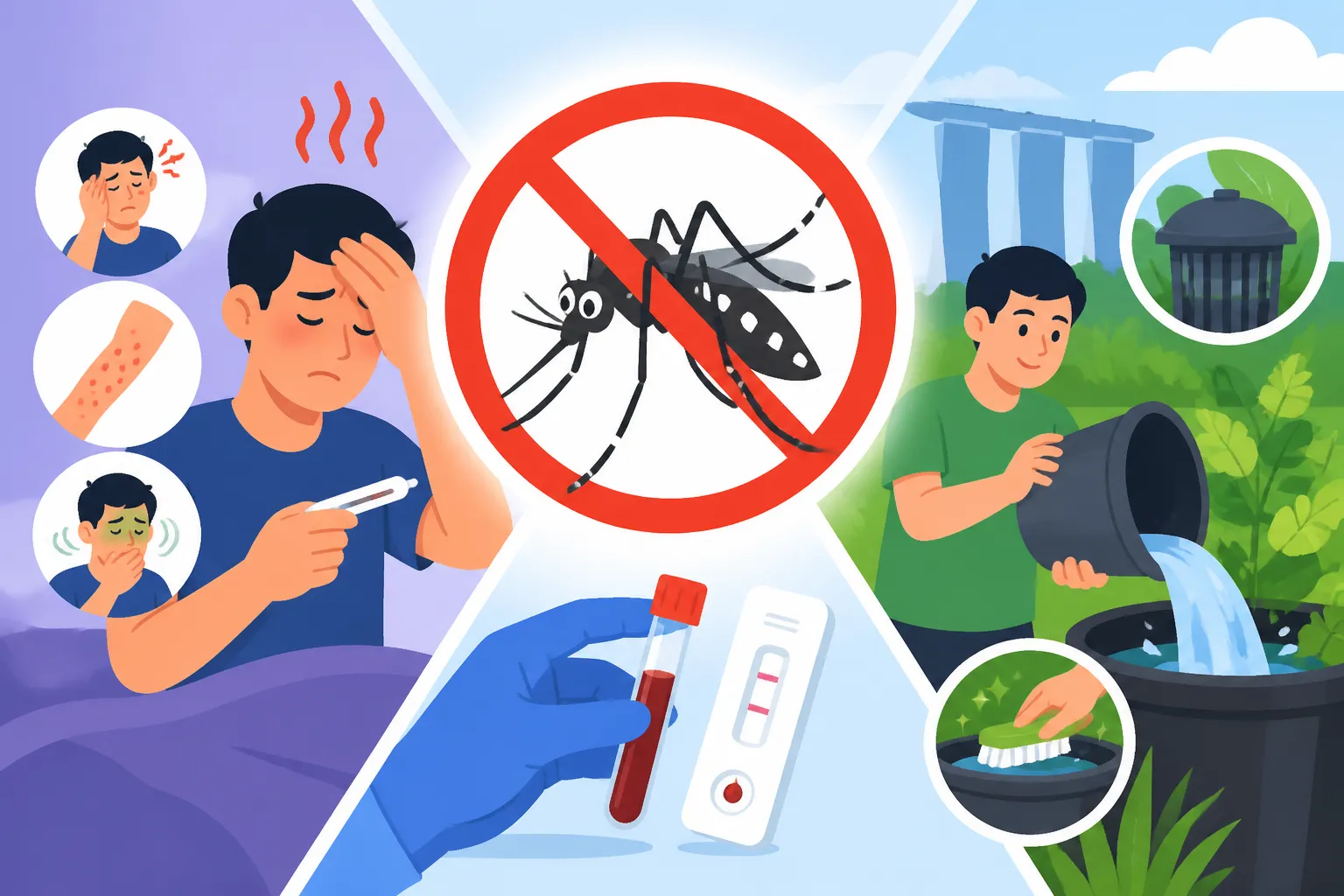
Dengue Fever Prevention: Symptoms, Testing, and NEA Guidelines
Living in a tropical paradise like Singapore comes with many perks, but it also introduces you to a persistent, buzzing reality: the Aedes mosquito. I remember the first time I saw a bright red banner in my condo’s lift lobby warning of a dengue cluster; it was a wake-up call that "garden city" living requires constant vigilance. This guide provides a deep dive into preventing dengue, recognizing its symptoms, and navigating the local healthcare protocols.
Understanding the Dengue Risk in Singapore
Dengue isn't just a seasonal flu; it is an endemic viral infection that the Singapore government takes incredibly seriously. Unlike many other countries where mosquito-borne diseases are confined to rural areas, dengue in Singapore is an urban challenge. The Aedes mosquito, which carries the virus, thrives in clean, stagnant water—the kind often found in flower pot saucers, roof gutters, and even the "trap" of your kitchen sink.
The risk fluctuates throughout the year, usually peaking during the warmer months from May to October. Higher temperatures accelerate the breeding cycle of the mosquitoes and cause the virus to replicate faster within them. For many of us coming from temperate climates, the idea that a tiny insect can dictate our weekend plans might seem strange, but once you’ve seen a friend or colleague hospitalized for "bone-break fever," you realize why the Singapore Healthcare System for Expats: Complete 2027 Guide emphasizes environmental awareness as much as medical treatment.
Why the Aedes Mosquito is a Unique Threat
The Aedes aegypti mosquito is a bit of a "sophisticated" pest. It is a daytime biter, with peak activity periods occurring shortly after sunrise and just before sunset. This makes your morning jog or evening walk at East Coast Park a prime time for exposure. I’ve learned the hard way that just because you don't see a swarm of mosquitoes doesn't mean you aren't at risk; a single bite from an infected female is all it takes.
Another factor is the "stripes." These mosquitoes are easily identifiable by the white markings on their legs and a lyre-like pattern on their thorax. They prefer to live indoors or in very close proximity to human dwellings, which is why even those living on the 30th floor of a luxury condo aren't entirely safe. Mosquitoes can travel up elevator shafts or be carried by the wind into high-rise balconies.
The Geographic Reality of Dengue Clusters
The National Environment Agency (NEA) monitors the mosquito population and dengue cases meticulously. They group cases into "clusters." A cluster is formed when two or more cases occur within 14 days and are located within 150 meters of each other. When you move into a new neighborhood, one of the first things you should do is check the NEA website or the myENV app to see if your area is a "Red Zone."
Red zones indicate high-risk areas with 10 or more cases. Yellow zones have fewer cases, and green zones have no active clusters but remain under surveillance. If you find yourself in a red zone, it’s time to double down on your home defense. Newcomers are often told that being proactive in a red zone isn't being paranoid—it’s being a responsible member of the community. Failure to keep your home mosquito-free can actually lead to legal issues, as detailed in our guide on Everyday Rules and Etiquette: Fines, Laws, and Social Norms.
Symptoms of Dengue Fever: When to Seek Medical Care
One of the most confusing aspects of dengue for expats is that the early symptoms often mimic a standard flu or even heavy dehydration. You might wake up feeling a bit sluggish, with a mild headache that you attribute to the Singapore heat. However, dengue usually progresses rapidly. The hallmark sign is a sudden, high fever that can reach 40°C (104°F) and lasts for two to seven days.
Accompanying this fever is often intense "retro-orbital" pain—a fancy way of saying it hurts behind your eyes. You might also experience severe muscle and joint pain, which is why dengue earned the nickname "break-bone fever." If you start feeling like your bones are literally snapping, it’s a clear signal that this isn't just a common cold.
Recognizing the Dengue Rash and Nausea
A few days into the fever, many patients develop a characteristic rash. It typically looks like small red spots (petechiae) and may appear on the limbs and trunk. Some describe it as "islands of white in a sea of red." Nausea, vomiting, and a total loss of appetite are also common. I remember a neighbor who thought he just had a bad case of "makan" gone wrong, but when the joint pain kicked in, he realized it was something else. To differentiate between stomach issues and dengue, you might find our article on Food Poisoning in Singapore: When to See a Doctor vs Rest at Home helpful.
Danger Signs of Severe Dengue
While most cases of dengue are "Dengue Fever" (DF), which is self-limiting and manageable at home, a small percentage can progress to Dengue Haemorrhagic Fever (DHF) or Dengue Shock Syndrome (DSS). These are life-threatening emergencies. You must seek immediate help at an A&E if you experience severe abdominal pain, persistent vomiting, bleeding from the gums or nose, or extreme fatigue and restlessness.
In Singapore, the medical community is highly trained to spot these transitions. If you have a confirmed case of dengue, your doctor will likely ask you to come in for daily blood tests to monitor your platelet count. A dropping platelet count is a major red flag. For those concerned about the costs of such frequent monitoring, brands like Cigna Global offer robust outpatient coverage that can be a lifesaver during a prolonged dengue recovery.
Diagnostic Testing and Medical Protocols in Singapore
If you suspect you have dengue, the first step is to visit a General Practitioner (GP) or a Polyclinic. Do not try to "tough it out" at home with just paracetamol. In Singapore, doctors have a very specific protocol for suspected dengue cases. They will usually start with a physical exam and a detailed history of your symptoms and travel within the island.
Navigating Polyclinics vs Private Clinics for Testing
Choosing where to go can be a dilemma for many foreigners. Polyclinics are highly efficient and cost-effective, but the wait times can be significant, especially during a dengue outbreak. Private clinics offer faster service but at a higher price point. If you are unsure of the costs, check our breakdown on How Much Does a GP Visit Cost for a Foreigner in Singapore?.
Most clinics will perform a "Dengue Duo" rapid test. This test looks for the NS1 antigen (which shows up early in the infection) and IgG/IgM antibodies (which show up a bit later). The results are often available within 20 to 30 minutes. If the rapid test is positive, your GP will likely order a full blood count (FBC) to check your hematocrit levels and platelet count.
Understanding the NS1 Antigen and PCR Tests
The NS1 antigen test is the gold standard for early detection, usually effective from the first day of fever up to day seven. It detects a protein produced by the virus. If you are in the very early stages, a PCR (Polymerase Chain Reaction) test might be used to actually identify the serotype of the virus (DENV-1, 2, 3, or 4). Singapore often sees shifts in the dominant serotype, which can lead to larger outbreaks because the population lacks immunity to the new strain.
It is important to note that getting dengue once does not make you immune to all forms of it. In fact, a second infection with a different serotype is often more severe. This is why consistent prevention is key, even for long-term residents who have "been there, done that." When navigating these visits, Finding Medical Care: Hospitals, Polyclinics, and GP Networks is an essential resource for finding a clinic that fits your needs and location.
Hospitalization vs Home Care Protocols
Not every dengue patient needs to be hospitalized. In fact, the majority are managed as outpatients. The decision to hospitalize usually depends on your blood results and whether you can maintain hydration. If your platelet count drops below a certain threshold (usually 80,000 to 100,000 per microliter), or if your hematocrit levels rise (indicating dehydration and "leaky" blood vessels), the doctor will refer you to a hospital.
If you are referred to a hospital, you will likely be sent to the A&E Departments: Triage Systems and Payment at Public vs Private Hospitals. Public hospitals like SGH or NCID have world-class infectious disease departments. Private hospitals like Mount Elizabeth or Gleneagles offer more "hotel-like" amenities but can be significantly more expensive. This is where having comprehensive insurance from Cigna Global or a travel-specific plan from SafetyWing for those on shorter passes becomes crucial.
| Feature | Polyclinic | Private GP Clinic | Hospital A&E |
|---|---|---|---|
| Wait Time | High (1-3 hours) | Low to Medium | Varies by Severity |
| Testing Cost | Low (Subsidized for PRs) | Moderate | High |
| Dengue Duo Test | Available | Available | Available |
| Specialist Care | Referral required | Referral required | Immediate access |
| Recommended For | Initial screening | Fast diagnosis | Severe symptoms |
NEA Guidelines and the "Block" System
The NEA is the frontline of defense against dengue in Singapore. Their approach is data-driven and aggressive. You will often see NEA officers in their distinctive uniforms conducting inspections in HDB estates and private condos. They are looking for one thing: breeding habitats.
The 5-Step Mozzie Wipeout
The NEA promotes a simple but vital routine called the "5-Step Mozzie Wipeout." It is expected that every resident—local or expat—follows this. I've integrated this into my weekly Sunday routine:
- Change water in vases/bowls every other day.
- Remove water from flower pot saucers every other day.
- Turn over all water storage containers.
- Loosen hardened soil in flower pots.
- Clear roof gutters and place BTI insecticide inside monthly.
As an expat, it’s easy to overlook these steps, especially if you have a balcony garden or keep "lucky bamboo" in water. Mosquito larvae can easily turn up in a tiny tray under a dish rack that was forgotten and left wet. It’s these small oversight areas that officers focus on.
Legal Repercussions: Fines for Breeding Mosquitoes
In Singapore, environmental hygiene is a legal obligation. If an NEA officer finds mosquito breeding on your premises, you will be fined. As of 2026, the fines have become even more stringent to combat rising cases. A first-time offense for a household can result in a S$200 fine. If multiple breeding habitats are found, or if you are in a red zone and have been warned previously, the fines can escalate into the thousands, and you could even be summoned to court.
For those renting, it is important to check your tenancy agreement regarding "minor repairs" and maintenance. Generally, preventing mosquito breeding is the tenant's responsibility. If you have questions about your rights and responsibilities as a renter, you might want to look at our guide on Understanding Your Employer’s Medical Benefits Package Before Signing or general housing rules.
Project Wolbachia: The Scientific Defense
You might notice NEA releasing mosquitoes from small tubes in certain neighborhoods. This is "Project Wolbachia." They release male mosquitoes carrying the Wolbachia bacteria. When these males mate with urban female Aedes mosquitoes, the resulting eggs do not hatch. It’s a brilliant, non-chemical way to suppress the population. If you see these mosquitoes, don't swat them! They are males, so they don't bite, and they are doing the hard work for us.
Prevention Strategies for Expats and Families
Beyond the NEA guidelines, personal protection is your second line of defense. When I first moved here, I thought I could skip the repellent if I was just going to the mall. I was wrong. Mosquitoes are everywhere—in the greenery outside the mall, in the taxi stand queue, and even in the office basement.
Repellents and Home Defense
The most effective repellents contain DEET, Picaridin, or IR3535. The NEA specifically recommends products with at least 10-30% DEET for long-lasting protection. If you prefer natural options, Citronella or Eucalyptus oil can work, but they need to be reapplied much more frequently—sometimes every 30 to 60 minutes.
For home defense, many expats install magnetic mosquito screens on their windows. Unlike the permanent screens common in the US or Australia, these can be popped off for cleaning or to open the window fully. They are a game-changer if you live near a park or have a lot of potted plants on your corridor. For more specific recommendations, our post on Preventing Mosquito Bites: NEA Approved Repellents covers the top brands available at Guardian and Watsons.
The Dengue Vaccine: Who Should Get It?
There are two main vaccines available in Singapore: Dengvaxia and Qdenga. Dengvaxia is only recommended for those who have had a laboratory-confirmed dengue infection in the past. If you've never had dengue, taking Dengvaxia could actually increase your risk of severe disease if you get infected later.
Qdenga, however, is a newer vaccine that can be administered regardless of whether you’ve had dengue before. It is approved for individuals aged 4 and above. I highly recommend discussing this with your GP, especially if you live in a persistent red zone or travel frequently around Southeast Asia. If you’re a digital nomad or on a short-term assignment, SafetyWing is an excellent option to cover your medical needs while you figure out your long-term vaccination strategy.
Insurance and Financial Considerations
One of the biggest stressors for expats when dealing with a medical issue is the cost. Dengue treatment can range from a few hundred dollars for outpatient GP visits and blood tests to several thousand dollars if you require a private room in a hospital.
Does Your Insurance Cover Dengue Treatment?
Most corporate health insurance plans in Singapore cover dengue, but the extent of that coverage varies wildly. Some plans have a high deductible or co-pay for outpatient services. Expats can get hit with unexpected bills because they didn't realize their "comprehensive" plan only kicked in for inpatient stays.
If you are on a local contract, you might not have the same protections as those on "expat packages." It is vital to review your policy. This is where a supplemental plan from Cigna Global can fill the gaps, providing peace of mind that your daily blood tests and potential hospital stay won't drain your savings. For a deeper look at managing these costs, refer to Healthcare Budgeting in Singapore: Managing Out-of-Pocket Costs and Expat Health Insurance in Singapore: Public vs Private Coverage.
Long-term Planning for Families
For families with children, the stakes are even higher. Kids can dehydrate very quickly when they have a high dengue fever. Pediatric clinics in Singapore are excellent at managing dengue, but they are also some of the busiest. Ensuring your family is covered under a plan that allows for private specialist access can mean the difference between waiting six hours in a crowded A&E and seeing a consultant within the hour.
It is advisable that newcomers keep a "Dengue Folder" containing their insurance details, a list of nearby 24-hour clinics, and their most recent blood test results if they are currently undergoing monitoring. Being organized makes the "brain fog" of a high fever much easier to manage.
Final Thoughts on Staying Dengue-Free
Singapore is a remarkably safe and clean city, but dengue is a reminder that nature still has a seat at the table. By staying informed through the NEA, practicing the 5-Step Mozzie Wipeout, and having a solid medical plan in place, you can enjoy all the benefits of the Red Dot without the fear of the "break-bone" fever.
Don't let a tiny mosquito ruin your experience of this incredible country. Stay vigilant, wear your repellent, and if that fever spikes, get yourself to a doctor immediately. We’ve all been through the "dengue scare" at some point, and with the right precautions, it’s just another manageable part of life in the tropics.
Medical Disclaimer
The information provided in this article is for educational and informational purposes only and is not intended as medical advice. Dengue fever is a serious medical condition. Always seek the advice of a qualified healthcare provider with any questions you may have regarding a medical condition or treatment. Never disregard professional medical advice or delay in seeking it because of something you have read in this guide. If you think you may have a medical emergency, call your doctor or the emergency services at 995 immediately.