Traveling with Controlled Substances: What You Cannot Bring to Singapore
The sheer panic of standing at the Changi Airport baggage carousel, wondering if your bottle of ADHD medication or that strong painkiller from your home GP will land you in a windowless room, is a rite of passage for many newcomers. I remember my first flight into Singapore, clutching a doctor’s note like a shield, sweating as the green light flickered on the scanner. This guide breaks down the high-stakes rules regarding controlled substances so you can arrive with confidence and clarity.
Navigating the Health Sciences Authority Regulations
The first thing you need to realize about Singapore is that "prescription" does not automatically mean "permitted." The Health Sciences Authority (HSA) is the gatekeeper of all medicinal products entering the island. Their primary mission is to prevent the illicit flow of narcotics and psychotropic substances, which means they cast a very wide net. Many expats assume that because their medication was legally prescribed by a top-tier specialist in London or New York, it would be waved through customs without a second thought. This is a dangerous assumption.
Singapore classifies drugs into several schedules under the Misuse of Drugs Act and the Health Products Act. Some are considered "controlled," which often includes common medications for anxiety, insomnia, and ADHD. If you are moving here or visiting, you must check the specific active ingredients in your medication against the HSA's lists. Even for non-controlled medications, there is a strict limit on the quantity you can bring. Generally, you are allowed a three-month supply for personal use without a permit, provided the medicine is not a controlled substance. However, even this requires you to have a clear, English-language prescription or a letter from your physician.
For those with complex medical histories, having a robust international health plan is essential before you even pack your bags. Providers like Cigna Global are often well-versed in the logistical hurdles of maintaining a steady supply of specialized medication across borders. When you are dealing with substances that require high levels of documentation, having a dedicated insurer to help coordinate with local clinics for a smooth handover can save you from a legal and medical nightmare.
The Approval Process for Controlled Medications
If your medication falls under the "Controlled" category—which includes many psychotropic drugs and certain painkillers—you cannot simply walk through the Green Lane. You are legally required to apply for an "Approval to Import Medicinal Products for Personal Use" through the HSA online portal at least ten working days before your arrival. I cannot stress this timeline enough. Some travelers have tried to apply while sitting in the departure lounge, only to find the system wouldn't process their request in time.
The application requires several specific documents. You will need a copy of your passport, a copy of the prescription, and a detailed letter from your doctor. This letter must state the medical condition for which you are being treated, the dosage, and the total quantity of medication you are carrying. If the letter is not in English, it must be officially translated. Once the HSA reviews your case, they will issue an approval letter. You must print this out and keep it with your physical medication.
When traveling, keep all medications in their original packaging with the pharmacy labels clearly visible. This matches your name on your passport to the name on the bottle. If you are a digital nomad or a frequent traveler using a plan like SafetyWing, you might be accustomed to a more "go-with-the-flow" approach to luggage, but Singapore is the place where meticulous organization is your best friend. Having your digital records and approval letters backed up on your phone is good, but physical copies are what the officers at the checkpoint will want to see.
Common Medications Requiring HSA Approval
| Medication Category | Common Examples | Status in Singapore |
|---|---|---|
| ADHD Medications | Ritalin, Concerta, Adderall | Controlled (Requires Permit) |
| Benzodiazepines | Xanax, Valium, Diazepam | Controlled (Requires Permit) |
| Strong Painkillers | Codeine (high dose), Morphine, Tramadol | Controlled (Requires Permit) |
| Sleeping Pills | Ambien (Zolpidem), Stilnox | Controlled (Requires Permit) |
| Medical Cannabis | CBD Oil, Sativex | Strictly Prohibited |
Absolute Prohibitions and the CBD Trap
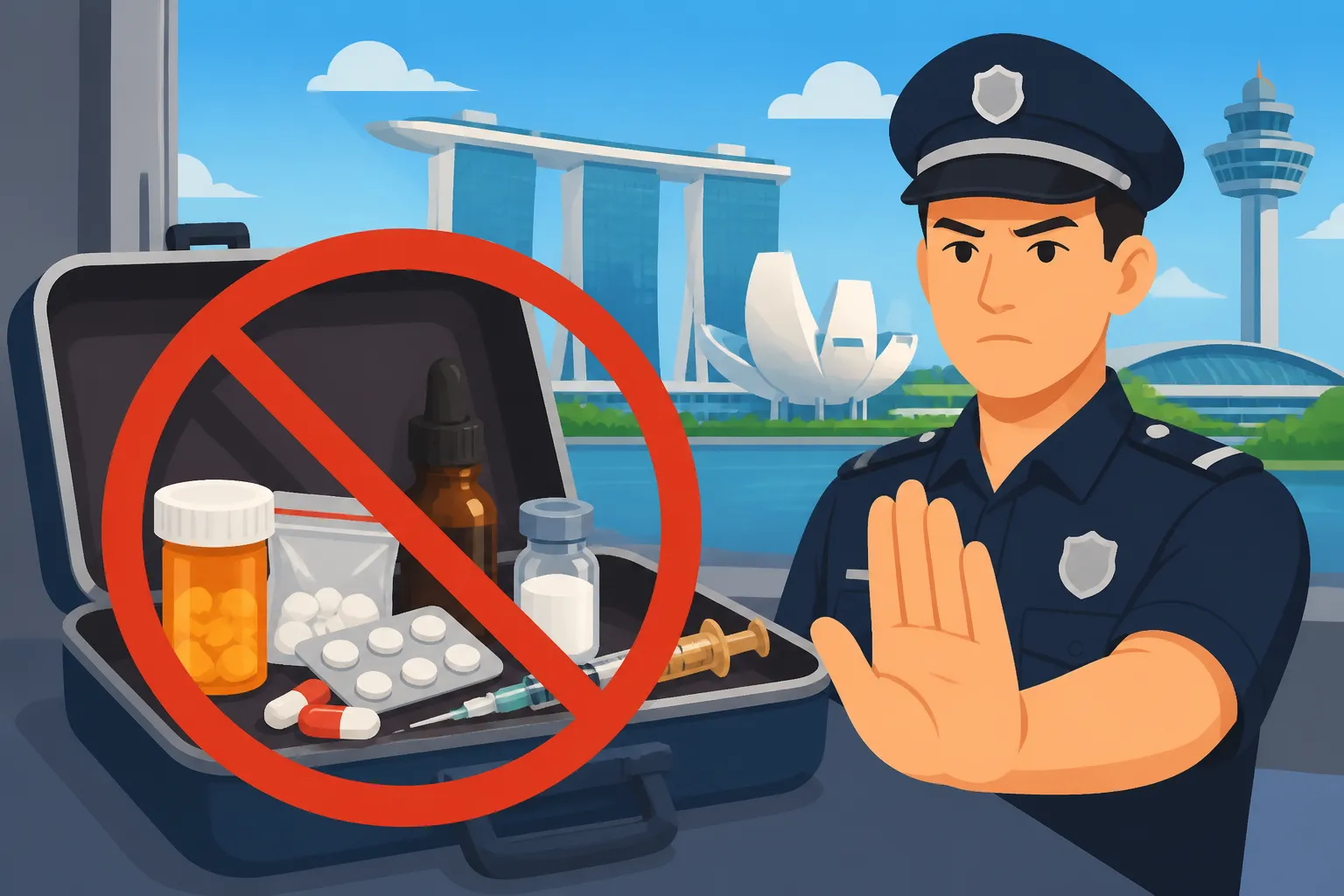
One of the most frequent "traps" for Western expats involves the rise of CBD and hemp-based products. In many parts of the world, CBD gummies or oils are sold in supermarkets and used for everything from sleep to muscle recovery. In Singapore, these are treated with zero tolerance. Under the Misuse of Drugs Act, cannabis and its derivatives are Class A controlled drugs. Bringing even a small bottle of CBD oil into the country, regardless of its THC content or whether you have a prescription from home, can result in severe legal consequences, including long-term imprisonment.
This prohibition extends to "hemp" products as well. There are reports of people having their luggage searched because of a hemp-seed granola bar or a hemp-infused face cream. While the authorities are primarily looking for ingestible drugs, the hassle of a secondary screening is something you want to avoid. If you rely on these for wellness, you will need to find local alternatives that are HSA-approved, which usually means shifting to more traditional medical treatments.
Furthermore, it is vital to understand that the Bringing Prescription Medication into Singapore: HSA Approval Rules apply even if you are just transiting through Changi. If you have to clear customs to pick up your luggage or switch terminals, you are technically importing those substances into the country. If you are a long-term expat, you should eventually look into Finding Medical Care: Hospitals, Polyclinic, and GP Networks to establish a local relationship with a doctor who can take over your prescriptions once your initial three-month supply runs out.
What to Do at the Changi Airport Checkpoint
When you land, the "Red Lane" and "Green Lane" are not just suggestions. If you are carrying any medication that required a permit, or if you are carrying more than a three-month supply of anything, you must head to the Red Lane to declare your items. Present your HSA approval letter and your doctor’s note to the Immigration and Checkpoints Authority (ICA) officer. Most of the time, if your paperwork is in order, the process is surprisingly quick. They might count the pills to ensure they match the approved amount, but otherwise, they are professional and efficient.
If you choose the Green Lane and are stopped for a random check with undeclared controlled substances, the "I didn't know" excuse will not work. Singapore’s legal system is built on the principle of personal responsibility. For those who may be worried about the cost of maintaining their health while navigating these rules, understanding Healthcare Budgeting in Singapore: Managing Out-of-Pocket Costs is a great way to prepare for the transition.
For those moving with families, special care must be taken with children's medications. Pediatric ADHD or anxiety medications are heavily scrutinized. You should consult a Family Health Guide: Maternity, Pediatrics, and Child Development to see how local schools and doctors handle these conditions. Often, you will find that while the rules for bringing the meds in are strict, the local support system, once you are integrated, is world-class.
Managing Your Supply Long-Term
Once you have successfully brought your initial supply into the country, your next hurdle is getting a refill. You cannot use a foreign prescription at a Singaporean pharmacy. You will need to see a local doctor, provide them with your medical history and your home country's prescription, and have them issue a new Singaporean prescription. This is where Pharmacies and Medication in Singapore: Prescriptions and OTC Rules becomes essential reading. Not all medications available in the US or Europe are registered in Singapore, so your local doctor might need to suggest a "therapeutic equivalent."
If your specific brand of medication isn't available, your doctor may need to apply for a special import on your behalf, which can be expensive. This is why having comprehensive coverage from a provider like Cigna Global is a lifesaver for expats with chronic conditions; they can often help cover the higher costs of imported medicines. Similarly, for those who travel frequently around Southeast Asia, having a flexible plan like SafetyWing ensures that if you lose your medication or have a medical emergency while on a weekend trip to Bali, you aren't left stranded.
It is also worth noting that some common over-the-counter drugs back home are regulated differently here. For instance, Cough Syrups and Cold Meds: Restrictions on Codeine in Singapore are quite strict, and you often have to provide your ID just to buy a bottle of syrup behind the counter. For those struggling with the transition or the stress of these administrative hurdles, there is plenty of Mental Health in Singapore: Counseling, Psychiatry, and Expat Support available to help you navigate the "expat blues" and the anxiety of a new legal environment.
Summary Checklist for Travelers
To ensure you don't run afoul of the law, follow this sequence every time you prepare to fly into the Little Red Dot:
- Identify the active ingredients in all your medications.
- Check the HSA website to see if any are on the "Controlled" or "Psychotropic" lists.
- If they are controlled, apply for an HSA permit at least 10 days before your flight.
- If they are not controlled, ensure you have no more than a 3-month supply.
- Obtain a fresh doctor's letter in English detailing your condition and dosage.
- Keep all medicine in original, labeled packaging.
- Declare everything at the Red Lane upon arrival.
If you are unsure about whether a substance is allowed, the safest route is always to email the HSA directly. They are generally very responsive to inquiries from foreigners. Being proactive is the difference between a smooth move and a very stressful introduction to Singapore's legal system. Make sure you also understand the HSA Approval for Personal Medications: The 3-Month Supply Rule to avoid accidentally bringing in too much of even "safe" medicines like basic antibiotics or blood pressure pills.
Navigating the healthcare landscape here can feel like a full-time job at first, especially when you are also trying to figure out Expat Health Insurance in Singapore: Public vs Private Coverage. But once you have your local GP and your prescriptions sorted, you’ll find that the system is incredibly reliable. You just have to play by the rules—and in Singapore, the rules are everything.
Disclaimer
This article is for informational purposes only and does not constitute legal or medical advice. Regulations regarding controlled substances in Singapore are subject to change by the Health Sciences Authority (HSA) and the Ministry of Manpower. Always verify current requirements on official government websites before traveling. Neither the author nor this publication assumes liability for any legal issues or health complications arising from the use of this guide.