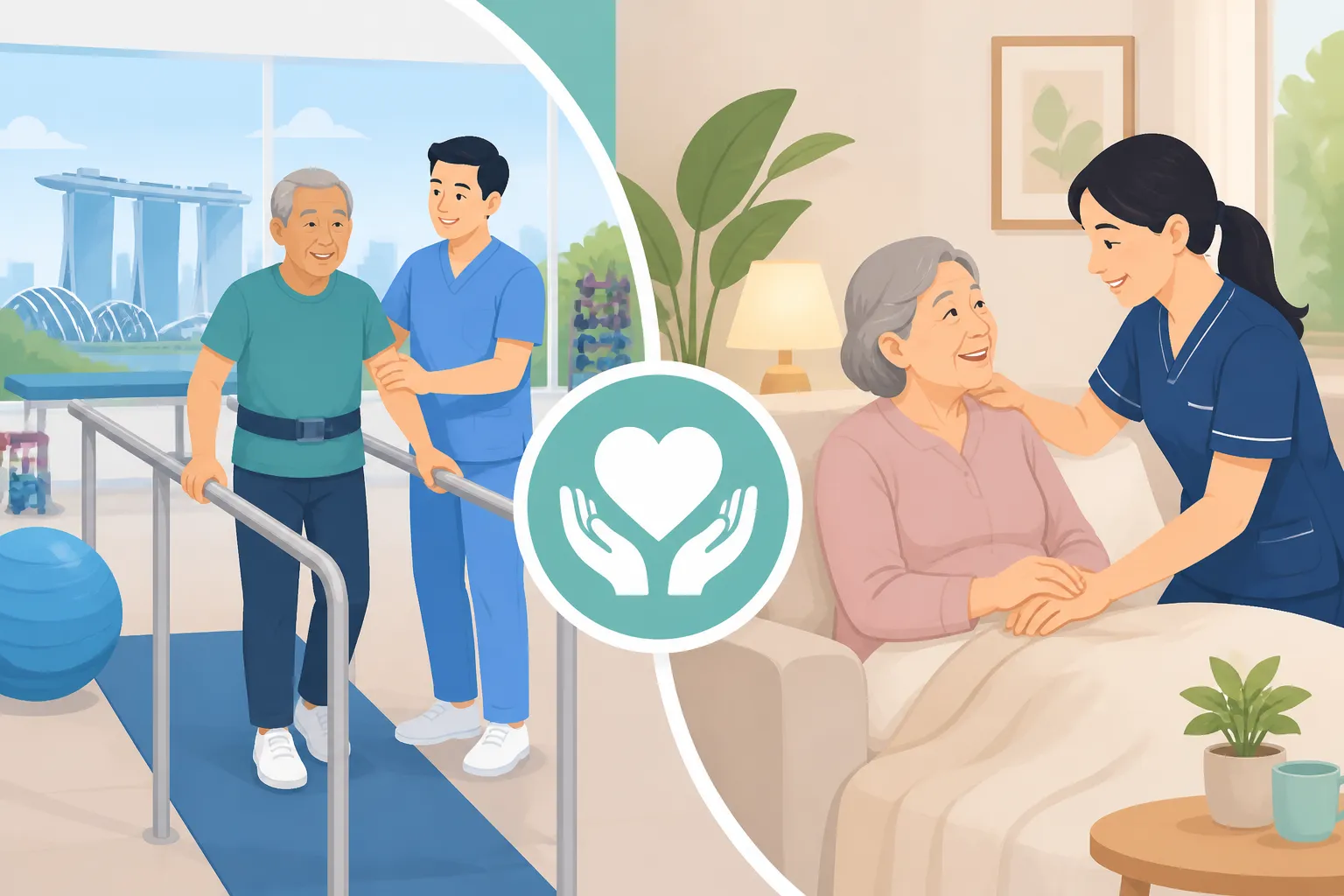
Post-Surgery Rehabilitation Centers and At-Home Nursing Care
The moment the anesthesia wears off and your surgeon tells you the procedure was a success, a new, daunting realization often hits: you are not yet ready to manage a household alone. When I went through my first major surgery here, I realized that my sleek, high-floor condo was actually a minefield of slippery tiles and narrow doorways. This guide solves the post-surgical puzzle by breaking down Singapore's specialized rehabilitation centers and at-home nursing options.
Transitioning from Hospital to Home: The Expat Reality
In Singapore, the healthcare system is incredibly efficient, often moving patients out of acute care beds as soon as they are medically stable. While this is great for hospital throughput, it can leave expats in a lurch, especially if they don't have local family members to assist with daily living. Unlike back home where you might have a network of relatives to drop off casseroles, here you are often navigating a foreign environment while physically compromised.
Why the Hospital-to-Home Gap is Harder for Foreigners
For many of us, our support system is thousands of miles away. You might be living in a bustling district like Orchard or River Valley, surrounded by world-class amenities, but those amenities feel unreachable when you can’t walk to the lift lobby. The Singapore Healthcare System for Expats: Complete 2027 Guide highlights that while acute care is top-tier, the "step-down" care is where many expats struggle to find their footing.
I remember the panic of realizing I couldn't even reach the intercom to let a delivery driver in. This "gap" is not just physical; it's administrative. You have to coordinate follow-up appointments, manage complex medication schedules, and ensure wound care is handled professionally to avoid infections that could land you back in a ward at Singapore General Hospital (SGH) and Public Hospital Access for Expats.
Assessing Your Home Environment for Recovery
Before you even go under the knife, you need to do a "recovery audit" of your apartment. Singaporean condos are beautiful, but they often feature sunken living rooms, high bed frames, and bathrooms that lack grab bars. If you are recovering from orthopedic surgery, these aren't just inconveniences—they are hazards.
You should consider whether your current layout allows for a wheelchair or walker. If your master bedroom is on the second floor of a penthouse, you may need to temporarily relocate to the living room. Understanding these logistical hurdles early on allows you to decide if at-home nursing is enough, or if a dedicated rehabilitation center is a safer bet for those first two weeks of intensive recovery.
Post-Surgery Rehabilitation Centers in Singapore
If your recovery requires intensive physical therapy or 24/7 monitoring that your spouse or partner simply cannot provide, a rehabilitation center is the gold standard. In Singapore, these generally fall into two categories: public community hospitals and private nursing or rehab facilities.
Public Community Hospitals
Community Hospitals (CHs) like St. Andrew’s or Yishun Health are designed specifically for patients who no longer need the high-intensity equipment of an acute hospital but aren't ready for home. They focus heavily on "re-learning" daily tasks. However, as an expat, you must be aware that these facilities often prioritize Singapore Citizens and Permanent Residents for subsidies and bed space.
While you can access them as a private-paying foreigner, the costs can escalate quickly. These wards are often more functional than luxurious, focusing on communal dining and shared therapy spaces to encourage mobility. If you are looking for a more personalized or "premium" experience, you might find the environment quite different from the private wings of Mount Elizabeth, Gleneagles, and Raffles: Premium Private Hospitals.
Private Rehabilitation Centers and Nursing Homes
For those who want a private room, high-speed Wi-Fi, and a more "hotel-like" atmosphere, private rehabilitation centers are the way to go. Facilities like Orange Valley or Allium Healthcare offer specialized post-surgical packages. These centers provide a multidisciplinary team including physiotherapists, occupational therapists, and on-site nurses.
The benefit of a private center is the ratio of staff to patients. You get more personalized attention, and the facilities often include specialized gyms designed for geriatric or post-operative recovery. This is particularly useful if your procedure was complex, such as a spinal fusion or a total hip replacement, where the first 14 days of movement are critical for long-term success.
Professional At-Home Nursing Care
Many expats prefer to recover in the comfort of their own homes, surrounded by their own things. This is where at-home nursing agencies come into play. This isn't just about someone "watching" you; it's about clinical care delivered in your bedroom.
When to Hire a Private Nurse vs. a Caregiver
There is a significant difference in Singapore between a "caregiver" and a "private nurse." A caregiver is typically trained in basic assistance like showering, feeding, and mobility. A private nurse, however, is a Registered Nurse (RN) or Enrolled Nurse (EN) licensed by the Singapore Nursing Board.
If you have surgical drains, require IV antibiotics, or need complex wound dressing changes, you must hire a licensed nurse. Some expats try to save money by asking their domestic helper to manage medical tasks, which is not only unfair to the helper but also legally and medically risky. If your recovery involves anything that "pierces the skin" or requires clinical judgment, the expense of a professional nurse is non-negotiable.
Top Nursing Agencies and Mobile Medical Services
Agencies like Homage and Jaga-Me have revolutionized home care in Singapore. They operate through apps, allowing you to book nursing shifts or therapist visits with just a few taps. This flexibility is perfect for the "tapering" phase of recovery—you might need 12-hour nursing for the first week, but only a 2-hour "check-in" by the third week.
These services also offer mobile doctors who can come to your home to perform blood tests or review your progress, saving you a painful trip in a taxi to the clinic. This is a life-saver during the humid "haze" season or the frequent afternoon thunderstorms when getting a wheelchair in and out of a car is a nightmare.
Managing Costs and Insurance for Recovery
The financial side of recovery in Singapore can be as stressful as the physical side. Post-surgery care is often a "grey area" in many insurance policies. It is vital to review Expat Health Insurance in Singapore: Public vs Private Coverage to see where your boundaries lie.
Navigating Inpatient vs. Outpatient Benefits
Most corporate insurance plans have a strict definition of "hospitalization." Often, once you are discharged from the acute hospital, the clock stops on your inpatient benefits. This means that a stay in a rehabilitation center might be classified as "outpatient" or "step-down care," which often has much lower coverage limits.
Newcomers should check their "post-hospitalization" benefit clause. A robust policy from a provider like Cigna Global often includes a specific window—usually 30 to 90 days—where post-surgical follow-ups and even home nursing are covered under the main surgical claim. Without this, you could be looking at out-of-pocket costs ranging from S$200 to S$600 per day for professional care.
The Role of International Insurance
For digital nomads or those on localized contracts, specialized international insurance can fill the gaps. For example, SafetyWing offers products that cater to the more mobile expat, though you must carefully check the specific "add-on" modules for rehabilitation. If you are planning a surgery, it is worth a call to your broker to see if you can "upgrade" your plan temporarily or if your current tier includes home nursing.
While Cigna Global tends to offer more comprehensive, long-term inpatient rehab coverage, SafetyWing can be a great bridge for those who might be between jobs or on shorter assignments in the Lion City. Regardless of the provider, always get a "Letter of Guarantee" from your insurer before checking into a rehab center to avoid a massive credit card bill at discharge.
Practical Recovery Logistics: Helpers, Food, and Equipment
Beyond the medical care, the "mechanics" of living in Singapore while recovering require a strategy. You need to think about who is cleaning the house, who is cooking, and where you are getting your medical gear.
Leveraging Your Foreign Domestic Worker (FDW)
If you already have a helper, they will be your greatest asset during recovery. However, you must be clear about their role. As noted in Hiring a Foreign Domestic Worker (Maid): Levies, Agencies, and Rules, their primary job is domestic. If you expect them to help you with "assisted transfers" (moving from bed to chair), they need training.
Many hospitals offer a "Caregiver Training Grant" or simple training sessions for helpers before the patient is discharged. I highly recommend sending your helper to a one-day course at a center like the Caregivers Training Academy. It gives them the confidence to help you without injuring themselves or you.
Equipment Rental and Meal Services
Don't buy a hospital bed or a heavy-duty wheelchair unless you absolutely have to. Singapore has a thriving market for medical equipment rental. You can have a motorized bed, a specialized "commode" chair, and oxygen concentrators delivered to your condo within hours. Check out the guide on Buying Medical Equipment (Crutches, Wheelchairs) for Home Recovery for a list of reliable vendors who handle the heavy lifting for you.
For food, consider "confinement meal" services. While traditionally used for new mothers—as discussed in Postpartum Confinement Culture in Singapore: Nannies and Care Centers—these caterers provide nutrient-dense, low-sodium, and "healing" foods that are perfect for post-surgery recovery. They deliver warm, balanced meals to your door twice a day, ensuring you aren't relying on greasy hawker food while your body is trying to knit itself back together.
Comparing Post-Surgery Recovery Options
| Feature | Community Hospital (Public) | Private Rehab Center | At-Home Nursing (Agency) |
|---|---|---|---|
| Cost (Estimated) | S$300 – S$600 / day | S$500 – S$1,200 / day | S$25 – S$60 / hour |
| Privacy | Low (Shared Wards) | High (Private Rooms) | Absolute (Your Home) |
| Medical Supervision | 24/7 Clinical Team | 24/7 Clinical Team | Periodic / Shift-based |
| Therapy Access | Scheduled daily | Intensive & Personalized | By Appointment |
| Insurance Coverage | Usually covered (Inpatient) | Depends on Policy | Usually Outpatient limits |
| Best For | Stable, mid-level rehab | High-end, luxury recovery | Moderate recovery with support |
Making the Final Decision: What’s Right for You?
Choosing between a center and home care often comes down to your personal "risk profile." If you live alone in a walk-up apartment in Tiong Bahru, a rehab center for the first week is almost mandatory for safety. If you have a supportive partner and a live-in helper in a modern condo with lift access, home nursing provides a much more comfortable environment for healing.
Before you sign any contracts, visit the facility or interview the agency. Ask specifically about their experience with your type of surgery. Most importantly, ensure you have a clear understanding of Understanding Your Employer’s Medical Benefits Package Before Signing so you know exactly who is footing the bill. Recovery in Singapore can be seamless, but it requires the same level of planning as the surgery itself.
Disclaimer
This guide is for informational purposes only and does not constitute medical or legal advice. Healthcare regulations and insurance policies in Singapore change frequently. Always consult with your surgeon, hospital discharge coordinator, and insurance provider to determine the most appropriate and covered care plan for your specific medical situation. Medical costs mentioned are estimates based on 2026 market rates and may vary significantly.