Telehealth in Singapore: Using Apps for Consultations and Prescriptions
Waking up with a sudden fever or a nagging migraine while living in a foreign city is an isolating experience that can leave you feeling incredibly vulnerable. I remember my first bout of food poisoning in River Valley, staring at the humid streets and wondering if I could even make it to a taxi, let alone wait in a crowded clinic. This guide solves that paralysis by explaining exactly how to use Singapore's world-class telehealth apps to get medical care, prescriptions, and official sick leave without ever leaving your bed.
The Rise of Telemedicine in the Little Red Dot
Singapore has transformed into a global hub for digital health, moving far beyond the experimental phase into a fully integrated part of the national healthcare strategy. For those of us who have lived here long enough, we’ve seen the shift from "digital-first" being a luxury to it being the default for busy professionals and families alike. The convenience of seeing a doctor via a smartphone screen is no longer a novelty; it is a standard of care that the Ministry of Health (MOH) has meticulously regulated to ensure safety and quality.
From Niche to Necessity
In the early days of my move here, the thought of "seeing" a doctor through a phone felt slightly suspicious, like a shortcut that might miss something important. However, the infrastructure in Singapore has made this fear obsolete. The speed of the local 5G networks and the professionalism of the participating physicians mean that a virtual consultation often feels more focused and efficient than a traditional walk-in. For expats, this is a game-changer. When you are still Choosing a Primary Care Physician (GP) in Singapore, having an app as a backup ensures you are never truly without medical guidance.
The necessity of these apps became undeniable during the global health shifts of the early 2020s, but they have remained popular because they solve the specific "pain points" of Singaporean life: the heat, the tropical rainstorms that make travel impossible, and the notoriously high opportunity cost of time for those working in the CBD. If you are managing a busy schedule, being able to book a 10-minute slot during your lunch break is infinitely better than spending two hours in a waiting room.
Regulatory Framework: Safety and Standards
One thing that always puts my mind at ease is knowing that the MOH doesn't let just anyone start a telehealth service. There is a strict Licensing Experimentation and Adaptation Programme (LEAP) that these providers had to clear. Every doctor you speak to on a reputable app is a Singapore-registered physician, meaning they hold the same qualifications as the doctor you’d see at a physical clinic. They are bound by the same ethical codes and clinical standards, which is a level of oversight you might not find in other regional digital health markets.
This regulatory rigor extends to how your data is handled. Most apps now require a login via Singpass, Singapore's national digital identity. While it might feel like an extra step, it ensures that your virtual records are accurately synced with your national health history. This is particularly useful when you are Using the HealthHub App as a Foreigner with Singpass, as it allows you to see your lab results and past prescriptions in one centralized location.
Top Telehealth Platforms for Expats in Singapore
Navigating the App Store can be overwhelming when you’re already feeling under the weather. Over the years, I’ve tried several of these platforms, and while they all offer the basics, some cater better to the expat lifestyle than others. Whether you need a quick MC for work or a specialized consultation for a chronic condition, knowing which app to open can save you a lot of frustration.
General Practitioner Apps for Common Ailments
For the "bread and butter" of medical care—flu, cough, skin rashes, or stomach bugs—WhiteCoat and Doctor Anywhere are the two heavyweights. WhiteCoat was one of the pioneers in the space and has a very polished interface. I personally found their wait times to be incredibly short, often connecting to a doctor in under five minutes. Doctor Anywhere, on the other hand, has a massive ecosystem that includes an e-marketplace for health supplements and even home-based screenings.
Both of these apps are excellent for the basics. When you are wondering How Much Does a GP Visit Cost for a Foreigner in Singapore, you’ll find that telehealth is often significantly cheaper than the walk-in rates at private clinics in Orchard or Tanglin. Most virtual consultations range from S$15 to S$25 (excluding medication and delivery), which is a fraction of what you’d pay at a premium physical GP.
Specialist and Mental Health Services Online
If your needs go beyond a simple fever, apps like Speedoc and MaNaDr offer a wider range of services. Speedoc is particularly interesting because they specialize in "hospital at home" services. If a video call isn't enough, they can actually dispatch a doctor or nurse to your condo for things like IV drips or wound dressing. This is a lifesaver for parents with young children or those caring for elderly relatives who find mobility difficult.
For those struggling with the mental toll of relocation or work stress, many of these platforms have dedicated sections for Mental Health in Singapore: Counseling, Psychiatry, and Expat Support. Being able to speak to a therapist from the privacy of your own home can lower the barrier to seeking help, especially if you are concerned about the perceived stigma of walking into a psychiatric clinic.
Corporate-Integrated Platforms
Before you pay out of pocket, check your employment contract. Many multinational firms in Singapore partner with specific telehealth providers as part of their employee benefits. If your company uses Fullerton Health or Raffles Connect, your consultations might be entirely covered or available at a heavily subsidized corporate rate.
It is always worth Understanding Your Employer’s Medical Benefits Package Before Signing because these integrations often include direct billing. This means you don’t have to pay and then wait weeks for a reimbursement; the app simply recognizes your employee ID and handles the transaction in the background. For those without corporate coverage, international plans like those from Cigna Global often have their own telehealth modules or will allow you to claim back expenses from local apps easily.
| App Name | Primary Focus | Delivery Time (Medication) | Best For |
|---|---|---|---|
| WhiteCoat | GP Consultations | 90 – 180 Minutes | Speed and Interface |
| Doctor Anywhere | Holistic Health & Wellness | 3 Hours | Corporate Users & Supplements |
| Speedoc | Urgent Care & House Calls | N/A (On-site) | Home Nursing & Procedures |
| MaNaDr | Multi-Specialty Access | Varies | Choosing Specific Doctors |
| Raffles Connect | Integrated Hospital Care | 3 – 4 Hours | Access to Raffles Specialists |
How the Telehealth Process Works in Singapore
The first time I used a telehealth app, I was worried about the "last mile"—how do I get the physical pills, and will my boss actually accept a digital PDF as a valid medical certificate? The process in Singapore is surprisingly seamless, designed to mimic the physical clinic experience as closely as possible.
Booking and Consultation Steps
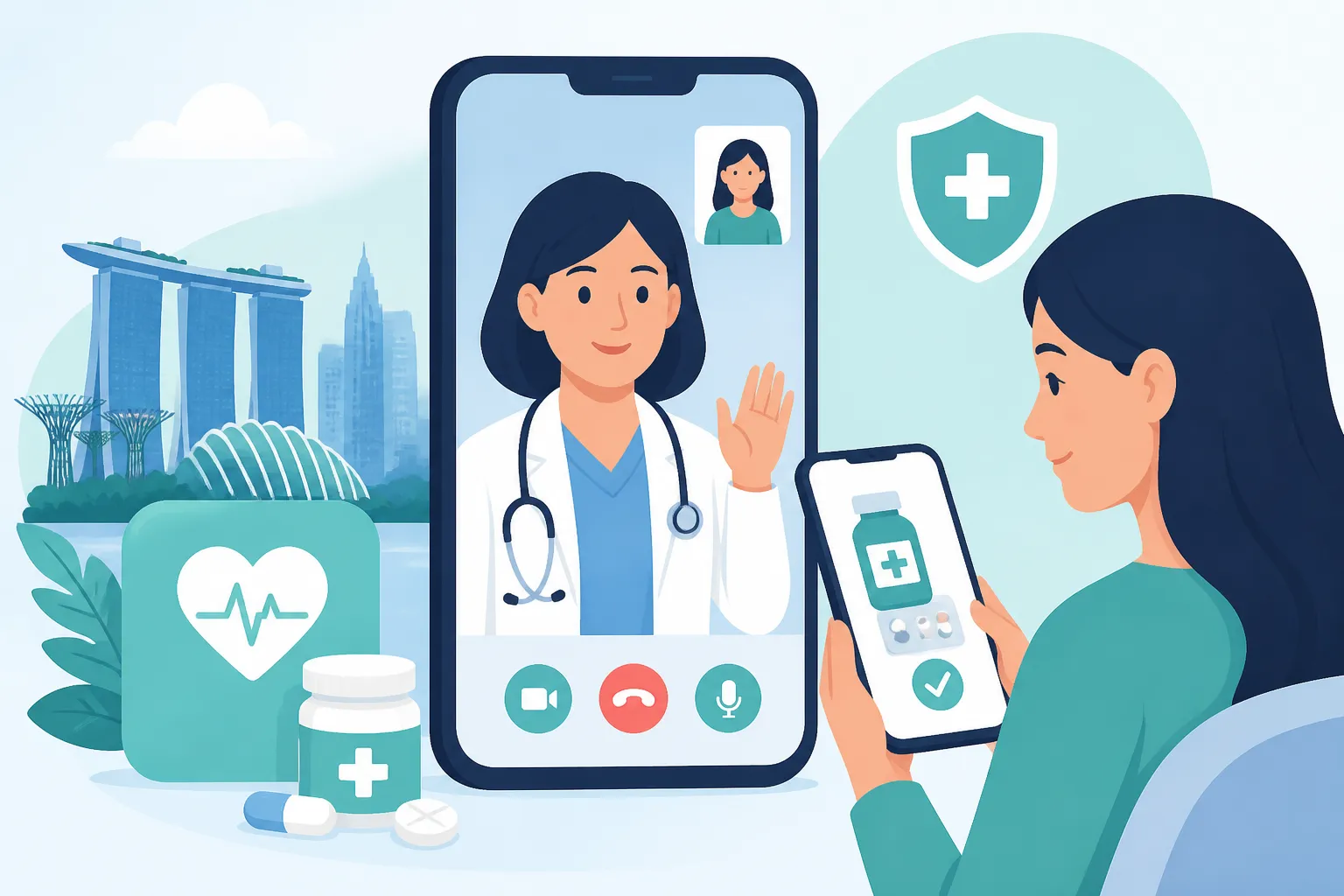
Once you’ve downloaded your app of choice and completed the registration (have your FIN card and a credit card ready), you can either enter a virtual queue or book a specific time slot. When the consultation begins, you’ll be in a secure video room. The doctor will ask about your symptoms, look at any visible issues (like a throat infection or a rash), and ask about your medical history.
Don't be afraid to be thorough. Since they can't physically palpate your abdomen or listen to your lungs, your verbal description is vital. If the doctor feels that your condition is too complex for a screen—for instance, if you have severe abdominal pain that might be appendicitis—they will tell you immediately and refer you to the nearest A&E. This triage is a crucial part of the service; they aren't just there to sell you pills, they are there to ensure you get the right level of care, which might mean a 24-Hour Clinics in Singapore: After-Hours Medical Care Guide visit instead.
Medication Delivery and Digital Prescriptions
If the doctor prescribes medication, this is where the Singapore "magic" happens. After the call, you’ll receive a notification with your prescription and the total cost. Once you click "approve" and pay via the app, the pharmacy prepares your meds. In most central areas, a courier on a motorbike will arrive at your door within 3 to 4 hours.
This is incredibly efficient, but you should be aware of the rules regarding Pharmacies and Medication in Singapore: Prescriptions and OTC Rules. Telehealth doctors can prescribe most common antibiotics, painkillers, and antihistamines. However, there are strict limits on controlled substances like certain sleeping pills or strong painkillers. If you require long-term refills for complex conditions, you might still need a physical visit to establish a rapport and a paper trail with a specialist.
Getting a Medical Certificate (MC) Virtualy
In Singapore, the "MC culture" is very real. If you are too sick to work, you need that piece of paper. Digital MCs issued through MOH-licensed apps are legally valid and recognized by the Ministry of Manpower (MOM). After your consultation, a PDF version of your MC will appear in the app's "Records" section.
You can simply email this to your HR department or upload it to your company’s leave portal. Most of these digital MCs also come with a QR code that employers can scan to verify their authenticity, which has largely eliminated the "fake MC" concerns of the past. If you are struggling with burnout, you can even discuss Getting a Medical Certificate (MC) for Mental Health Days with the doctor, as mental health is increasingly recognized as a valid reason for medical leave in the Singaporean workplace.
Understanding Costs and Insurance Coverage
Budgeting for healthcare is a major concern for any expat. While Singapore is known for its high-quality medical care, it is also known for being expensive if you aren't prepared for the out-of-pocket costs. Telehealth offers a way to keep these costs manageable, provided you understand how the billing works.
Pricing Comparison: Digital vs. Walk-in Clinics
When you walk into a private GP clinic in a neighborhood like Holland Village, you can expect to pay anywhere from S$40 to S$80 just for the consultation. If you add in the cost of medications (which are often marked up in private clinics), a single visit for a cold can easily set you back S$120.
In contrast, a telehealth consultation is often fixed at a much lower rate. Because the providers don't have the same overhead costs as a brick-and-mortar clinic in a high-rent district, they pass those savings on to you. For those focused on Healthcare Budgeting in Singapore: Managing Out-of-Pocket Costs, switching to telehealth for minor ailments can save a household hundreds of dollars a year.
Navigating Insurance Claims for Virtual Visits
The most important thing to verify is whether your insurance provider considers "telemedicine" a covered benefit. Most modern plans, including those specifically designed for nomads like SafetyWing, are very supportive of telehealth because it reduces their overall claim costs compared to an emergency room visit.
However, some older "local" plans might require a physical receipt with a clinic's stamp. Always check the "Claims" section of your app to download the official tax invoice. If you have Expat Health Insurance in Singapore: Public vs Private Coverage, you’ll likely find that private insurers are much more flexible with digital receipts. Some apps even offer "cashless" or "direct settlement" options for major insurers like Cigna Global, meaning you don't have to front the cash at all.
Limitations and When to See a Doctor in Person
As much as I love the convenience of my phone, I've learned the hard way that telehealth has its limits. There are times when trying to use an app is actually a waste of time and could delay necessary treatment. Knowing the boundaries of digital medicine is essential for your safety.
Non-Teleconsultable Conditions
There are certain symptoms that a doctor simply cannot diagnose through a camera. If you have chest pain, sudden numbness in your limbs, severe breathlessness, or deep lacerations that require stitches, do not open an app. These are red flags that require immediate physical intervention.
Furthermore, if you need a physical examination—such as a pelvic exam, a breast lump check, or an ear inspection for a suspected infection—telehealth will only be able to provide a referral. If you are already sure you need a physical test, it is better to go straight to a clinic. This is especially true for things like the Mandatory Medical Examinations for Employment Passes and PR Applications, which require blood draws and X-rays that obviously cannot be done virtually.
Emergency Scenarios and Triage
If you are in a true emergency, every second counts. The telehealth doctor is trained to recognize emergencies, but you shouldn't use them as a "pre-filter" if the situation is life-threatening. In Singapore, if you are unsure, it is better to call 995 for a state ambulance or head to the A&E.
For non-life-threatening but urgent issues—like a high fever in a child that won't come down—telehealth can be a good first step to see if you can manage it at home or if you need to head to the hospital. Just keep in mind that if the app doctor tells you to go to the hospital, you will still have to pay for the teleconsultation fee in addition to your hospital bills.
Privacy and Data Security in Singaporean Apps
As an expat, you might be wary of how much personal data you are sharing with local tech companies. Singapore has some of the strictest data privacy laws in Asia, but it is still important to understand where your medical history ends up.
Singpass Integration and HealthHub
Most major telehealth apps now encourage or require Singpass login. While this feels like "Big Brother" is watching, the reality is that it protects you. By linking your consultation to your FIN, your prescriptions are recorded in the National Electronic Health Record (NEHR). This means if you are ever unconscious in a public hospital, the doctors there can see what medications you were prescribed via an app three months ago.
This integration also allows you to see your records in the HealthHub app. It is a powerful tool for Long-Term Health: Screenings, Vaccinations, and Chronic Care because it keeps a digital timeline of your health journey in Singapore, which is incredibly useful if you ever decide to relocate and need to hand over your records to a new doctor in your home country.
Protecting Your Personal Medical Records
Beyond the government systems, the apps themselves must comply with the Personal Data Protection Act (PDPA). This means they cannot sell your medical data to third-party advertisers. When you use a reputable app like WhiteCoat or Doctor Anywhere, your video consultation is encrypted and generally not recorded (though the doctor takes digital notes, just like in a physical clinic).
If you are concerned about specific privacy issues—for example, if you are seeking help for a sensitive issue and want to ensure it doesn't appear on a company-wide insurance report—you should check the privacy settings of the app and your insurance policy. Most STD Testing in Singapore: Confidentiality and Clinic Options still prefer a physical visit for absolute privacy and the necessity of swabs, but for general health, the digital trail is as secure as any paper file in a cabinet.
Disclaimer
This guide is for informational purposes only and is based on personal experiences and local research. It does not constitute professional medical advice, diagnosis, or treatment. Always seek the advice of a qualified healthcare provider with any questions you may have regarding a medical condition. Never disregard professional medical advice or delay in seeking it because of something you have read in this article. The availability of services and specific app features may change; always check the latest Ministry of Health (MOH) guidelines.