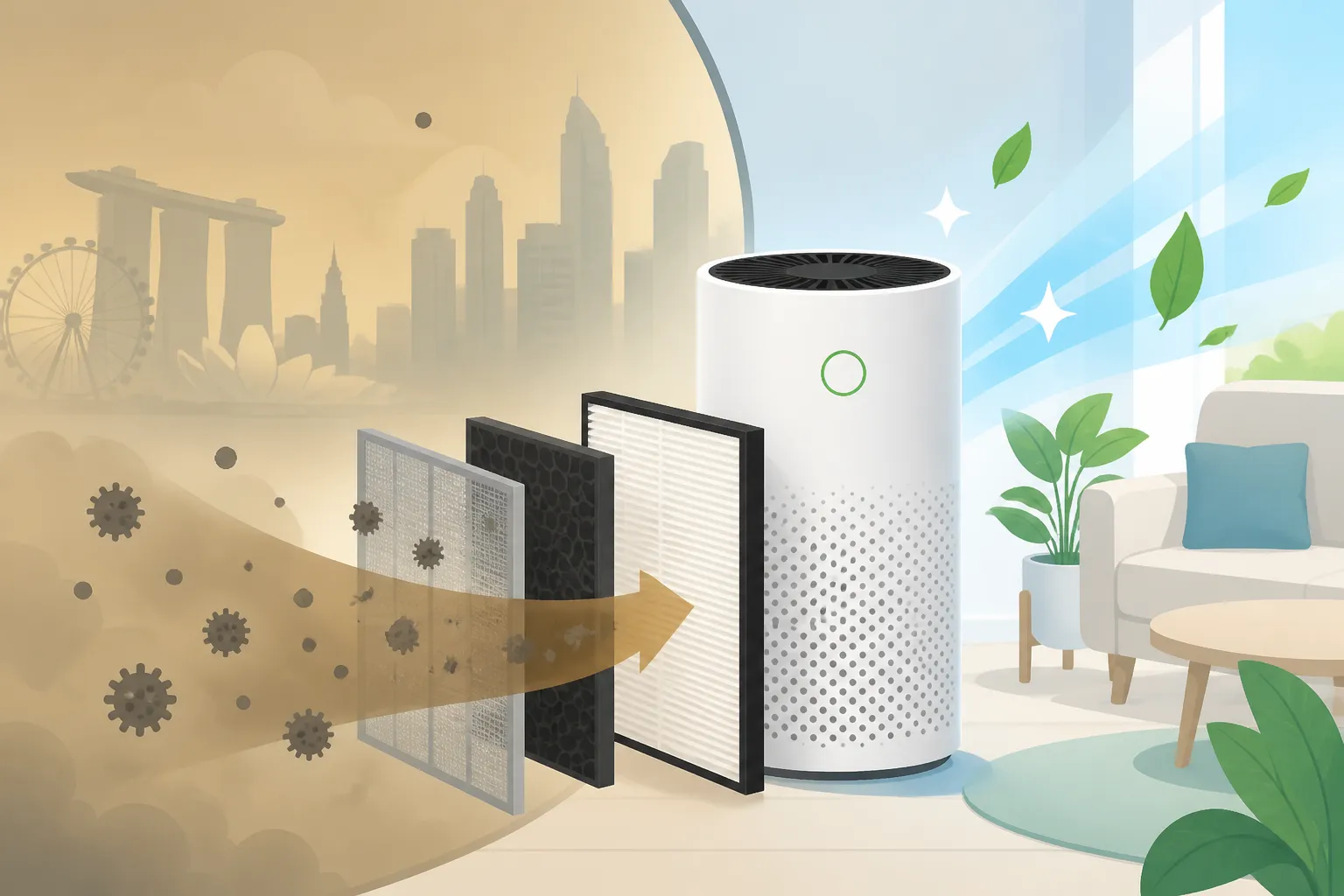
Buying an Air Purifier in Singapore: HEPA Filters for Haze Season
Waking up to a sepia-toned skyline and the distinct, pungent smell of burnt wood is a rite of passage for every newcomer to the Little Red Dot. I remember my first major haze event back in 2015; I spent the first morning wondering if someone in my Tiong Bahru walk-up was having a massive charcoal BBQ before I realized the entire city was engulfed in a gray shroud. This guide will walk you through exactly how to choose an air purifier that actually works, ensuring your home remains a literal breath of fresh air when the PSI levels start to climb.
Understanding the Singapore Haze and Why Your AC Isn't Enough
The haze in Singapore is a recurring environmental challenge, typically occurring between June and October, though it can strike at any time depending on wind patterns and agricultural practices in neighboring regions. The primary culprit is the burning of peatlands and forests, which releases a cocktail of pollutants into the atmosphere. For an expat, the most critical term to learn is PM2.5. These are fine particulate matters that are 2.5 microns or smaller in diameter—roughly 30 times smaller than a human hair. Because they are so tiny, they can bypass the natural filters in your nose and throat, lodging deep in your lungs and even entering your bloodstream.
Many newcomers mistakenly believe that keeping the air conditioning on is enough to filter out these particles. Unfortunately, most standard residential split-unit air conditioners in Singapore are designed to cool and recirculate air, not to purify it. Their mesh filters are great for catching dust bunnies and pet hair, but PM2.5 particles sail right through them. If you or your family members suffer from pre-existing conditions, you should consult the Air Quality and Haze in Singapore: Managing Asthma and Allergies guide to understand how these particles can trigger flare-ups.
Living through a high-PSI week is as much a mental challenge as a physical one. Being trapped indoors with the windows sealed can feel claustrophobic. If you find the lack of sunlight and outdoor activity affecting your mood during these periods, it might be worth looking into Mental Health in Singapore: Counseling, Psychiatry, and Expat Support for strategies to manage "haze cabin fever." To keep the air truly safe, you need a dedicated air purifier equipped with a High-Efficiency Particulate Air (HEPA) filter.
Decoding the Specs: What Actually Matters for a Singapore Home
When you walk into a Harvey Norman or browse Shopee, you’ll be bombarded with technical jargon like CADR, ACH, and Ionizers. It’s easy to feel overwhelmed and just buy the most expensive model, but price doesn't always correlate with effectiveness against haze. The gold standard for haze protection is a mechanical HEPA filter. Look for a True HEPA filter, specifically those rated H13 or higher. These are medical-grade filters capable of capturing 99.97% of particles as small as 0.3 microns.
Another crucial metric is the Clean Air Delivery Rate (CADR). This tells you how much filtered air the machine can produce in an hour. A common mistake I see expats make is buying a small, "cute" purifier meant for a desktop and placing it in a large Orchard Road living room. If the CADR is too low for the room size, the purifier will never be able to keep up with the microscopic leaks around your windows and doors. You want a machine that can provide at least five Air Changes per Hour (ACH).
For those who move frequently or are in Singapore on a digital nomad visa, having portable protection is key. Brands like SafetyWing offer insurance products that are popular with the mobile expat community, and they often emphasize the importance of maintaining health in regions prone to seasonal pollution. If you are here for the long haul, securing Expat Health Insurance in Singapore: Public vs Private Coverage is a wise move, as chronic exposure to poor air quality can lead to respiratory issues that require specialist intervention. Cigna Global is another brand that many of my peers use because their international plans often cover the kind of diagnostic screenings you might want after a particularly bad haze season.
| Feature | Importance for Haze | What to Look For |
|---|---|---|
| Filter Type | Critical | True HEPA (H13 or H14) |
| Carbon Filter | High | Thick activated carbon pellets for smells |
| CADR | High | 300 m³/h or higher for living rooms |
| Noise Level | Moderate | Below 30dB for bedroom use |
| Smart Sensors | Useful | PM2.5 real-time laser sensors |
Top Air Purifier Brands and Models in Singapore for 2026
The market in Singapore is mature, meaning you have access to some of the best technology in the world. For 2026, the trend has shifted toward "smart" purifiers that integrate with the NEA (National Environment Agency) app to automatically ramp up their fan speed when outdoor pollution spikes.
-
Blueair (The Heavy Hitter): Often considered the "Volvo" of air purifiers, Blueair machines use a combination of mechanical and electrostatic filtration. They are incredibly quiet and have a high CADR, making them perfect for large condo living areas. They are a bit pricier, so factor this into your Healthcare Budgeting in Singapore: Managing Out-of-Pocket Costs if you view air quality as a preventative health expense.
-
Xiaomi (The Budget King): If you are looking for the best bang for your buck, the Xiaomi Smart Air Purifier series is ubiquitous in Singapore. The replacement filters are affordable and easy to find at any Mi Store or on Lazada. While they might feel a bit more "plasticky" than European brands, their H13 HEPA performance is solid.
-
Dyson (The Multi-Tasker): Dyson’s Purifier Cool range combines a fan with a high-end filter. While the CADR isn't always as high as a dedicated box-style purifier, their sensors are top-notch. They are excellent for bedrooms where you want both air movement and filtration. If you have children, the bladeless design is a significant safety plus. For more on keeping your little ones healthy, check out the Family Health Guide: Maternity, Pediatrics, and Child Development.
Regardless of the brand you choose, the activated carbon layer is just as important as the HEPA filter during haze. The carbon is what removes the volatile organic compounds (VOCs) and that "burning" smell. Without it, your air might be "clean," but your home will still smell like a campfire. If the smell becomes unbearable and starts causing headaches or nausea, don't hesitate to seek help through Finding Medical Care: Hospitals, Polyclinics, and GP Networks to rule out more serious reactions.
Maintenance and Filter Replacement: The Tropical Challenge
One thing no one tells you about owning an air purifier in the tropics is the "wet dog" smell. Singapore’s high humidity, often exceeding 80%, can interact with the dust and organic matter trapped in your filters. If you don't run your purifier regularly or if your home is particularly damp, mold can grow on the filter medium itself. I’ve had to throw out perfectly good HEPA filters after only three months because they started smelling musty.
To prevent this, it is wise to run your purifier on a low setting 24/7, even when the haze isn't active. This keeps the air moving and prevents moisture from settling. Also, check the pre-filter (the mesh screen in front of the HEPA) every two weeks. In a dusty city-state like Singapore, this will get clogged with lint and hair quickly. Vacuuming the pre-filter can extend the life of your expensive HEPA filter by months.
If you find yourself struggling with respiratory issues despite having a purifier, it might be time for a professional check-up. Navigating the Singapore Healthcare System for Expats: Complete 2027 Guide can be daunting, but it's essential for long-term health. Plans from Cigna Global are particularly useful here as they often allow for direct billing at premium clinics, saving you the hassle of manual claims. For those on a tighter budget, understanding how Healthcare Budgeting in Singapore: Managing Out-of-Pocket Costs works will help you decide between a private specialist and a polyclinic visit.
Practical Tips for Your Condo During Haze Season
Buying the machine is only half the battle. You need to manage your environment to make the purifier's job easier. First, check your window seals. Many older condos in areas like River Valley or East Coast have slight gaps in the sliding doors. During haze, these gaps act like vacuums, sucking in polluted air. Using simple weather-stripping tape from a DIY shop like Selffix can make a massive difference.
Second, be mindful of your "in and out" traffic. If you have a balcony, keep the doors shut tight. If you must go out, try to do so during the early morning or late evening when the PSI often dips slightly. If you start feeling the effects of the air—chest tightness or a persistent cough—know where the nearest Emergency Medical Care in Singapore: Ambulances and A&E Wards is located. While 99% of haze-related issues aren't life-threatening, it’s better to be prepared. SafetyWing is a great option for short-term visitors or those awaiting their permanent insurance to kick in, as they provide coverage for unexpected medical emergencies.
Finally, keep an eye on your indoor activities. Avoid burning candles or incense during haze season, as these add more particulate matter to your already stressed indoor environment. Even cooking on high heat can spike your indoor PM2.5 levels. If you are managing chronic health issues, refer to Managing Chronic Conditions: Diabetes and Hypertension Care for Expats to see how environmental stressors like haze can complicate your overall wellness routine.
Disclaimer
The information provided in this guide is for educational and informational purposes only and does not constitute medical or professional health advice. Air quality needs can vary significantly based on individual health conditions and home environments. Always consult with a qualified healthcare professional regarding any respiratory concerns or before making significant changes to your health management plan. All brand mentions are based on market availability in Singapore as of 2026 and do not imply a formal endorsement.