Navigating Palliative and Hospice Care Options for Elderly Relatives
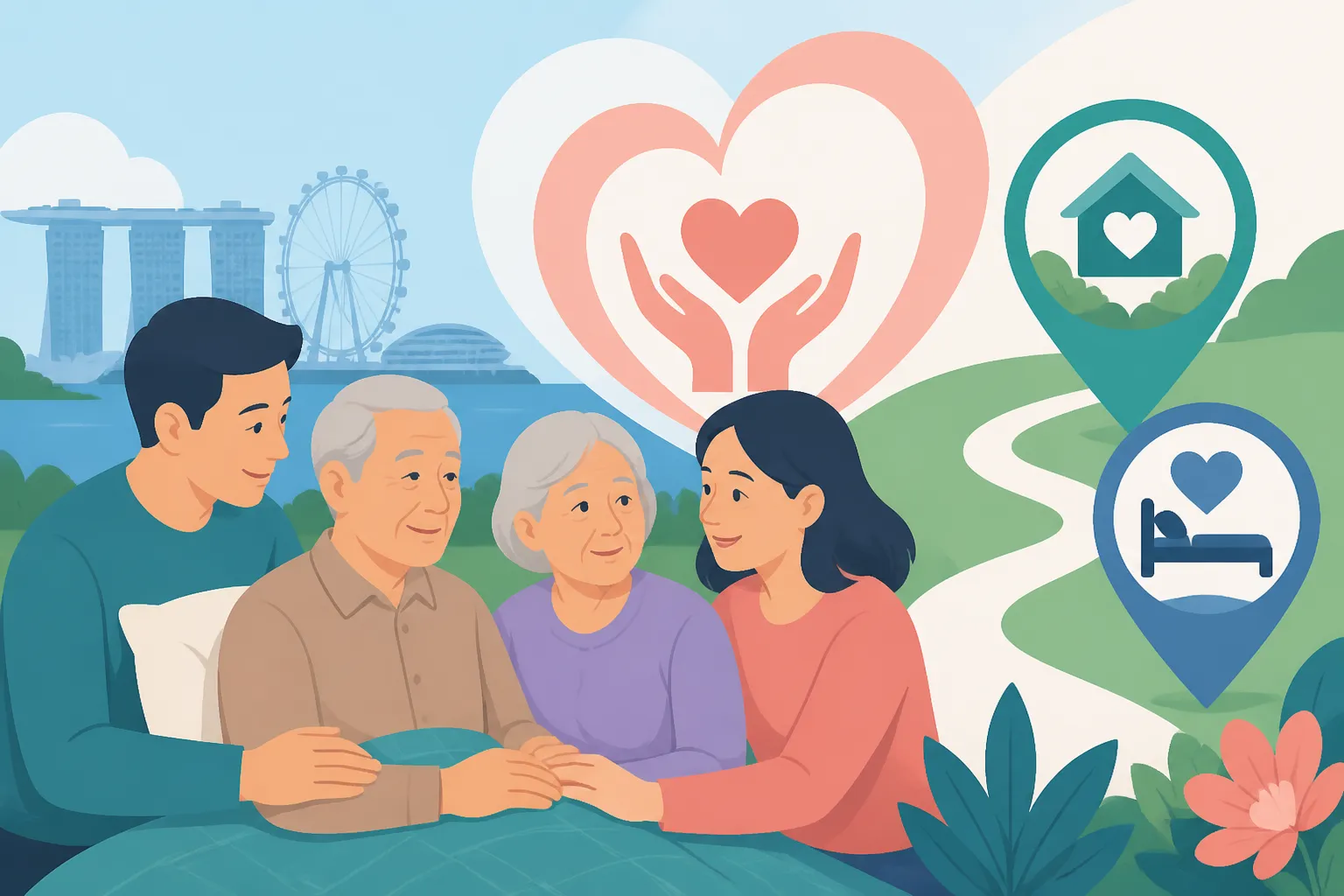
One of the most heart-wrenching challenges we face as expats is managing the end-of-life care for elderly relatives in a system that isn't our own. I personally spent months navigating the sterile corridors of local hospitals when my own family member’s health took a sudden turn for the worse. This guide provides the clarity and emotional grounding you need to navigate palliative and hospice care options in Singapore.
Understanding Palliative Care vs. Hospice Care in the Singapore Context
In Singapore, the terms palliative care and hospice care are often used interchangeably, but they represent different stages of a very personal journey. Palliative care is an approach that improves the quality of life for patients facing life-threatening illnesses. It is not just for those at the very end; it can be integrated early in the course of an illness, alongside curative treatments. Many expats find themselves overwhelmed by the technicality of local medical jargon, but the core focus here is always on pain management and psychological support.
Hospice care, conversely, is a specific type of palliative care that usually begins when curative treatments are no longer an option or the patient has a prognosis of six months or less. In Singapore, this transition can be abrupt. You might be having a consultation at one of the Mount Elizabeth, Gleneagles, and Raffles: Premium Private Hospitals only to be told that the focus must shift to comfort. It is a staggering moment, and understanding the local infrastructure is the first step toward reclaiming some sense of control.
The Singaporean healthcare model is highly efficient, but it expects a high level of family involvement. Unlike some Western countries where the state might take a more proactive "nursing home first" approach, Singapore emphasizes "dying in place"—ideally at home. For an expat family with limited local relatives, this expectation can feel like an impossible weight. However, the system does offer robust support if you know where to look and how to ask.
Types of Hospice Services Available for Foreigners
When you are looking for hospice care, you generally have three main avenues: home-based care, inpatient hospice facilities, and day hospices. For many of us living in condos or rented black-and-whites, the idea of home care can be daunting. You worry about whether your Expat Health Insurance in Singapore: Public vs Private Coverage will cover the specialized equipment needed, like hospital beds or oxygen concentrators, and whether your domestic helper is equipped to handle the emotional and physical toll.
Inpatient hospice care is often the most sought-after option for expats who lack a large support network at home. Facilities like Assisi Hospice or Dover Park Hospice provide specialized wards where the environment is much more "home-like" than a standard hospital. They focus on dignity and comfort, allowing family members to stay overnight. However, as a foreigner, you must be prepared for the reality that admission criteria can be strict, and priority is often given to citizens and Permanent Residents.
Day hospices are an excellent middle-ground option. They provide a place for the patient to go during the day for social interaction, basic medical supervision, and therapy, giving the primary caregiver a much-needed break. This is particularly useful if you are still working on an Employment Pass and need to ensure your relative is safe during office hours. This should be a key part of your Expat Health Checklist for the First 30 Days in Singapore if you are moving with elderly dependants.
Financial Realities: Costs, Insurance, and Subsidies
We need to talk about the elephant in the room: the cost. Singapore’s healthcare is world-class, but for non-residents, it is also world-class in price. Expats are generally excluded from government subsidies that make hospice care affordable for locals. This is a significant point of stress that can break many families’ budgets. When you are looking at Healthcare Budgeting in Singapore: Managing Out-of-Pocket Costs, hospice care must be its own dedicated line item.
Most public hospices use a means-testing system for subsidies, but as an expat on a high-tier visa, you will likely fall into the "private" or "non-subsidized" category. This means you could be looking at several hundred dollars per day for inpatient care. It is vital to check your policy with providers like Cigna Global to see if palliative care is included in your inpatient benefits. Many international plans have a specific "hospice" or "palliative" rider that can save you tens of thousands of dollars.
For those on more flexible or short-term arrangements, perhaps visiting on a Long-Term Visit Pass, specialized travel-health hybrids like SafetyWing can offer essential medical coverage for acute episodes, though they may not cover long-term terminal hospice stays. You must proactively manage your expectations by reading up on The Real Cost of Cancer Treatment for Uninsured Expats in Singapore to understand how chronic illness billing spirals into palliative care costs.
| Type of Care | Average Daily Cost (Non-Subsidized) | Best For | Key Consideration |
|---|---|---|---|
| Home Hospice | S$150 – S$300 per visit | Families with live-in help | Requires 24/7 family presence |
| Inpatient Hospice | S$400 – S$800 | Complex symptom management | Limited beds for foreigners |
| Day Hospice | S$50 – S$120 | Respite for working caregivers | Transport can be a logistical hurdle |
| Private Palliative Ward | S$1,000+ | Maximum privacy and luxury | High out-of-pocket expenses |
Practical Steps for Expats Navigating the System
If you find yourself in the position of needing to arrange this care, your first point of contact should be your relative's primary specialist or a Choosing a Primary Care Physician (GP) in Singapore who has experience with geriatric care. They will need to issue a formal referral to the Singapore Hospice Council or a specific hospice provider. Do not wait for a crisis to start these conversations. The "waiting list" for inpatient hospice beds can be unpredictable.
Simultaneously, you must address the legalities. Singapore is very strict about medical decision-making. If your relative has not yet signed an Advance Care Plan (ACP) or a Lasting Power of Attorney (LPA), you may face massive administrative hurdles if they lose the capacity to communicate. This is one of the most common Senior Expat Healthcare: Managing Costs for Retirees and Older Dependants issues—families get locked out of bank accounts or medical decisions because they skipped the local legal paperwork.
You should also look into specialized equipment rentals. Companies like BW Generation or various medical supply shops in the Novena area allow you to rent high-end palliative care beds and monitors. This is often much cheaper than buying them outright, especially if you aren't sure how long the care will be needed. Check if your corporate health plan or a comprehensive policy from Cigna Global covers the rental of durable medical equipment.
Dealing with Language Barriers and Local Customs
While English is the main language in Singaporean hospitals, the "heart language" of the palliative care sector is often a mix of Mandarin, Malay, Tamil, and various dialects. Nurses and social workers are incredibly empathetic, but as an expat, you might find the directness (or sometimes the indirectness) of local medical communication jarring. In some local cultures, discussing death openly is still considered "taboo" or "bad luck," which can lead to some doctors being more hesitant to give a grim prognosis than you might be used to in London or New York.
You also need to navigate the cultural landscape of "filial piety." In Singapore, the family is expected to be the primary caregiver. You might feel a subtle pressure from hospital staff to bring your relative home, even if you feel completely unequipped to handle the medical needs. It is okay to be firm about your limitations. Explain your living situation and your lack of an extended family network in Singapore. The hospital's Medical Social Worker (MSW) is your best ally here; they can help bridge the gap between your reality and the hospital’s expectations.
If the stress becomes too much—and it often does—don't hesitate to seek professional help. Mental Health in Singapore: Counseling, Psychiatry, and Expat Support is a vital resource for the primary caregiver. Watching a loved one decline in a foreign country can lead to a unique type of "expat isolation." Finding a therapist who understands the specific grief of the international life can be a lifeline.
Managing Medical Evacuation and Repatriation
There is a final, difficult question that many expat families face: Should we stay in Singapore or go home? If the elderly relative is a visitor, your Medical Evacuation and Repatriation: Why Expats Need International Cover becomes the most important document in your drawer. Moving a terminally ill patient across the world is a massive undertaking involving air ambulances and specialized "bed-to-bed" transfers.
If your relative is a permanent fixture of your life here, you may decide that the quality of Finding Medical Care: Hospitals, Polyclinics, and GP Networks in Singapore is higher than what they would receive back home. In that case, the focus shifts to ensuring their final days are spent in a place that reflects their life here—perhaps with a view of the greenery they loved or near the community they built. For those with a more transient lifestyle, SafetyWing can sometimes provide the necessary support for sudden medical crises that occur before a long-term plan can be enacted.
Regardless of your choice, the key is to document everything. Keep a folder with their NRIC or FIN, their latest medical reports from Singapore General Hospital (SGH) and Public Hospital Access for Expats, and their insurance cards. In an emergency, having these ready is the difference between a calm transition to hospice and a frantic night in the Emergency Medical Care in Singapore: Ambulances and A&E Wards.
Disclaimer
This guide is for informational purposes only and does not constitute medical, legal, or financial advice. Healthcare regulations and costs in Singapore are subject to frequent change. Always consult with qualified medical professionals and insurance providers regarding your specific circumstances and those of your relatives.