Finding Medical Care: Hospitals, Polyclinics, and GP Networks
Getting sick in a foreign country is one of the most isolating experiences you can have, especially when you’re staring at a medical bill that looks like a monthly mortgage payment. I remember my first week in Singapore, wandering through a humid shopping mall with a throbbing sinus infection, completely paralyzed by whether I should find a "GP" or just head to the A&E. This guide breaks down the Singapore healthcare landscape so you can find the right care at the right price without the panic.
Understanding the Singapore Healthcare Landscape
When you first arrive, the sheer efficiency of Singapore can be deceptive. You see gleaming buildings and high-tech kiosks, but the underlying structure of how people access care is actually a very specific three-tiered system. It is designed to prioritize residents, which means as an expat, you need to understand where you fit in the queue and the pricing brackets. The system is divided into primary care (GPs and Polyclinics), secondary/tertiary care (Hospitals), and specialized outpatient care.
For many of us coming from Western countries with universal healthcare or highly litigious insurance-based systems, the "pay-and-claim" or "co-pay" culture here can be a shock. In Singapore, healthcare is excellent but it is not a free-for-all. Every visit involves a financial transaction, and as a foreigner, you are generally charged the "standard" rate rather than the subsidized rate reserved for citizens. This makes Expat Health Insurance in Singapore: Public vs Private Coverage an essential piece of your administrative puzzle before you even step foot in a clinic.
One of the most important things I realized early on is that the public system is world-class but crowded. If you have an Employment Pass, you are technically allowed to use public facilities, but you won't receive the same subsidies as a local. Often, the price difference between a public hospital’s "A-Class" ward and a private hospital is smaller than you’d expect for an expat. This is why many long-term residents opt for comprehensive plans from providers like Cigna Global to ensure they have access to the faster, more comfortable private wing of the medical world.
General Practitioners and Neighborhood GP Networks
The General Practitioner (GP) is the gatekeeper of the Singapore medical system. Unlike some countries where you might wait weeks for an appointment with a family doctor, Singapore is littered with private GP clinics. You can find them in nearly every HDB (Housing Development Board) estate, shopping mall, and office tower. Most operate on a walk-in basis, which is incredibly convenient when you wake up with a sudden fever or a case of "Bali Belly."
Choosing a Primary Care Physician (GP) in Singapore is usually your first task. It is wise to finding a clinic near your home and another near your office. When you walk in, you’ll be asked for your FIN card (your work pass) or your passport. The consultation is usually fast—Singaporean doctors are known for being efficient and direct. Don't be surprised if the consultation lasts less than ten minutes; they are focused on diagnosis and getting you the necessary medication.
One quirk of the Singapore GP system is the in-house pharmacy. In many countries, the doctor gives you a slip and you go to a separate chemist. Here, the clinic handles the dispensing. This is convenient but can lead to "sticker shock" at the front desk because the bill includes both the consultation fee and the medication costs. If you are a digital nomad or on a short-term contract, having a flexible plan like SafetyWing can help cover these unexpected outpatient costs if they escalate into something more serious.
The Role of the Medical Certificate
In Singapore, the Medical Certificate (MC) is a sacred document. If you miss a single day of work due to illness, your employer will almost certainly require an official MC from a registered doctor. You cannot simply call in sick and stay in bed; you must physically go to a clinic to be "certified" sick. This leads to the phenomenon of "MC hunting," but for expats, it’s just a standard part of the corporate culture you have to accept.
Most private GPs charge between S$30 and S$60 for a consultation, but the medications can easily double that. If you are savvy, you can ask the doctor for a "prescription only" and buy the medicine at a retail pharmacy like Guardian or Watsons, but often the price difference isn't worth the extra trip. For those looking for 24-hour options, there are specific 24-Hour Clinics in Singapore: After-Hours Medical Care Guide locations that offer peace of mind for middle-of-the-night emergencies.
The Polyclinic Experience for Foreigners
Polyclinics are the "one-stop-shop" hubs of the public healthcare system. They are large, government-run facilities that provide everything from vaccinations to dental care and chronic disease management. For locals, they are the go-to for subsidized care. For expats, they are an option, but you need to manage your expectations regarding wait times and the environment.
The first time I went to a polyclinic, I was overwhelmed by the sheer volume of people. It’s a very "local" experience—lots of seniors, young mothers with babies, and people getting their routine screenings. As a foreigner, you will pay a higher consultation fee than a citizen, though it is still often cheaper than a high-end private clinic in the Central Business District. You can learn How to Book an Appointment at a Singapore Polyclinic Using the App to avoid standing in line for hours, as the "HealthHub" app is now the standard way to manage public health visits.
The primary benefit of a polyclinic is the integrated nature of the services. If the GP thinks you need a blood test or an X-ray, it’s usually done right there in the same building. However, the downside is the lack of continuity. You are unlikely to see the same doctor twice, and the environment can feel a bit like a high-efficiency factory. If you value a personal relationship with your physician, a private GP network is a much better fit.
When to Choose a Polyclinic
Expats generally use polyclinics for two reasons: specific government-mandated screenings or if they are on a very tight budget and don't mind the wait. If you are a Permanent Resident, you might find more value here, but for EP holders, the cost-benefit analysis often leans toward private clinics. If you do go, bring a book and your Singpass, as the digital integration is the only thing that keeps the system moving.
It is also worth noting that polyclinics are excellent for routine childhood immunizations. If you have moved with family, the Family Health Guide: Maternity, Pediatrics, and Child Development will often point you toward these centers for the National Childhood Immunisation Schedule, which is strictly tracked by the Ministry of Health.
Hospital Care: Public vs. Private Institutions
This is where the healthcare conversation in Singapore gets serious. Singapore has some of the best hospitals in the world, split into two distinct sectors. Public (Restructured) hospitals like Singapore General Hospital (SGH) and Public Hospital Access for Expats are massive, research-heavy institutions that handle the bulk of complex cases and trauma. Private hospitals like Mount Elizabeth, Gleneagles, and Raffles: Premium Private Hospitals offer a more "concierge" experience with private rooms that feel more like hotels than wards.
As a foreigner, you generally don't have access to the subsidized wards (B2 and C class) in public hospitals. You will be placed in A1 or B1 wards, which are the "private" tiers of the public system. The care is identical across all wards, but the amenities and the number of roommates change. Interestingly, the cost of an A1 ward in a public hospital can sometimes rival the cost of a private hospital. This is a crucial realization for expats: if you're going to pay top dollar anyway, many choose the speed and luxury of the private sector.
Private hospitals are favored by the expat community for their speed. You can often see a specialist and have a diagnostic scan done on the same day. In the public system, unless it’s a life-threatening emergency, you might wait weeks for a non-urgent MRI or specialist consultation. If you have a plan with Cigna Global, you’ll likely have "direct billing" at most major private hospitals, meaning you won't have to pay a massive deposit out of pocket upon admission.
| Feature | Public Hospitals (Restructured) | Private Hospitals |
|---|---|---|
| Wait Times | Can be long for non-emergencies | Usually very short / Same day |
| Cost for Expats | High (A/B1 Wards) | Very High (Premium) |
| Specialist Access | Referral-based (via GP/Polyclinic) | Direct access (Self-referral) |
| Amenities | Clinical, efficient | Hotel-like, private suites |
| Complex Trauma | Best equipped (SGH, NUH, TTSH) | Excellent, but may refer out for extreme trauma |
Emergency Care and Specialist Referrals
One of the biggest mistakes newcomers make is calling the wrong number during a crisis. In Singapore, there are two different ambulance services. Calling 995 connects you to the SCDF (Singapore Civil Defence Force) for life-threatening emergencies. These ambulances will take you to the nearest public hospital. You do not get to choose your destination. If your situation is not life-threatening, but you still need transport, you should call 1777 for a private ambulance.
Understanding Emergency Medical Care in Singapore: Ambulances and A&E Wards is vital. When you arrive at an A&E (Accident & Emergency) department, you will be triaged. If you have a minor injury and go to a public A&E, be prepared to wait 4 to 6 hours. Private hospital A&Es are much faster but significantly more expensive. I’ve had to use the A&E at Raffles Hospital before, and while I was in and out in an hour, the bill was nearly S$800 before insurance kicked in.
Specialist care follows a similar public-private split. If you want a subsidized rate at a public specialist clinic, you must get a referral from a polyclinic first. However, as an expat, since you aren't subsidized anyway, you can usually bypass this and book directly with a specialist in a private medical center. This "self-referral" is common and saves you the step of visiting a GP first, provided your insurance allows for it.
Navigating the Specialist Maze
Singapore's specialists are often clustered in "Medical Centres" attached to hospitals. For example, Mount Elizabeth Novena and Paragon Medical Centre are hubs for everything from cardiology to dermatology. When you seek a specialist, do your research on their "bedside manner" and fees. Some specialists charge a premium just for their reputation. If you’re a nomad or traveling through, a SafetyWing policy is excellent for emergency stabilization, but for ongoing specialist treatment for chronic issues, a more robust international plan is usually necessary.
Managing Costs and Medical Insurance
The reality of living in Singapore is that healthcare is a major budget line item. Unlike locals who have CPF (Central Provident Fund) and MediSave to cushion the blow, expats are essentially "self-insured" unless their company provides a stellar package. You need to understand Why Expats Are Excluded from MediShield Life and CPF Subsidies to grasp the financial exposure you have here. Without a private policy, a single surgery for appendicitis could cost you upwards of S$20,000 at a private hospital.
When reviewing your employment contract, look closely at the medical benefits. Does it cover dependants? Is there a "co-pay" (where you pay 10-20% of the bill)? Many corporate plans have a "sub-limit" for outpatient care that is surprisingly low—sometimes as little as S$500 a year. If you have a family, this won't even cover the annual flu shots and occasional ear infections.
This is where supplemental insurance comes in. Even if your company provides basic coverage, many expats "top up" with an individual plan from Cigna Global to ensure they have high-limit inpatient coverage. This protects your savings from the "catastrophic" bills that can occur with long-term hospitalizations. Always keep a digital copy of your insurance card on your phone, as hospitals will ask for it the moment you check in.
Out-of-Pocket Expenses and GIRO
For smaller clinic visits, you will pay on the spot using credit cards, NETS (a local debit system), or PayNow. For larger hospital bills, if you don't have a Letter of Guarantee (LOG) from your insurer, the hospital will require a substantial credit card authorization or cash deposit. It’s a stressful way to start a hospital stay, so always contact your insurer the moment a procedure is scheduled to arrange the LOG.
Specialized and Alternative Care
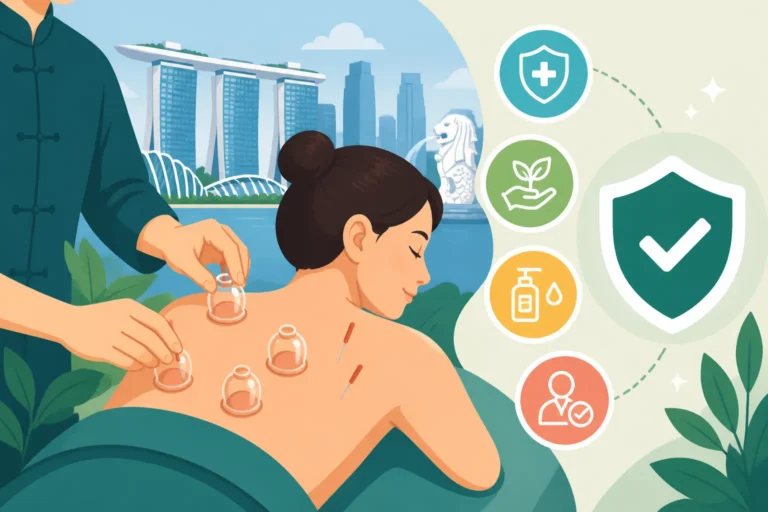
Singapore is a fascinating blend of ultra-modern Western medicine and deep-rooted Traditional Chinese Medicine (TCM). You will see TCM clinics in almost every neighborhood, and they are fully regulated by the government. Many expats find great relief in TCM for chronic back pain or stress, though you should check if your insurance covers it, as many "Western" plans do not.
Dental and Vision Care in Singapore: Finding Specialists and Clinics is another area where you'll find a massive range of prices. High-end dental clinics in Orchard Road offer spa-like environments and the latest technology, but you can find equally competent dentists in suburban malls for half the price. Vision care is also very accessible; you don't need a medical prescription to buy contact lenses or glasses—you can simply walk into an optometrist at any mall for a quick eye test.
Mental health support has also improved significantly in recent years. While there is still some cultural stigma, there is a growing network of expat-friendly counselors and psychologists. Finding Mental Health in Singapore: Counseling, Psychiatry, and Expat Support is easier than it used to be, but be aware that mental health coverage is often an "add-on" or has a waiting period in many insurance policies.
Practical Tips for Your First 30 Days
In your first month, don't wait until you are sick to figure this out. New arrivals should do a "dry run." Find your local GP, download the "HealthHub" app, and set up your Singpass. Knowing which bus or MRT line takes you to the nearest A&E is one of those things you hope you never need, but you’ll be glad you checked when you're in a pinch.
Keep a basic medical kit at home. While Pharmacies and Medication in Singapore: Prescriptions and OTC Rules are clear, some things that are over-the-counter in your home country might require a doctor's consultation here (like certain higher-strength painkillers or specific cough syrups). Stock up on the basics like Panadol (paracetamol) and antihistamines from the local pharmacy so you aren't forced to visit a GP at 2 AM for a simple headache.
Lastly, stay hydrated. The Singapore heat is no joke, and many "medical emergencies" for new expats are actually just heat exhaustion or severe dehydration. Invest in a good water filter for your home and carry a bottle everywhere. It sounds simple, but it’s the best preventative medicine you can practice in the tropics.
Disclaimer
This guide is for informational purposes only and is based on personal experience and general research as of 2026. Healthcare regulations, visa requirements, and insurance policies in Singapore change frequently. This is not medical or legal advice. Always consult with a qualified medical professional or a licensed insurance advisor regarding your specific health needs and coverage. The author and publisher are not responsible for any actions taken based on the information provided in this article.