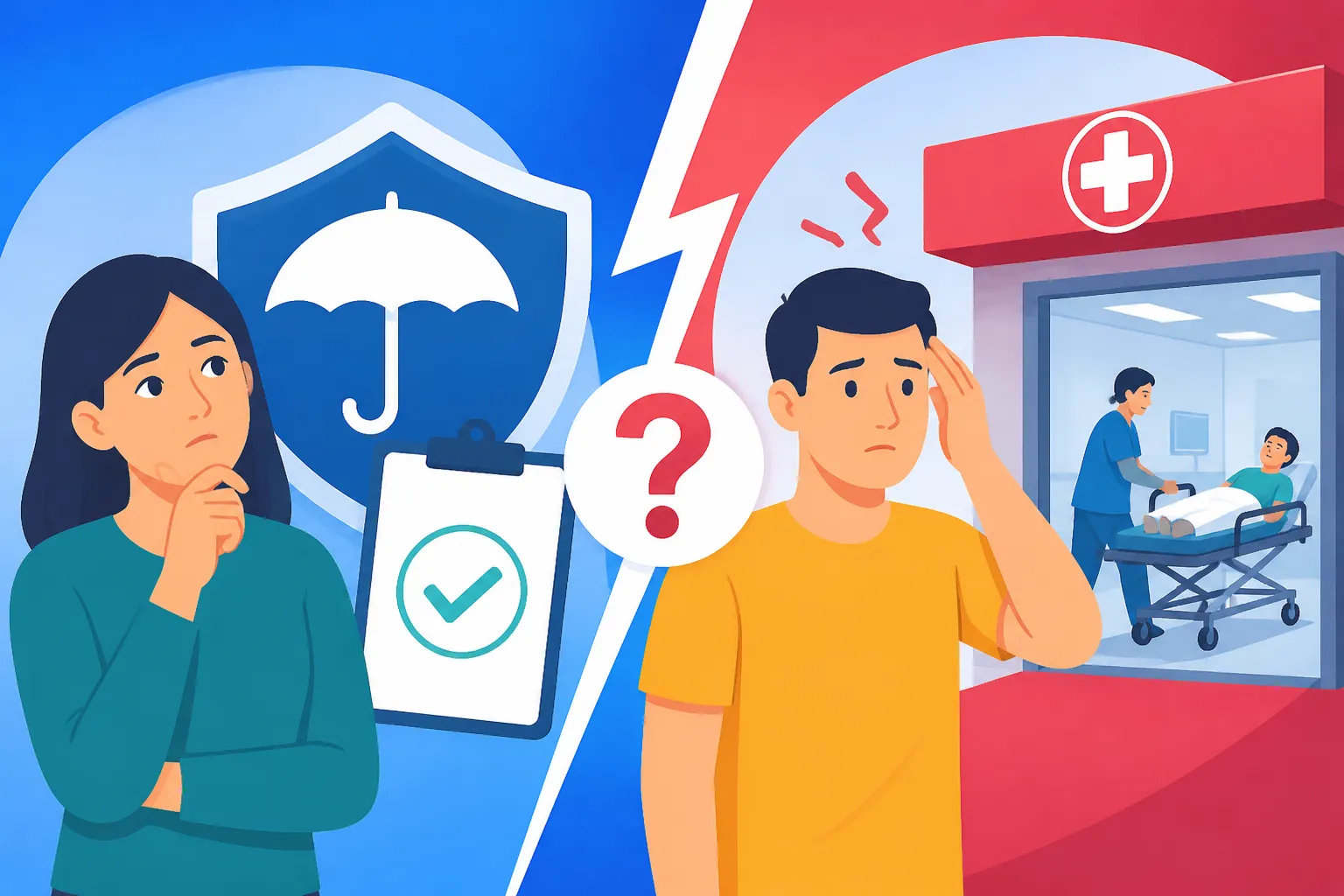
Does Insurance Cover A&E Visits If It’s Not a Life-Threatening Emergency?
One of the most stressful experiences as an expat in Singapore is rushing to the hospital at midnight, only to be hit with a massive bill and a potential insurance rejection. A taxi ride to the A&E for what turns out to be "just" a severe case of food poisoning can leave an administrative headache that is almost worse than the cramps. This guide clarifies exactly how Singaporean hospitals and international insurers define an emergency so you can avoid unnecessary out-of-pocket expenses.
Understanding Singapore’s A&E Triage System
When you walk into an Accident & Emergency (A&E) department at a hospital like Singapore General Hospital (SGH) or Mount Elizabeth, you aren't seen on a first-come, first-served basis. Singapore uses a strict Patient Acuity Category Scale (PACS) to determine who gets priority. Understanding this scale is the key to knowing whether your insurance will later consider your visit "medically necessary."
The PACS system is broken down into four levels. P1 represents life-threatening emergencies, such as cardiac arrest or major trauma, where patients are wheeled in immediately. P2 cases are for those who are acutely ill but stable, like a severe asthma attack or a broken limb. These two categories are almost always covered by comprehensive plans from providers like Cigna Global because the medical necessity is undeniable.
The trouble for expats usually starts at P3 and P4. P3 is "non-urgent," involving conditions like high fever, persistent vomiting, or minor fractures. P4 covers "non-emergency" issues, such as a sore throat, a skin rash, or a cold that could have been treated at a GP clinic the next morning. If you are triaged as a P4, your insurance provider may look at the claim and argue that you should have sought Finding Medical Care: Hospitals, Polyclinics, and GP Networks instead of utilizing high-cost emergency resources. This is where the "reasonableness" of your decision is put to the test.
How Expat Insurance Policies Define an Emergency
The definition of an "emergency" in your policy document is often much narrower than your definition of one when you are in pain at 3 AM. Most international health insurance plans require that the condition be a "sudden and unexpected onset of a medical condition that presents an immediate threat to life or long-term health." If you go to the A&E for a chronic back issue that has been bothering you for weeks, it is highly likely the claim will be denied.
When using a plan like SafetyWing, which is popular among digital nomads and short-term expats, the focus is often on stabilization. They generally cover the costs to get you out of immediate danger, but if you stay at the A&E for tests that could be done as an outpatient, you might find those specific line items rejected. Cigna Global, on the other hand, often offers more leeway if you have a comprehensive outpatient rider, but even then, they may apply a higher deductible or co-payment for A&E visits that do not result in a hospital admission.
A critical term to look for in your policy is "Reasonable and Customary" (R&C) charges. In Singapore, private A&E departments can be significantly more expensive than public ones. If your insurer deems that you went to a high-end private A&E for a minor P3 condition, they might only reimburse you up to the amount a public hospital would have charged. This leaves you to foot the remaining balance. To navigate this, it is essential to understand How to Claim Medical Expenses from International Insurance Providers before the crisis hits.
The Financial Reality of Public vs Private A&E Visits
In Singapore, the cost difference between public and private emergency care is staggering. Public hospitals like SGH, NUH, or Tan Tock Seng charge a flat "A&E Facility Fee," which typically ranges from S$120 to S$160 for foreigners. This fee usually includes basic consultation and standard medication. However, if you require specialized scans (like a CT or MRI) or laboratory tests, these are often billed as extras.
Private hospitals, such as Raffles Hospital or Gleneagles, do not usually have a flat fee. Instead, you are billed for the consultation, every single swab, every tablet of Panadol, and a facility usage fee. A simple visit for a deep cut that requires stitches can easily exceed S$600 at a private facility, whereas it might be half that at a public hospital.
If your insurance plan has a high deductible, you might find that a non-emergency A&E visit doesn't even cross the threshold for a claim. This is a common frustration for those on Expat Health Insurance in Singapore: Public vs Private Coverage plans. You end up paying the full amount out-of-pocket because the insurer views the visit as an expensive convenience rather than a medical requirement.
| Feature | Public Hospital A&E | Private Hospital A&E |
|---|---|---|
| Initial Facility Fee | S$120 – S$160 (Foreigner rate) | S$200 – S$400+ (Consultation only) |
| Triage System | Very strict; long waits for P3/P4 | Generally faster service |
| Insurance Acceptance | Most international plans (Reimbursement) | Direct billing often available for premium plans |
| Wait Times | 3 to 8 hours for non-emergencies | 30 minutes to 2 hours |
| Medication/Tests | Often bundled in basic fee | Usually billed item-by-item |
Why "Medical Necessity" Is the Ultimate Deciding Factor
The most frequent reason for an insurance claim rejection after an A&E visit is a lack of "medical necessity." Insurers rely on the doctor's clinical notes to decide if the visit was justified. If the doctor records your condition as "stable" and "suitable for primary care follow-up," the insurer's claims department will see that as a red flag.
For example, if you suspect a broken toe, you might feel that the A&E is the only option. However, if you can walk and the pain is manageable with over-the-counter medication, the insurer might argue that you could have waited for a Choosing a Primary Care Physician (GP) in Singapore appointment the following morning. On the flip side, if the A&E doctor admits you into a ward for observation, the A&E charges are almost always bundled into the inpatient claim and covered without question.
This is why veteran expats often suggest that if you can wait, you should. If the situation is urgent but not life-threatening, looking for 24-Hour Clinics in Singapore: After-Hours Medical Care Guide is often a smarter financial move. These clinics can handle stitches, nebulizers, and basic X-rays at a fraction of the cost of an A&E, and insurers are far more likely to cover these claims under your outpatient benefits.
Alternatives to the A&E for Non-Life-Threatening Issues
If you find yourself in a medical grey area—where you're worried but don't think you're dying—Singapore has excellent middle-ground options. Many GP clinics in residential hubs like Tiong Bahru or Holland Village stay open until 11 PM or midnight. There are also dedicated "Urgent Care Centres" (UCC) which are designed to bridge the gap between a GP and an A&E.
Using a UCC is often a "best of both worlds" scenario. They are equipped to handle more than a standard clinic but are less focused on the P1 trauma cases that clog up hospital emergency rooms. From an insurance perspective, using a UCC or a 24-hour clinic often falls under "outpatient care." If you have a plan with SafetyWing or Cigna Global that includes outpatient coverage, these visits are usually processed much more smoothly than a full-blown A&E claim.
Before you rush out the door, it is also worth checking if your insurance provides a telehealth service. Many modern expat plans now offer 24/7 video consultations with doctors. These professionals can help you determine if you actually need the A&E or if you can manage the symptoms until morning. This proactive step can be the evidence you need later to prove to your insurer that you attempted to seek the most appropriate (and cost-effective) level of care.
Does Insurance Cover the Ambulance Ride?
A common misconception is that calling an ambulance automatically makes your visit a "covered emergency." In Singapore, calling 995 connects you to the SCDF (Singapore Civil Defence Force) emergency services. If the paramedics determine your case is a genuine emergency, the ride is free for everyone, including foreigners. However, they will take you to the nearest public hospital, not the hospital of your choice.
If the paramedics arrive and decide your case is "non-emergency," they may charge you a fee of S$274. Furthermore, if you use a private ambulance to go to a specific hospital like Gleneagles, you will be charged several hundred dollars. Most insurance policies, including those from Cigna Global, will only cover ambulance fees if the ride was medically necessary and resulted in a hospital admission. If you call an ambulance for a minor issue, be prepared to pay that bill yourself. For more details on this, see our guide on Emergency Numbers: Calling 995 for Ambulance and 999 for Police.
Knowing when to use Non-Emergency Medical Transport: When to Use 1777 Instead of 995 is another vital skill for navigating the local system. If you need to get to a hospital but your life isn't in danger, calling 1777 is the appropriate route, though insurance coverage for this is rare unless specifically pre-authorized.
Strategic Tips for Expats Facing a Medical Crisis
- Check the Clock: If it is 8 PM, many high-quality GP clinics are still open. They are cheaper and faster than the A&E.
- The "Admission" Rule: If you are worried about the cost, remember that if the A&E doctor admits you to the hospital, your insurance coverage becomes much more certain.
- Keep the Triage Paperwork: Always ask for a copy of the triage notes and the doctor’s memo. If the insurer challenges the claim, these documents are your primary evidence of "medical necessity."
- Know Your Deductibles: If you have a S$500 outpatient deductible, a S$400 A&E visit for a non-emergency will be entirely out-of-pocket anyway.
- Private vs Public: If you don't have a "premium" plan with direct billing, a public hospital A&E like Singapore General Hospital (SGH) and Public Hospital Access for Expats is a safer bet for your wallet while you wait for reimbursement.
Navigating the healthcare system here is a learning curve, but once you understand the PACS triage and how insurers like SafetyWing view "necessity," you can make better decisions in the heat of the moment. It’s always better to be safe, but being "safe and informed" will save you thousands of dollars in the long run. Don't forget to review Healthcare Budgeting in Singapore: Managing Out-of-Pocket Costs to ensure your emergency fund is ready for these situations.
Disclaimer
The information provided in this article is for general informational purposes only and does not constitute professional medical or financial advice. Healthcare regulations and insurance policies in Singapore are subject to change. Always consult with your insurance provider and a qualified medical professional regarding your specific circumstances.