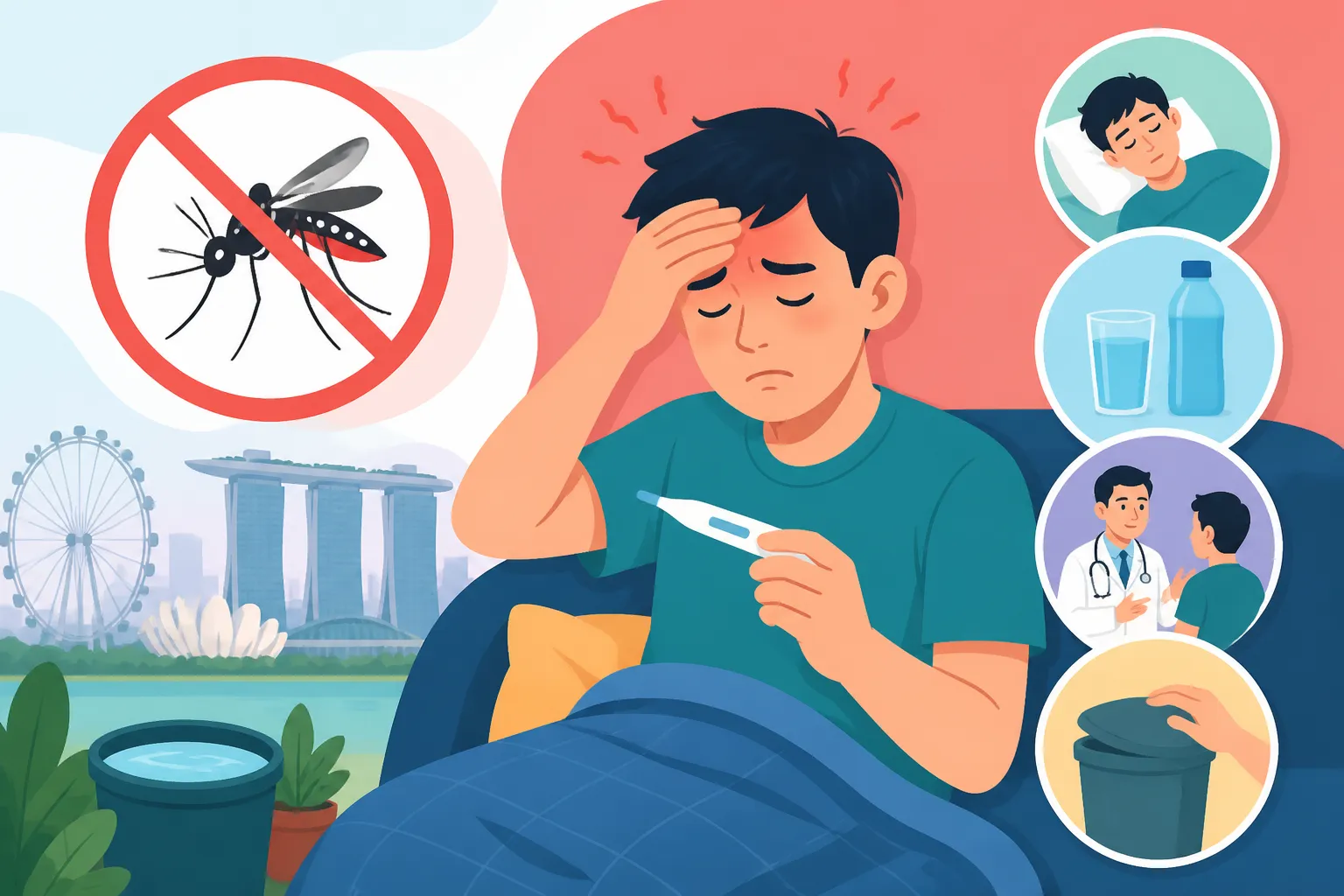
What to Do If You Suspect You Have Dengue Fever
Waking up with a sudden, crushing headache and a fever that feels like you’ve been hit by a freight train is a rite of passage no expat wants in Singapore. I remember sitting in my humid living room during my second year here, staring at a tiny Aedes mosquito on the wall and wondering if the joint pain I was feeling was just "gym soreness" or something much more sinister. This guide provides a clear, step-by-step roadmap on how to identify the symptoms, where to get tested without breaking the bank, and how to navigate the Singaporean medical system when you suspect you have dengue fever.
Recognising the Symptoms: It’s Not Just a Flu
Dengue is often called "breakbone fever" for a reason, and if you are currently feeling like your bones are literally snapping under your skin, you need to pay attention. Unlike a standard respiratory flu, dengue rarely starts with a sore throat or a runny nose. Instead, it hits you with a sudden, high-grade fever that can soar to 40°C (104°F) almost instantly. For many of us coming from temperate climates, this level of heat is terrifying and can lead to immediate exhaustion.
The pain is usually concentrated behind the eyes—a dull, throbbing ache that intensifies when you move your eyeballs. You might also notice a strange, metallic taste in your mouth or a complete loss of appetite. Within twenty-four to forty-eight hours of the fever starting, many patients develop a characteristic red rash. This isn't usually itchy at first; it looks more like a collection of tiny red spots or a flushed appearance across the chest and back. If you are experiencing these, you should review Dengue Fever Prevention: Symptoms, Testing, and NEA Guidelines to understand the progression of the virus.
The Warning Signs of Severe Dengue
While most cases of dengue fever are "self-limiting," meaning they resolve with rest and hydration, a small percentage of cases develop into Dengue Haemorrhagic Fever (DHF). This is where things get dangerous for expats who might be living alone or trying to "tough it out." Severe dengue typically manifests just as the fever starts to subside. You might think you are getting better, but suddenly you experience intense abdominal pain, persistent vomiting, or bleeding from the gums or nose.
If you see any signs of bruising without a known injury, or if you feel exceptionally lethargic and confused, do not wait for a GP appointment. This is a medical emergency. You should immediately look into Emergency Medical Care in Singapore: Ambulances and A&E Wards to find the nearest facility. The transition from standard dengue to severe dengue can happen in a matter of hours, and in the tropical heat of Singapore, dehydration accelerates the risk of organ failure.
Differentiating Between Dengue and Other Tropical Ailments
In Singapore, we also have to contend with Zika and Chikungunya, which share similar symptoms. However, dengue is significantly more prevalent and generally carries a higher risk of complications. Zika usually presents with a milder fever and conjunctivitis (red eyes), while Chikungunya is notorious for lingering joint pain that can last for months. Because the treatments—or rather, the management of symptoms—are similar, a clinical blood test is the only way to be certain of what you are fighting.
When you speak to a doctor, be very specific about your timeline. Tell them exactly when the fever started and if you have been spending time in known dengue clusters. The National Environment Agency (NEA) keeps a live map of these clusters, and knowing you live in a "Red Zone" can help your doctor make a faster diagnostic call.
The Testing Process: Where to Go and What to Expect
If you suspect you have dengue, your first port of call should be a General Practitioner (GP) or a Polyclinic. Many expats make the mistake of heading straight to a high-end private hospital A&E for a simple test, which can result in a bill five times higher than necessary. A local GP is perfectly equipped to handle the initial screening. They will perform a physical exam and likely order a "Dengue NS1 Ag" test or a full blood count to check your platelet levels.
A drop in platelets is the hallmark of dengue. While a normal platelet count is between 150,000 and 450,000, dengue can cause this to plummet below 100,000 or even lower. If your count is stable, the doctor will likely send you home with orders to monitor your condition daily. You can find more information on Finding Medical Care: Hospitals, Polyclinic, and GP Networks to help you decide which facility is closest to your home or office.
Using the Polyclinic System for Testing
Polyclinics are the backbone of the Singaporean healthcare system, and they offer the most cost-effective way to get tested. For a foreigner, the consultation fee is higher than for a citizen, but it remains significantly cheaper than private clinics. The catch is the waiting time. If you are already feeling weak and dizzy, sitting in a crowded waiting room for two hours might feel impossible.
To avoid the queue, I highly recommend using the HealthHub app. You can learn How to Book an Appointment at a Singapore Polyclinic Using the App to secure a slot before you leave your bed. Once you arrive, the triage nurse will prioritize you if your fever is exceptionally high. They will draw blood, and results are usually available within the same day or by the next morning via the app or a phone call from the clinic.
The Cost of Testing and Initial Consultations
As a foreigner, you will be paying "unsubsidized" rates at both public and private institutions. A typical GP visit for a dengue screening, including the blood test and basic medication like paracetamol, will likely set you back between S$80 and S$150. At a Polyclinic, this might be closer to S$60 to S$90. It is a manageable expense, but if you require daily blood draws to monitor your platelets, these costs can add up quickly.
| Service Type | Estimated Cost (Foreigner/Expat) | Typical Turnaround Time |
|---|---|---|
| Polyclinic Consultation | S$50 – S$70 | 2 – 4 Hours |
| Private GP Consultation | S$40 – S$100 | 30 – 60 Minutes |
| Dengue Blood Test (Full Panel) | S$40 – S$80 | 4 – 24 Hours |
| Private Hospital A&E Visit | S$300 – S$500 | 1 – 3 Hours |
| Daily Platelet Monitoring | S$30 – S$60 per test | Same Day |
If you are concerned about how these frequent visits might impact your monthly budget, you should read through Healthcare Budgeting in Singapore: Managing Out-of-Pocket Costs for more detailed advice on navigating the price tiers.
Home Recovery vs. Hospitalisation
The vast majority of dengue cases in Singapore are managed at home. Because there is no specific antiviral "cure" for dengue, the goal is "supportive care." This means keeping the fever down and, most importantly, staying hydrated. The doctor will strictly forbid you from taking aspirin or ibuprofen (like Advil or Nurofen), as these are blood thinners and can drastically increase the risk of internal bleeding if your platelets are low. Paracetamol (Panadol) is the only approved painkiller.
During home recovery, you should be drinking more water than you ever thought possible. Many locals swear by isotonic drinks like 100Plus or coconut water to replenish electrolytes. Personally, I found that even if I wasn't thirsty, sipping water every ten minutes was the only thing that kept me out of the hospital. If your company insurance is limited, you might want to check Understanding Your Employer’s Medical Benefits Package Before Signing to see if home-based lab tests are covered.
When Hospitalisation Becomes Mandatory
Your doctor will likely require you to return every 24 hours for a blood test. If your platelet count drops below a certain threshold—usually around 50,000 to 80,000 depending on the physician's discretion—or if you show signs of dehydration, they will admit you to the hospital for an IV drip. For expats, this is where the financial "sticker shock" often happens.
Hospitalisation in Singapore is world-class, but it is expensive for those without local subsidies. A three-day stay in a private hospital like Mount Elizabeth or Gleneagles for IV hydration and monitoring can easily exceed S$5,000. Public hospitals like SGH or NUH are cheaper but still significant for non-residents. This is why having a plan like Cigna Global is vital; it ensures that if a simple fever turns into a week-long hospital stay, you aren't wiped out financially. Similarly, for those on shorter assignments or digital nomads, SafetyWing offers a safety net that covers these types of acute infectious diseases.
Managing the Practicalities of Being Sick Alone
One of the hardest parts of having dengue as an expat is the isolation. You will be too weak to cook, clean, or even walk to the nearby hawker centre. If you live alone, I highly recommend using delivery apps for everything. Stock up on rehydration salts and simple, bland foods. Ensure someone—a colleague or a friend—knows you are sick and checks in on you every few hours.
If your condition worsens and you cannot drive yourself to the hospital, do not hesitate to call for help. Understanding the difference between emergency services is crucial; for instance, Emergency Numbers: Calling 995 for Ambulance and 999 for Police will ensure you get the right help quickly. For non-life-threatening but urgent transport, private ambulances are also an option.
Insurance and Financial Protection for Dengue
One of the most common questions I get from newcomers is whether their standard travel or international insurance covers tropical diseases like dengue. The answer is generally yes, but the way they cover it matters. Most outpatient GP visits for testing will fall under your "outpatient" limit, which can be quite small on some corporate plans. You might find yourself hitting that limit after just three days of blood tests.
If you are currently evaluating your coverage, it is worth looking at Expat Health Insurance in Singapore: Public vs Private Coverage to see where the gaps might be. For those without a comprehensive corporate plan, Cigna Global provides the kind of high-limit inpatient care that is necessary for severe dengue cases. On the other hand, younger expats or those on a budget often find that SafetyWing offers a great balance of protection for unexpected medical crises like this without the heavy monthly premiums of traditional providers.
Claiming Your Expenses
Keep every single receipt. Singaporean clinics are very efficient with documentation, but you need to ensure the "Diagnosis" is clearly stated as "Suspected Dengue" or "Dengue Fever" on the invoice. Most international insurers will require a brief medical report if you are hospitalised. If you are worried about the initial costs, you can read Out-of-Pocket Limits: Protecting Your Savings from Hospital Bills to understand how to structure your claims to get reimbursed faster.
Remember that most insurers, including Cigna Global, have 24/7 hotlines. If you are admitted to a hospital, call them immediately. They can often issue a "Letter of Guarantee" (LOG) to the hospital, which means you won't have to pay the massive deposit (often S$5,000+) upfront.
Prevention and the NEA’s Role
Finally, the best way to deal with dengue is to avoid it. The NEA is incredibly strict about mosquito breeding. If you are sick, the NEA might even visit your home to conduct an inspection and ensure you aren't inadvertently breeding the very mosquitoes that made you ill. They use a "gravitrap" system and regular fogging in high-risk areas.
You can take proactive steps by checking Preventive Mosquito Bites: NEA Approved Repellents to see which local brands actually work in this humidity. Always clear stagnant water from your balcony planters and ensure your "Mozzie Wipeout" routine is performed weekly. Living in the tropics is a dream, but it requires a bit more vigilance than life back home.
Medical Disclaimer
This article is for informational purposes only and does not constitute professional medical advice, diagnosis, or treatment. Always seek the advice of your physician or other qualified health provider with any questions you may have regarding a medical condition. Never disregard professional medical advice or delay in seeking it because of something you have read in this guide. If you think you may have a medical emergency, call your doctor or the emergency services immediately.