Hand, Foot, and Mouth Disease (HFMD): Daycare Outbreaks and Rules
Hand, Foot, and Mouth Disease (HFMD) is a rite of passage for almost every expat child in Singapore, but that doesn't make the first outbreak any less terrifying. I remember sitting in my living room with a feverish toddler, staring at a sudden flurry of urgent emails from his preschool about a mandatory closure. This guide solves the confusion surrounding Ministry of Health protocols, daycare rules, and how to manage the practicalities of a local outbreak.
Understanding HFMD in the Singapore Context
In many Western countries, HFMD is a seasonal concern, often peaking in summer or autumn. However, in Singapore’s perpetual tropical climate, the virus is endemic and can strike at any time of the year. The high humidity and population density, especially in childcare settings, create an environment where the virus thrives. For an expat parent, the first hurdle is realizing that "outbreak" isn't just a scary word; it’s a localized administrative reality that triggers a specific chain of events.
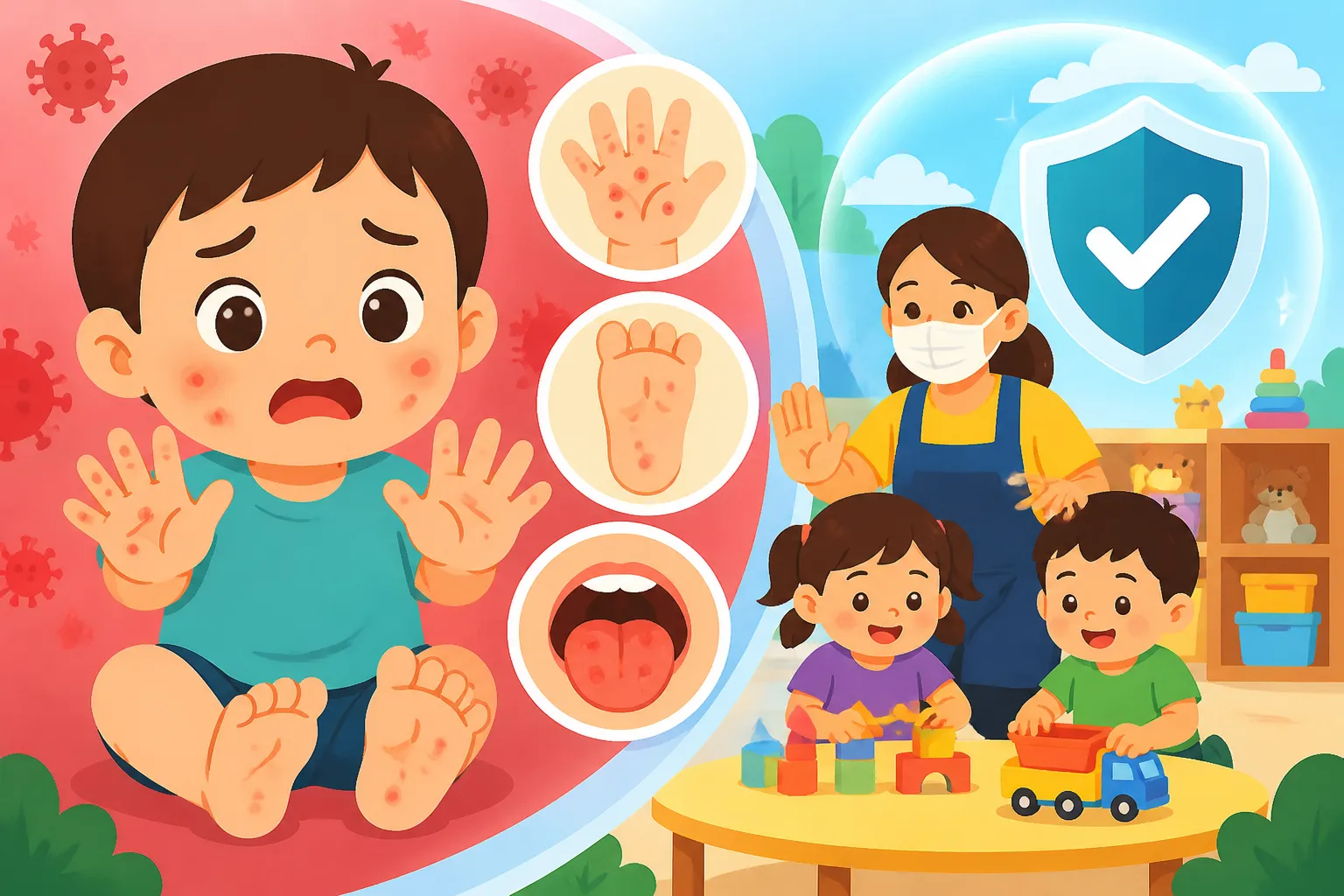
The symptoms typically begin with a mild fever and a sore throat, followed by the namesake blisters on the hands, feet, and inside the mouth. It is the mouth ulcers that usually cause the most distress for children, as they can make swallowing painful, leading to dehydration. While most cases are mild, Singaporean authorities are particularly vigilant about Enterovirus 71 (EV71), a strain that can occasionally lead to more severe complications like brain or heart inflammation. This is why the medical response here is far more structured than you might be used to back home.
If your child starts showing symptoms, your first point of contact should be a local clinic. You can refer to our guide on Choosing a Primary Care Physician (GP) in Singapore to find a doctor who is familiar with the local reporting requirements. Unlike a standard cold, a diagnosis of HFMD carries legal and social obligations for parents and schools alike.
Why HFMD is So Prevalent in Local Daycares
The structure of Singaporean preschools and "Student Care" centers often involves large groups of children in air-conditioned, enclosed spaces. While these facilities maintain high standards of hygiene, the sheer volume of children sharing toys and mealtimes makes transmission rapid. The virus spreads through direct contact with saliva, mucus, or the fluid from blisters, as well as through fecal-oral transmission.
Local daycare centers are required to conduct "health checks" every morning. You will see teachers using thermometers and asking children to show their tongues and palms before they are allowed into the classroom. If your child is flagged during this check, they will be isolated immediately and you will be asked to pick them up. It feels a bit clinical and perhaps a bit harsh if you’re new here, but it’s a necessary gatekeeping measure to prevent a total facility shutdown.
Common Symptoms and the Spot-Check Routine
As a parent, you need to become proficient in the daily spot-check. Before leaving for school, check your child’s temperature and look specifically for tiny red spots or fluid-filled blisters. In the mouth, look for small ulcers on the tongue or the back of the throat. If you see anything suspicious, do not send them to school. Sending a symptomatic child to daycare is considered a major social faux pas in the expat and local communities alike.
If you are unsure whether a rash is HFMD or just a common heat rash, it is best to consult a professional. Our Family Health Guide: Maternity, Pediatrics, and Child Development provides more context on general pediatric care, but for HFMD specifically, a quick trip to the pediatrician is the only way to get the official Medical Certificate (MC) that the school will require for your child's eventual return.
Daycare Outbreaks and Ministry of Health Regulations
In Singapore, the Early Childhood Development Agency (ECDA) and the Ministry of Health (MOH) work in tandem to monitor HFMD. There is a legal requirement for schools to report cases. If a preschool has more than a certain number of cases—usually 10 cases or more than 13% of the student population—the MOH may mandate a 10-day closure of the entire facility. This is the scenario that sends expat parents into a tailspin, especially those without local family support.
When a school is under an "Outbreak Status," the cleaning protocols go into overdrive. You might see staff in full protective gear disinfecting the premises. These measures are designed to break the cycle of transmission, but they also mean your childcare plans will be disrupted for at least two weeks. This is a common trigger for workplace stress, and if you find yourself struggling with the balance, you might find our article on Workplace Burnout and Stress: Seeking Medical Leave for Mental Health helpful in navigating those difficult conversations with your employer.
The Mandatory School Closure Triggers
The 10-day closure is calculated based on the incubation period of the virus. During this time, the school must undergo a deep cleaning, and all students are essentially under a "Stay-at-Home" period. Even if your child is not sick, they are not allowed to attend other playgroups or public playgrounds if their school is closed due to an outbreak. This is to prevent the virus from leaping from one daycare cluster to another.
It is important to understand that these closures are not optional for the school. They are directed by the MOH to protect the public. For many of us who are used to more relaxed guidelines, this can feel like an overreaction, but in a city-state like Singapore, containment is the only way to prevent a national health crisis.
Reporting Protocols for Preschools and Parents
If your child is diagnosed with HFMD, the doctor will notify the MOH. Simultaneously, you must inform your child’s school immediately. The school will then issue a circular to all parents. They will not name your child, but they will state the class or level where the case was detected. This transparency is a hallmark of the Singaporean system and helps other parents monitor their children closely.
Failure to report a case is taken very seriously. If a school discovers you sent a child back before their quarantine period ended, it can lead to a breakdown in trust and potentially the termination of your child's enrollment. Always ensure you have a "Fit for School" letter from your doctor before attempting to return. You can find more information on the types of clinics that provide these in our guide to Pediatric Clinics: Childhood Vaccinations and School Medical Forms.
Navigating Medical Care and Isolation at Home
Once your child is diagnosed, the focus shifts to home care and isolation. Since there is no specific cure for HFMD, the treatment is supportive—managing pain and ensuring the child stays hydrated. This sounds simple until you are trying to convince a three-year-old with mouth ulcers to drink water. Many local parents swear by "cooling" foods like coconut water or watermelon to soothe the throat.
Isolation is the biggest challenge, especially if you have other children or live in a condo with shared facilities. You should strictly avoid the condo pool, the BBQ pits, and the playground. If you are staying in a high-rise, you should also be mindful of shared elevators. We’ve covered more on the social expectations of condo living in our guide on Everyday Rules and Etiquette: Fines, Laws, and Social Norms.
When to Visit a Pediatrician vs. A&E
Most cases can be handled by a neighborhood GP or a private pediatrician. However, you should head to the Accident & Emergency (A&E) department of a hospital like KK Women’s and Children’s Hospital (KKH) if your child shows signs of severe dehydration, persistent high fever, or neurological symptoms like tremors or excessive lethargy.
Be prepared for long wait times at public hospital A&E departments during an active HFMD season. For a faster experience, many expats choose private hospitals like Mount Elizabeth or Gleneagles, but these come with significantly higher costs. For more details on these options, read our analysis of Mount Elizabeth, Gleneagles, and Raffles: Premium Private Hospitals.
Managing the 10-Day Quarantine and Stay-at-Home Etiquette
The 10-day rule is the gold standard in Singapore. Even if the blisters have dried up after five days, your child can still be shedding the virus. Use this time to deep clean your home. All toys, door handles, and shared surfaces should be disinfected with a bleach-based solution or a specialized virus-grade cleaner.
If you have a live-in helper, ensure she is educated on the hygiene protocols. Many helpers are very diligent about this, but they need the right supplies and clear instructions on why the child must stay indoors. If you are currently looking for a helper to assist during such emergencies, our guide on Hiring a Foreign Domestic Worker (Maid): Levies, Agencies, and Rules is a great starting point.
| Cost Category | Estimated Price (SGD) | Notes |
|---|---|---|
| GP Consultation | $35 – $70 | Standard neighborhood clinic |
| Private Pediatrician | $120 – $250 | Specialist clinics in Orchard/Novena |
| Medication (Pain/Ulcers) | $20 – $50 | Paracetamol, topical gels, sprays |
| Medical Certificate (MC) | Included | Part of the consultation fee |
| A&E Visit (Public) | $120 – $160 | All-in rate for foreigners |
| A&E Visit (Private) | $300 – $600 | Excluding intensive tests/scans |
Insurance, Costs, and Financial Planning for Outbreaks
The financial impact of an HFMD outbreak isn't just the medical bill; it’s the lost productivity and the potential need for emergency childcare. While a GP visit won't break the bank, an emergency hospitalization for a dehydrated child can quickly run into the thousands of dollars. This is where having robust medical coverage becomes vital.
Most corporate insurance plans will cover the outpatient consultation, but check if your policy has a limit on the number of GP visits per year. For expats on local contracts, the coverage might be basic. If you are looking for more comprehensive protection that includes your dependants, international plans from providers like Cigna Global or SafetyWing are popular choices because they offer higher limits and more flexibility regarding choice of doctor.
Does Insurance Cover HFMD Treatments?
HFMD is generally covered by most standard medical insurance policies in Singapore, provided the child was not symptomatic when the policy was taken out. Cigna Global is particularly well-regarded for its pediatric coverage, often including specialist visits without needing a GP referral. If you are an expat freelancer or on a short-term assignment, SafetyWing offers a cost-effective alternative that still provides a safety net for emergency medical situations.
You should always keep your receipts and the doctor's diagnosis memo to facilitate claims. Some clinics offer direct billing for major insurers, which saves you from paying out-of-pocket and waiting for a reimbursement. To understand how these billing systems work, take a look at Co-pays and Deductibles: How Singapore Medical Billing Works.
Hidden Costs: Unpaid Leave and Alternative Childcare
If both parents work and the daycare closes, the financial strain is real. While Singaporean citizens get government-paid childcare leave, many expats are on contracts that only provide the statutory minimum. If you exhaust your annual leave, you might have to take unpaid leave.
Another hidden cost is the "cleaning fee" that some private preschools might charge parents to help cover the costs of the professional disinfection required by the MOH. While controversial, it is often buried in the enrollment contract. For a breakdown of what to expect when budgeting for your life here, check out Budgeting in Singapore: Cost of Living Benchmarks for Expats.
Practical Prevention Strategies for Expat Households
Prevention is about more than just washing hands; it's about understanding the high-risk environments in Singapore. Indoor playgrounds are notorious hotspots for the virus. If there is a reported spike in cases nationwide, it is wise to avoid these venues entirely. Instead, opt for outdoor activities where the UV light and fresh air naturally help reduce the survival of the virus on surfaces.
Educating your child about "not sharing" is counter-intuitive to everything we teach them about social behavior, but during an HFMD season, it is essential. They should use their own water bottles and towels. If your child is in a school that provides communal snacks, check what their hygiene protocol is during meal times.
Sanitation Standards at Singaporean Childcare Centers
The ECDA has very strict guidelines on sanitation. Preschools are required to use disinfectants that are effective against non-enveloped viruses. They must also have a clear "Isolation Room" policy. When touring schools, don't be afraid to ask about their HFMD track record and their specific sanitization schedule. If you are still in the process of choosing a school, our guide on International Schools in Singapore: Choosing the Right Curriculum offers tips on what to look for in a facility.
Many schools now use professional misting services that apply a long-lasting antimicrobial coating to surfaces. While no system is foolproof, these measures significantly reduce the likelihood of a massive outbreak within the school.
Building Immunity and Long-Term Health Management
A healthy immune system is the best defense. Ensure your child is up to date on all their routine vaccinations, which you can track using our guide on the National Childhood Immunisation Schedule: What Your Child Must Have. While there is no vaccine for the most common strains of HFMD in Singapore yet, keeping the overall immune system strong helps children recover faster if they do get infected.
Proper nutrition, plenty of sleep, and managing environmental factors like air quality also play a role. During the haze season, for example, children's respiratory systems are under more stress, making them more susceptible to viral infections. You can read more about managing this in Air Quality and Haze in Singapore: Managing Asthma and Allergies.
Living through an HFMD outbreak is stressful, but with the right information and a bit of preparation, it becomes just another manageable part of the expat journey in Singapore. Stay vigilant with the spot-checks, keep your insurance details handy (whether through SafetyWing, Cigna Global, or a local provider), and remember that this too shall pass.
Disclaimer
The information provided in this article is for educational and informational purposes only and does not constitute medical or legal advice. Always seek the advice of a qualified healthcare professional regarding any medical condition or treatment. Regulations and Ministry of Health guidelines in Singapore are subject to change; please consult official government sources for the most current protocols.